
Samuel Jay Keyser
The Mental Life of Modernism
If an idle browser were to thumb through my book, say in a bookshop somewhere, I would hope that Chapter 3 catches her eye. It contains a number of surprises, things that she will have looked at but not necessarily seen, like what is hidden in the FedEx logo or in the famous Silence of the Lambs motion picture poster. Even if the browser doesn’t buy the book, she will take away something that she probably didn’t know before and won’t easily forget.
Both the FedEx logo and the famous Silence of the Lambs motion picture poster contain hidden structures that artists put into their work without any expectation that their audiences would ever find them. These are “Easter eggs” in the software sense of the term. This chapter will show that the practice of embedding Easter eggs in a work of art can be found in the poetry of Geoffrey Chaucer and in the music of Guillaume de Machaut. “Easter eggs” go back even farther, certainly to the Old Testament. Building secret structures into works of art was at best a pastime in the past. It was something artists did simply because they could. After the shift to Modernism, this practice became central to the work of art.
I would also hope that Chapter 12 would catch a browser’s eye. It is the real point of the book; namely, that Modernism and Newtonianism are two sides of the same coin. What the book is really about is the monumental consequences that transpire when artists and scientists encountered the limitations of the brain. This chapter explores the implications of this encounter. Have we as a species reached the limits of our understanding? Richard Feynman commented on quantum mechanics in this fashion:We can’t pretend to understand it since it affronts our commonsense notions. The best we can do is to describe what happens in mathematics, in equations, and that’s very difficult. What is even harder is trying to decide what the equations mean. That’s the hardest thing of all.
It is a reasonable thing to ponder. Quantum mechanics tells us that the result of an experiment done in the past cannot be understood until some point in the future. It tells us that two photons billions of miles apart are somehow connected, what Einstein called “Spooky action at a distance.” Just as Newton’s action at a distance wrought a sea change in science by virtue of the brain coming up against its own limitations, quantum mechanics is doing the same thing in our lifetime, only this time there may be no work around.
I would consider the book a modest success if readers were to come away with two notions. The first is that natural functions of the brain like face recognition, metrical poetry, tonal music, and the ability to use natural language are illuminated by thinking of them in terms of abstract representation. I hope readers will come to appreciate how this perspective can shed light on important upheavals in the history of ideas.
Of course, a great deal more needs to be done. For example, we know that the fusiform gyrus is an area of the brain where face recognition begins. But what precisely does that area do? Does it search for circles within circles in a kind of emoji hunt? Once it comes up with a facial representation in some notation or other, what does it do? Is there a face lexicon paralleling the way words are stored in a mental lexicon? How does the brain link a face to a name? What does it really mean to say, “The name is familiar but I can’t place the face?”
A friend of mine, Mike Strauss, grew a beard a year or so after we first met. He kept the beard for a long time. Then he decided to shave it off. But being a fellow with a quirky curiosity, he wondered what would happen if he only shaved one side of his face. He was living in a commune at the time. He reported that his housemates took 11 hours to notice. I can believe that. He came for a visit one evening with his face still half-shaved. It took me fully 5 minutes before I realized what he had done. The effect on me was startling. Here is a possible scenario of what happened. When we first met, I stored a representation of his face in my “face lexicon.” From that point on whenever we met, I did not reconstruct his face, but accessed the one in my face lexicon. Perhaps when he grew a beard, I even stored a second image, like a new meaning for an old word. When he came for a visit, perhaps I didn’t actually look at his half- shaved face. But rather I short-circuited the process by going directly to my face lexicon and “looked at” the first image of him that I stored. It was only when, for whatever reason, my fusiform gyrus rebuilt his image that evening and my storage program compared the new image to the ones already in storage that I noticed the disparity.
Whatever the worth of this scenario, it does suggest that what actually happened will never be answered by just looking at the brain. Rather we need to step back and try to come up with an abstract representation that successfully models face recognition behavior. That will tell us what to look for when we start probing brain cells. So my first point is this: abstract representation can be extraordinarily enlightening. It can even shed light on convulsions in the history of ideas.
The second notion also relates to the history of ideas. If post-Newtonian science and Modernism are instances of the brain coming up against its own limitations, perhaps there are others. For example, modern economics is highly mathematical. One might even think of it as a branch of applied mathematics. But it wasn’t always a branch of mathematics. When did that shift occur? And why? Perhaps the change was a natural one in the normal course of things. But maybe not. Maybe commonsense notions of how human beings behave in the marketplace were simply too slippery to get a handle on.
I remember going to a market early one morning in Luang Prabang, Laos. I stopped at one stand and the owner wouldn’t let me leave until I bought something. He kept lowering the price and the more I resisted, the lower he went. Finally, he explained that I was his first customer and that he was bound to give me a “morning price” because, if he didn’t sell me something, he would have bad luck for the rest of the day. I didn’t have the heart not to buy something.
Richard Feynman was talking about quantum mechanics when he said “The best we can do is to describe what happens in mathematics…” Perhaps the sentiment applies to modern economics as well.
It is even worth thinking about the history of ideas from the opposite perspective. What about bodies of knowledge that are change resistant, religions, for example? Because of their adherence to immutable texts—the Bible, the Talmud, the Koran, the Agamas, the Avesta, the Book of Mormon, etc.—followers of these texts do not change. One consequence is that they will not move beyond the natural state of cognition that prevailed when the texts were written. There might be something cognitively significant in that. It can’t be an accident that the vast majority of humanity believes in the teachings of an immutable text. Perhaps the attraction of religious thinking lies in the mere fact that its texts are immutable, rather than in what they contain. Maybe this is what is behind Matthew 16:18 where Jesus tells Peter, “You are Peter, and on this rock, I will build my Church.” Nothing says immutability like a rock.
My second point, then, is this: if the study of Modernism and modern science in terms of the natural limits of the brain has borne fruit, then perhaps a similarly oriented study of the histories of other areas of human endeavor might likewise prove fruitful. Unfortunately, I am ill-equipped to undertake the search. I will have to leave that in the capable hands of like-minded others. When Andrew Marvell wrote:Had we but world enough and time,This coyness, lady, were no crime.he wasn’t just talking about seduction.
Editor: Judi Pajo

The Mental Life of Modernism
Samuel Jay Keyser The Mental Life of Modernism: Why Poetry, Painting, and Music Changed at the Turn of the Twentieth Century The MIT Press 240 pages, 6 x 9 inches ISBN 978 0262043496
Available here →July 15, 2020
20200715-keyser-samuel-on-book-mental-life-modernism-poetry-painting-music-3-1
A close-up
The rest of this thread
Carlos Silva
Samuel Jay Keyser
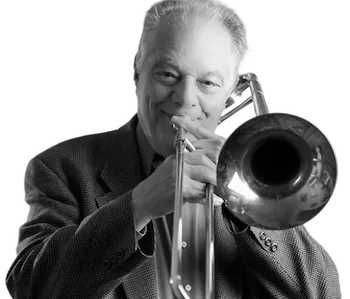
Samuel Jay Keyser is the Peter de Florez Professor Emeritus in the Department of Linguistics and Philosophy at MIT. He is the founding editor and for the last 50 years editor-in-chief of Linguistic Inquiry. He is also the founding editor of The Linguistic Inquiry Monograph Series and the book series Current Studies in Linguistics, all published by the MIT Press. Aside from seven books and close to 100 articles in the field of theoretical linguistics, he has published two books of poems, Raising the Dead and The Pond God and Other Stories. The latter was designated a 2003 Lee Bennett Hopkins Honor Award for children’s poetry. He has been an occasional commentator on National Public Radio’s All Things Considered. He is a jazz trombonist with the Aardvark Jazz Orchestra, New Liberty Jazz Band and the Dixie Sticklers. He has appeared on more than a dozen CDs. Jay and his photographer wife, Nancy Kelly, have visited 60 countries including Bhutan, Myanmar, Laos, Cambodia, Vietnam, the island state of Tasmania and Chile’s Easter Island. They have prepared photo-journals of many of these trips and will be happy to make them available to anyone interested.
Pull this thread
Modernism is a cognitive event, not a cultural one, which is why modern art has to be taught.
Know something the rest of us don't?
Most threads on Rorotoko begin with our invitation. Any thread can begin with a proposal: you write it with the same prompts every thread answers, and we review it.
Propose a thread →