
Samuel Jay Keyser
The Mental Life of Modernism
If the linguistic revolution inaugurated by Noam Chomsky in his seminal 1957 monograph Syntactic Structures teaches anything, it is the role that rules play in our understanding of how the brain works. This perspective is absent from much contemporary work in art criticism and especially in the neuroscience of aesthetics. Obviously, I think these fields would benefit from its introduction. This book is an example of how that might be done.
Our knowledge of language can be represented in terms of a systematic grammar and not just as a collection of arbitrary conventions. Over the years theorists have extended this way of looking at the brain to include art. Lerdahl and Jackendoff’s ground-breaking A Generative Theory of Tonal Music (MIT Press, Cambridge Massachusetts, 1983) is an important case in point. They have shown with great precision what rule systems in music look like. The assumption is that these rule systems are internalized in our brains just as the rules of grammar are. This doesn’t mean that the rules are literally to be found in mental circuitry the way they might be found in the pages of a book. But it does mean that their counterparts are there. Indeed, one of the great tasks of the 21st-century will be to show how such unconscious knowledge is represented in the “wetware” of the brain.
When artists abandoned the set of rules that they shared with their audiences, they replaced them with private formats. Audiences had to learn what these private formats were in order to enjoy the art that they produced. In this sense, much modern art has been an acquired taste. It is no accident that college courses in the poetry of John Ashbery or the music of Arnold Schoenberg or the painting of Jackson Pollock were a side effect of Modernism. Prior to the sea change it was perfectly obvious what a poet was saying or a painter depicting. Afterwards, like Dante in purgatory, people needed a guide.
There is a punchline in all of this. Modernism is not sui generis. I believe it is the same phenomenon that led to the abandonment of the mechanical philosophy of the Galilean revolution and of Descartes in the 17th century when Newton’s postulation of action at a distance required the same kind of mental gymnastics; namely, abandoning the idea of an intelligible world for the idea of an intelligible theory. In short, Newtonianism and Modernism are work-arounds devised by the brain on encountering its own limitations.
As an undergraduate, I was a student of English literature. I loved the subject matter, but not the discipline. I was interested in explanation. Practitioners of the trade were interested in interpretation. It is not surprising that I turned to modern linguistics, a field devoted to the tool that gives rise to literature, but devoted to understanding the nature of the tool and what it says about human nature. It was also not surprising that I would return to literature. But what was a surprise was that thinking about things linguistically would shed light on the nature of Modernism.
This is a book that I could not have written at the beginning of my professional life, but only at the end. I’m very glad I have written it. Having pondered the mystery of Modernism for most of my professional life, I feel as if this book is to my need for explanation what Androcles was to his lion.
Editor: Judi Pajo

The Mental Life of Modernism
Samuel Jay Keyser The Mental Life of Modernism: Why Poetry, Painting, and Music Changed at the Turn of the Twentieth Century The MIT Press 240 pages, 6 x 9 inches ISBN 978 0262043496
Available here →July 15, 2020
20200715-keyser-samuel-on-book-mental-life-modernism-poetry-painting-music-2-1
The wide angle
The rest of this thread
Carlos Silva
Samuel Jay Keyser
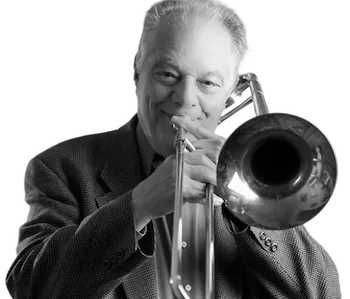
Samuel Jay Keyser is the Peter de Florez Professor Emeritus in the Department of Linguistics and Philosophy at MIT. He is the founding editor and for the last 50 years editor-in-chief of Linguistic Inquiry. He is also the founding editor of The Linguistic Inquiry Monograph Series and the book series Current Studies in Linguistics, all published by the MIT Press. Aside from seven books and close to 100 articles in the field of theoretical linguistics, he has published two books of poems, Raising the Dead and The Pond God and Other Stories. The latter was designated a 2003 Lee Bennett Hopkins Honor Award for children’s poetry. He has been an occasional commentator on National Public Radio’s All Things Considered. He is a jazz trombonist with the Aardvark Jazz Orchestra, New Liberty Jazz Band and the Dixie Sticklers. He has appeared on more than a dozen CDs. Jay and his photographer wife, Nancy Kelly, have visited 60 countries including Bhutan, Myanmar, Laos, Cambodia, Vietnam, the island state of Tasmania and Chile’s Easter Island. They have prepared photo-journals of many of these trips and will be happy to make them available to anyone interested.
Pull this thread
Modernism is a cognitive event, not a cultural one, which is why modern art has to be taught.
Know something the rest of us don't?
Most threads on Rorotoko begin with our invitation. Any thread can begin with a proposal: you write it with the same prompts every thread answers, and we review it.
Propose a thread →