
Jack N. Rakove
Beyond Belief, Beyond Conscience
Many studies of religious liberty follow one of two paths. One essentially involves a study of ideas, and tries to explain how great thinkers, like St. Augustine, either justified the coercion of religious beliefs or (on the other side of the story) began creating a space where individual rights of conscience could be protected. Here we pay special attention to such writers as John Locke, Baruch (or Benedict) Spinoza, Pierre Bayle, and Voltaire.
The second path, particularly for Americans, is concerned with developments in constitutional law and the leading cases that represent the current, often rather muddled state of legal doctrine.
In writing this book, I wanted to have a different emphasis. Part of my original interest in the subject came from my long-running interest (going back to the early 1970s) in the political career and thinking of James Madison. Religious freedom was Madison’s first political commitment, but explaining its impact on his constitutional thinking, and that of his friend and ally, Thomas Jefferson, remained an issue that deserved fuller explanation.
But I was also influenced by recent work done by historians of early modern Europe. Their concern was not with ideas of religious toleration but with practices of religious tolerance that had to be worked out at the community level. Toleration, properly defined, means having to accept something you find truly offensive and burdensome. It is, as one English scholar put it, a form of “charitable hatred.” It is also a legal privilege that the state can extend but also withdraw, which is what famously happened in 1686 when Louis XIV revoked the Edict of Nantes that had protected French Huguenots.
By the middle eighteenth century, and certainly by the Revolution, many Americans believed they had moved “beyond toleration,” and were recognizing religious conscience as a fundamental right that the state must recognize and never revoke. To explain how they had reached this position is one of the challenges this book takes up. Having the European background as a point of comparison makes it easier to appreciate the American achievement.
But one also needs to know more about the nature of American religiosity in an avowedly Protestant society. One of my main arguments is that the emphasis that the Puritans and their spiritual descendants placed on the direct personal experience of religious conversion made the rights of conscience a vital element in American Protestantism, not only in the colonial era but well into the nineteenth and twentieth centuries. And that emphasis enhanced the idea that matters of religious choice had a fundamental importance that scrupulous individuals could never alienate.
Editor: Judi Pajo

Beyond Belief, Beyond Conscience
Jack N. Rakove Beyond Belief, Beyond Conscience: The Radical Significance of the Free Exercise of Religion Oxford University Press 240 pages, 5 1/2 x 8 1/4 inches ISBN 978 0195305814
Available here →January 20, 2021
20210120-rakove-jack-on-book-beyond-belief-beyond-conscience-radical-2-1
The wide angle
The rest of this thread
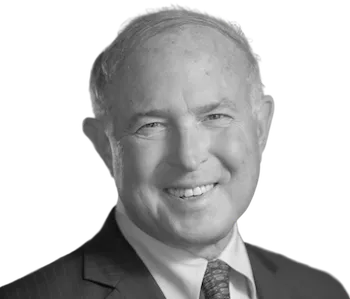
Linda A. Cicero / Stanford News Service
Jack N. Rakove
Jack Rakove is the William Robertson Coe Professor of History and American Studies and Professor of Political Science, emeritus, at Stanford University, where he began teaching in 1980. He is the author of eight books, including Original Meanings: Politics and Ideas in the Making of the Constitution (1996), which won the Pulitzer Prize in History, and Revolutionaries: A New History of the Invention of America (2010), which was a finalist for the George Washington Prize.
Pull this thread
Separating church and state is what let American religion flourish.
Know something the rest of us don't?
Most threads on Rorotoko begin with our invitation. Any thread can begin with a proposal: you write it with the same prompts every thread answers, and we review it.
Propose a thread →