
David Livingstone Smith
Making Monsters
Making Monsters is about the phenomenon of dehumanization, a phenomenon that is implicated in the most hideous acts that human beings have inflicted upon one another. Perpetrators of mass violence often dehumanize their victims. They think of them as less-than-human entities that must be oppressed, enslaved, or even exterminated.
The term “dehumanization” is used in many different ways. Some use it as just another term for inhumane or degrading treatment. Others think of it as something verbal: the metaphorical likening of others to nonhuman animals. Still others think that when we dehumanize others, we picture them as mindless, inanimate objects.
Making Monsters makes the case that these conceptions of dehumanization are unsatisfactory, and that dehumanization should be understood as the attitude of regarding others as subhuman creatures. It is a very particular phenomenon that needs to be distinguished from other, related attitudes such as racism, misogyny, ableism, xenophobia, and transphobia.
Making Monsters is the third book that I have about dehumanization, and offers my most detailed and sophisticated treatment of this topic. Using historical examples, such as the Holocaust and anti-Black violence in the United States, it gives an account both of what dehumanization is and how it works, both psychologically and politically. Making Monsters focuses on the transformation of dehumanized people in the eyes of their persecutors not simply as animals such as rats, cockroaches, and lice, but as monstrous or demonic beings—an issue that is neglected in the social psychological literature.
In my view, this occurs because when people are dehumanized, they are seen as human and as subhuman simultaneously. For example, perpetrators of the Holocaust genocide did not regard their victims simply as vermin, but conceived of them as human vermin, monstrous, uncanny fusions of rats and human beings. I argue that it is part of our legacy as ultrasocial primates that we automatically perceive others as fellow human beings.
However, we are also inclined to defer to people in positions of power and authority who tell us that these others are not really human, but only appear to be human. They are, so to speak, counterfeit human beings. This leaves us with two contradictory representations of the other as wholly human and wholly subhuman, the superimposition of which transforms them into monsters.
I wrote Making Monsters to be accessible and engaging to the general reader, while also packing a strong academic punch. I wrote the book this way because I believe that dehumanization is too serious a problem to be left to the putative experts. It should be of concern to all of us, and it is up to all of us to do something about.
Editor: Judi Pajo

Making Monsters
David Livingstone Smith Making Monsters: The Uncanny Power of Dehumanization Harvard University Press 352 pages, 5 1/2 x 8 1/4 inches ISBN 9780674545564
Available here →January 11, 2023
20230111-smith-david-on-book-making-monsters-uncanny-power-dehumanization-1-1-1
In a nutshell
The rest of this thread
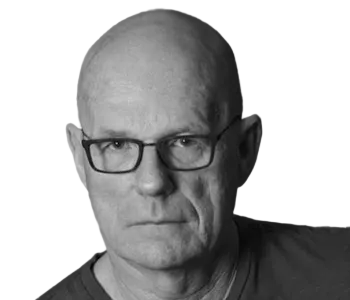
David Livingstone Smith
David Livingstone Smith is professor of philosophy at the University of New England, in Maine. He is the author of ten books, including Less Than Human: Why We Demean, Enslave, and Exterminate Others, which won the 2012 Anisfield-Wolf award for non-fiction. Smith’s work is widely cited in the national and international media, and he often gives presentations on his work to both academic and non-academic audiences, both in the United States and abroad. He was a guest at the 2012 G20 economic summit, where he spoke about dehumanization and mass violence.
Pull this thread
Dehumanization casts people not simply as vermin but as human vermin, uncanny monsters.
Know something the rest of us don't?
Most threads on Rorotoko begin with our invitation. Any thread can begin with a proposal: you write it with the same prompts every thread answers, and we review it.
Propose a thread →