
David Livingstone Smith
Making Monsters
In 2006, I was researching wartime propaganda and was struck by the extent to which enemies are represented as less-than-human creatures. Turning to the relevant research literature, I discovered that virtually all of it was in social psychology. The existing psychological accounts seemed unsatisfactory to me, so I decided to undertake an ambitious research project of clarifying what dehumanization is, reconsidering its psychological dynamics, and tracing the history of the concept from ancient times to the present.
This resulted in my 2011 book Less Than Human, and I have been working on this subject ever since. Of course, my views changed over time, as my research progressed between then and now. Making Monsters is the most comprehensive statement of my current position (see also its predecessor On Inhumanity: Dehumanization and How to Resist It, published by Oxford University Press in 2020).
Making Monsters offers an analysis of the forces, both psychological and social, that contribute to acts of mass atrocity. On the psychological side, it draws on the rich empirical literature on “psychological essentialism”—the tendency to attribute unobservable properties or “essences” to living things that define the kinds of entities that they are.
Essentialism is crucial for explaining how dehumanization works, because when people dehumanize others, they grant that these others have a human appearance, but deny that they possess a human essence.
To make sense of dehumanization, one must also consider hierarchical thinking—the idea that there are “higher” and “lower” kinds of being. Making Monsters describes and criticizes work by historians of ideas, and argues that the idea of a Great Chain of Being is more than an historical artefact, and that it is firmly anchored in our moral psychology.
Neither essentialism nor hierarchical thinking comport with a scientific picture of the world, but they are immensely powerful cognitive biases that can have devastating social consequences.
Digging into the history of dehumanization, it becomes obvious that ideas about dehumanization are bound up with ideas about race. The process of racialization—of coming to regard a group of people as essentially different from and inherently inferior to “us”—is often a precursor to those people’s dehumanization. Making Monsters devotes a lot of attention to the notion of race.
Drawing on history, literature, psychology, and genetics, it explains what it is about our psychology and its ideological background that accounts for the persistence of beliefs about race, even though biological science has shown them to be vacuous. Making sense of what goes on when we dehumanize others requires a theory of what it is to classify others as human. We need to understand exactly what is being denied when people deny others’ humanness. It turns out that “human” is not a biological category. It is not reducible to Homo sapiens or any other bio-taxonomic group. Instead, it is a political category.
To regard someone (or more often, some group of people) as human is to regard them as belonging by their very nature to “our kind,” and to divest them of humanness is to conceive of them as categorically and essentially other. Dehumanization is thus an act of radical disidentification. Making Monsters also draws on many other resources including work on the psychology of the uncanny, anthropological insights into the transgression of “natural” categories, and the aesthetics of horror fiction. Because dehumanization has a strong ideological component, the book also presents a novel theory of ideology that is modelled on the Darwinian theory of natural selection.
Some scholars deny that dehumanization really exists. They hold that although it might seem that some people regard others as less than human, this is not actually the case. These skeptics claim that ostensibly dehumanizing language is merely a way of devaluing, degrading, or humiliating others. Making Monsters points out the flaws in these arguments, and shows that however bizarre dehumanizing beliefs might seem, they are all too real.
Editor: Judi Pajo

Making Monsters
David Livingstone Smith Making Monsters: The Uncanny Power of Dehumanization Harvard University Press 352 pages, 5 1/2 x 8 1/4 inches ISBN 9780674545564
Available here →January 11, 2023
20230111-smith-david-on-book-making-monsters-uncanny-power-dehumanization-2-1
The wide angle
The rest of this thread
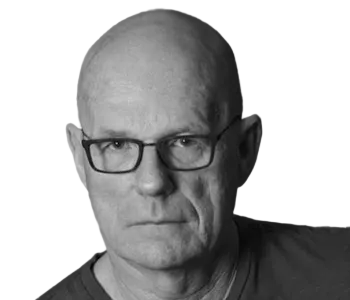
David Livingstone Smith
David Livingstone Smith is professor of philosophy at the University of New England, in Maine. He is the author of ten books, including Less Than Human: Why We Demean, Enslave, and Exterminate Others, which won the 2012 Anisfield-Wolf award for non-fiction. Smith’s work is widely cited in the national and international media, and he often gives presentations on his work to both academic and non-academic audiences, both in the United States and abroad. He was a guest at the 2012 G20 economic summit, where he spoke about dehumanization and mass violence.
Pull this thread
Dehumanization works because its victims are seen as human vermin, uncanny fusions of fellow human and subhuman creature.
Know something the rest of us don't?
Most threads on Rorotoko begin with our invitation. Any thread can begin with a proposal: you write it with the same prompts every thread answers, and we review it.
Propose a thread →