
Mark Osteen
Fake It
Fake It investigates a set of fictional literary and art forgeries and hoaxes alongside their real-life inspirations that range from the 1660s to the twenty-first century. In the prologue, I present fifteen theses that distill the book’s conclusions and are designed to inspire other scholars to review their assumptions, refine their techniques, and reconsider their objections to the creative activities and artefacts that we call forgeries.
The book demonstrates how forgeries foster fresh authorial identities for writers seeking to break from previous practices or trying to get published (thesis 2). It shows how any forgery or hoax is only as good as its authenticating story, and that forgeries are the seeds from which other fictions grow (thesis 3). It describes how forgeries and impostures involve a conflict between erasure and exposure (thesis 4), suggesting that forgers and hoaxers want to be unmasked, so that the world can appreciate their craft.
Fake It shows in detail that forgeries are deeply intertextual, scholarly, and frequently original (thesis 9). Ultimately, I propose that forgeries challenge the norms we use to classify art works and creators: that they are beyond category.
To participate in the playful spirit that forgeries promote (thesis 11), each chapter borrows its form from the texts under discussion. For example, Arthur Phillips’s 2011 novel The Tragedy of Arthur begins with an “introduction” to the newly “discovered” eponymous Shakespeare play. The introduction is actually a bildungsroman about a fictional Arthur Phillips and his forger father, also named Arthur Phillips, in which young Arthur argues that the play is a fake. The play follows. Which do we read first, the play or the introduction?
To solve this problem (and to mirror the novel’s twins motif), I divide the page into columns, with the left side devoted to the introduction and the right side focusing on the play. In short, I try in this book to offer an erudite, yet witty and imaginative approach to literary and art criticism that imitates the playful, unorthodox, and uniquely creative works that I discuss.
Beginning with the eighteenth-century teenaged poet and forger Thomas Chatterton and ending with the contemporary novelist Siri Hustvedt, Fake It demonstrates that a forgery is not only a crime, a sin, and a con game; it may also be a prank, a paradox, a provocation, a performance, a self-portrait, a weapon of revenge, a cultural critique, an imposture, an erasure, and a resurrection—or many of these things at once. But it is first and foremost a story. Fake It reads, relates, and analyzes these stories of falsehoods to find within them kernels of truth and authenticity.
Editor: Judi Pajo

Fake It
Mark Osteen Fake It: Fictions of Forgery University of Virginia Press 370 pages, 5 3/4 x 8 3/4 inches ISBN 9780813946276
Available here →February 8, 2023
20230208-osteen-mark-on-book-fake-it-fictions-forgery-1-1-1
In a nutshell
The rest of this thread
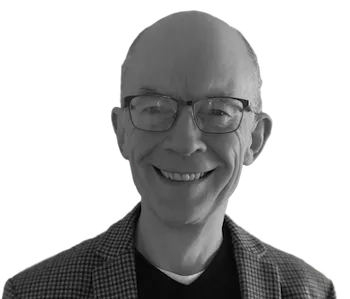
Mark Osteen
A professor of English and founder of the Film Studies Program at Loyola University Maryland, Mark Osteen is the author or editor of a dozen books, including American Magic and Dread: Don DeLillo’s Dialogue with Culture (2000), One of Us: A Family’s Life with Autism (2010), The Beatles through a Glass Onion: Reconsidering the White Album (2019), and more than fifty articles and book chapters on literature, film, music, and disability. He is the editor of the Library of America’s edition of Don DeLillo’s works. Osteen has also long been a working jazz saxophonist and vocalist.
Pull this thread
Forgery is a legitimate artistic practice, not merely a crime.
Know something the rest of us don't?
Most threads on Rorotoko begin with our invitation. Any thread can begin with a proposal: you write it with the same prompts every thread answers, and we review it.
Propose a thread →