
Sara Blaylock
Parallel Public
Parallel Public introduces material that is new to German art history, particularly in relation to an idea of artistic autonomy or independent thought in the oppressive context of East Germany. My analyses are informed by my commitments to feminist art histories, as well. This means not only that I bear in mind who I am writing about, but also about how their work advances equality and builds community and horizontalizes traditional power dynamics. For example, I dedicate a large section to photographs Gundula Schulze Eldowy took of Tamerlan, a woman she met in a park one morning in East Berlin. Over the course of a several year friendship Schulze Eldowy recorded Tamerlan as she faced a series of amputations and her move from independent living to a nursing home. Schulze Eldowy’s series records the experience of aging with a degree of empathy amplified by the collaborative nature of her photographic practice. Historically, these images are important because the East German government’s youthful and ableist priorities did little to dignify the experiences of people who could no longer––or never could––conform to a utopian ideal. I mention the example of Schulze Eldowy’s images of Tamerlan because it reveals both a grounding motivation in this book as well as an overall purpose that drives my scholarship, in general. I am interested in how art can advance equality and believe strongly that a record of the marginalized contributes to a more inclusive view of the world. In this sense, Schulze Eldowy’s photographs function both for the 1980s East Germany and for our time, when of course prejudice against the aging or differently abled body persists. I am also really gripped by the relationship building aspects of an artistic practice, specifically the ways that art that has an element of collaboration either at the fore or as a latent quality acts as a binder between people. In short, exploring art as a kind of encounter between very specific parties interests me profoundly. I could really wax rhapsodic about a number of other examples of the kind of relationship building through creative practice from the book. In the interest of space, I draw reader’s attention to the chapters on Gino Hahnemann (Chapter 4) as well as on the Women Artists Group Exterra XX (Chapter 6). It bears mentioning that the founding organizer of this group, Gabriele Stötzer, turned to creative work after a year-long imprisonment for political activity in the late 1970s. She went into prison an activist and came out an artist, motivated by the world building potential of working with a local community.
The discussion of larger motivations for the project helps me to answer another part of this question, about how my path led me to this research topic. The book originated as my doctoral dissertation, which I defended in spring 2017. From the very first interviews I had with artists and their contemporaries when I first began the study about ten years ago I very quickly recognized the desire people from the former East Germany had to see a more complex historical accounting of their creative lives. Having frequented some really interesting non-commercial art spaces in the Bay Area of the early to mid 2000s, I also found familiar the ways that the GDR’s experimental artists used spontaneity, including their innovative use of materials and space. Also inspiring to me were the ways that the experimental scene in East Germany was by definition non-commercial. Of course, this was a practical reality. In fact, the scene effectively ended when the two Germanys reunified in 1990 and the GDR’s artists began to experience the commercial realities of the Western art world. Nevertheless, I think there are some important correlations between how artists defined their methods of practice (improvisational, locally responsive) and the ways that artists I knew in the early 2000s were working to create a creative life for themselves and their communities. The comparison wears thin when we think about the stark differences between the economic realities of the Cold War East German artist and those of an artist in San Francisco or Oakland in the year 2004. Specifically, life was inexpensive in the GDR, and many artists actually took advantage of generous cultural policies that supported the arts, while life has only gotten more expensive for the artist who wishes to produce a creative community in and for itself in a large American city.
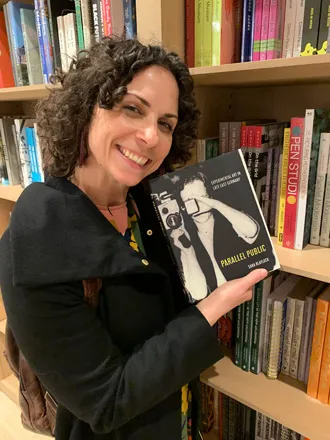
Picture of the author holding her book at the MoMA bookshop in New York City. Photo by Ace Lehner, 2023
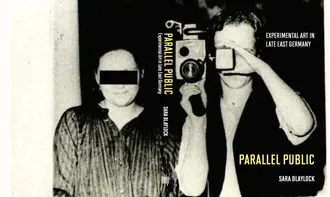
Front and back cover of Parallel Public: Experimental Art in Late East Germany. Photo by Ace Lehner, 2023.
Editor: Judi Pajo

Parallel Public
Sara Blaylock Parallel Public: Experimental Art in Late East Germany MIT Press 328 pages, 7 x 9 inches ISBN 9780262046633
Available here →March 15, 2023
20230315-blaylock-sara-on-book-parallel-public-experimental-art-late-east-2-1
The wide angle
The rest of this thread
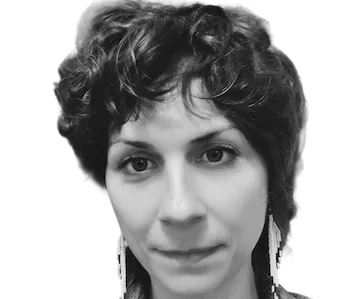
Sara Blaylock
Currently Associate Professor of Art History at the University of Minnesota Duluth, Sara Blaylock is an expert on the experimental art, film, and visual culture of the German Democratic Republic during the 1980s. Broader interests include official cultural policy in state socialism, documentary film from the GDR, as well as the intersections of visuality, gender, and class in 20th and 21st century Europe and the United States. Her first book, Parallel Public: Experimental Art in Late East Germany, appeared with the MIT Press in March 2022, and she has published widely in forums including Third Text, Cinema Journal, and The Oxford Handbook of Communist Visual Cultures. Her website is www.sarablaylock.com.
Pull this thread
Late-GDR experimental artists worked through state art schools and official venues, and the Stasi's outsized presence was ineffective.
Know something the rest of us don't?
Most threads on Rorotoko begin with our invitation. Any thread can begin with a proposal: you write it with the same prompts every thread answers, and we review it.
Propose a thread →