
Ho-fung Hung
City on the Edge
Hong Kong has been my hometown, where I grew up before leaving for the United States. My area of research has been the political economy of global capitalism, Chinese development, protest, and politics in China. I have been trained in the social scientific tradition that emphasizes how long-term, large-scale historical structures shape local events. I have been observing the political and economic development of Hong Kong closely and occasionally commenting on them in the media. But I have been reluctant to write about Hong Kong academically. It is a challenging task, as a social scientific analysis of Hong Kong–and any place–requires the analyst to maintain critical distance from the object. Hong Kong felt too close to my heart.
But with the protest and crackdown unfolding in 2019/20, I decided to take on the task to write about Hong Kong by employing the materials I have accumulated and the macro-historical perspective I have been trained in. I also flew back to Hong Kong in the middle of the 2019 protest to conduct the last round of library research for the book. Such a book is important, as dramatic events like protests often drive scholarly and popular attention to Hong Kong, and not many writings about the deep and long-term roots of today’s turmoil are available. I feel I have the responsibility to write this book to fill the gap.
The book diagnoses the many structural and historical conditions that both restrained and enabled the aspirations, demands, and actions of protesters, opposition parties, and the government in Hong Kong. It also detailes the politics and interactions among many grassroots and elite actors that translate the structural conditions of Hong Kong into political events with long-lasting impacts. Despite my intimate relation with the city, I deliver a cool-headed, clear-eyed, and engaging analysis of Hong Kong.
Editor: Judi Pajo

City on the Edge
Ho-fung Hung City on the Edge: Hong Kong under Chinese Rule Cambridge University Press 316 pages, 5 ½ x 8 ½ inches ISBN 9781108840330
Available here →April 5, 2023
20230405-hung-ho-fung-on-book-city-on-edge-hong-kong-under-chinese-rule-2-1
The wide angle
The rest of this thread
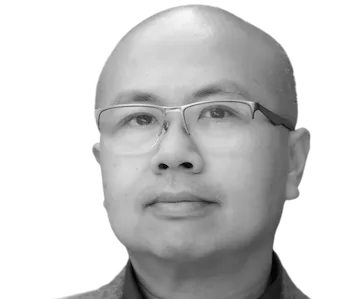
Ho-fung Hung
Ho-fung Hung is the Henry M. and Elizabeth P. Wiesenfeld Professor in Political Economy in the Department of Sociology and the Nitze School of Advanced International Studies at the Johns Hopkins University. He is the author of Protest with Chinese Characteristics (Columbia 2011), The China Boom: Why China Will not Rule the World (Columbia 2015), City on the Edge: Hong Kong under Chinese Rule (Cambridge 2022), and Clash of Empires: From “Chimerica” to the “New Cold War” (Cambridge 2022). His analyses and publications have been cited and featured in major media outlets around the world and translated into at least 10 different languages.
Pull this thread
Beijing needs Hong Kong as a financial gateway, which requires visible autonomy, and needs political control, which destroys it.
Know something the rest of us don't?
Most threads on Rorotoko begin with our invitation. Any thread can begin with a proposal: you write it with the same prompts every thread answers, and we review it.
Propose a thread →