
David L. Sloss
Tyrants on Twitter
What is this book all about? Tyrants on Twitter makes three main points. The first point is that we’ve been experiencing a period globally for about the last 15 years of democratic decay and creeping authoritarianism. This means that the number of democracies is declining, while the number of authoritarian states is increasing. It also means that the quality of democracy in existing democratic states is deteriorating, whereas autocrats are exercising greater control over their populations than they did in the past. This is not a novel point; a lot of other people have made the point, but that is my starting point for the analysis in this book.
The second big point of the book—and this is more of a novel point—is that Chinese and Russian information warfare is contributing to both democratic decay and creeping authoritarianism. I do a really in-depth dive looking separately at China and Russia. One former government official said that “Russia is a hurricane and China is climate change.” That phrase nicely captures the differences between them. Russian information warfare is primarily negative and destructive; Russia is trying to undermine existing democracies.
Chinese information warfare, in contrast, is aimed at bringing about a gradual change in the liberal international order to make that system align better with its illiberal values. The key similarity is that both Russia and China are accelerating the processes of democratic decay and creeping authoritarianism. Moreover, they are using information technology, generally, and social media, in particular, to do that.
Then, third, the book presents a detailed proposal for transnational regulatory cooperation among liberal democracies.
If liberal democracies want to resist creeping authoritarianism and enhance democracy in existing democracies, we need better defenses against information warfare. This is something that liberal democracies need to work on cooperatively. It’s not a US problem, it’s not a French problem, it’s not an Australian problem – although it affects all of us. In order to respond effectively, we need a cooperative approach that involves what some legal scholars call “regulatory harmonization” among liberal democracies. So that’s the basic pitch of the book. That’s the nutshell version.
Editor: Judi Pajo

Tyrants on Twitter
David L. Sloss Tyrants on Twitter: Protecting Democracies from Information Warfare Stanford University Press 352 pages, 6 1/2 x 9 1/4 inches ISBN 9781503628441
Available here →August 2, 2023
20230802-sloss-david-on-book-tyrants-twitter-protecting-democracies-from-information-warfare-1-1-1
In a nutshell
The rest of this thread
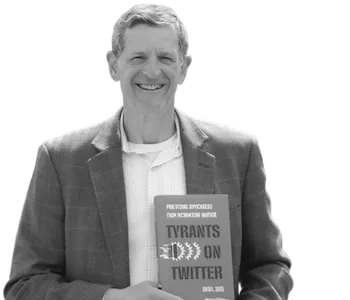
David L. Sloss
David L. Sloss is the John A. and Elizabeth H. Sutro Professor of Law at Santa Clara University. He has written two books and is the editor of three other books. He has published several dozen book chapters and law review articles. Three of his books have won prestigious awards. His scholarship is informed by extensive government experience. Before entering academia, he spent nine years in the federal government, where he worked on U.S.-Soviet arms control negotiations and nuclear proliferation issues.
Pull this thread
Liberal democracies should ban Chinese and Russian state agents from social media by treaty.
Know something the rest of us don't?
Most threads on Rorotoko begin with our invitation. Any thread can begin with a proposal: you write it with the same prompts every thread answers, and we review it.
Propose a thread →