
Jonathan P. Lamb
How the World Became a Book in Shakespeare's England
Human beings think, speak, and write in metaphors. Those metaphors change as cultures do; people use them to respond to and reshape the world. Indeed, neuroscientists and literary scholars alike have explored how we build the world with metaphors and other figurative language. The present era is undergoing a massive metaphorical transformation, as computer technology has introduced (one might say “installed”) a new vocabulary: even when it causes us to cringe, we sometimes speak of “rebooting” the cause for social justice, or “clicking” on a problem. These metaphors do not simply express human experience and identity; they compose them by framing and forming them in language.
Early modern England (1500-1700) had its own pervasive set of metaphors.
Although someone familiar with Shakespeare’s plays might assume the dominant metaphors came from the theater—“all the world’s a stage,” after all!—by far the most significant and widespread metaphor came from books and related text technologies: cover, page, headline. Bound, volume, spine. Folio, quarto, octavo. Book of nature, art of printing, a taste of a book. Set forth for all to see, read you like a book, a fool in folio.
Early modern England abounded in such “bookish” words and phrases, most of which were inherited from earlier traditions and media or imported from other cultures. Playwrights and poets used this lexicon to make new kinds of art. Pamphleteers appealed to books to stage political attacks. Preachers formulated theological arguments using metaphors of page and binding. Scientists claimed to leaf through the Book of Nature. Always rhetorically situated and rarely systematic, this lexicon did not merely offer a linguistic tool; it created a broad conceptual resource for writers and readers.
How the World Became a Book in Shakespeare’s England argues that books gave early modern writers the language to describe and reshape the world around them. At a scale and range far beyond what scholars have imagined, this language expressed and, in turn, gave form to religious, political, racial, scientific, and literary questions that remain relevant today.
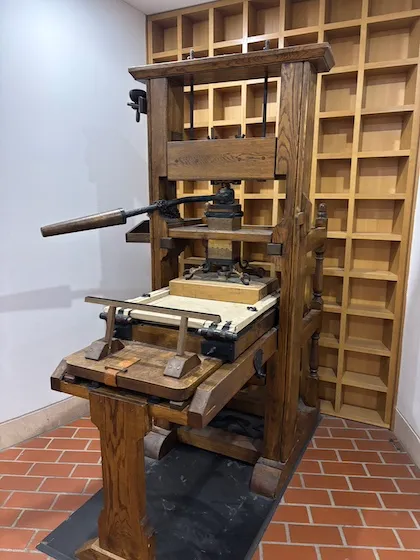
A printing press at the British Library
Curator: Bora Pajo
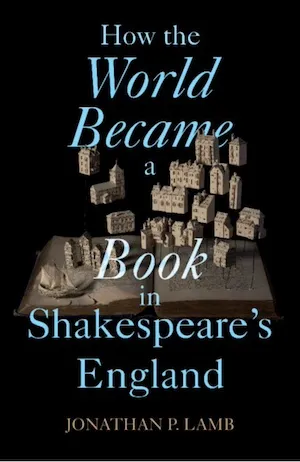
How the World Became a Book in Shakespeare's England
Jonathan P. Lamb How the World Became a Book in Shakespeare's England Cambridge University Press 336 pages, 6 x 9 inches ISBN 978-1009460415
Available here →September 22, 2025
20250922-lamb-jonathan-on-how-the-world-became-a-book-in-shakespeare-england-1-1
In a nutshell
The rest of this thread

Jonathan P. Lamb
Jonathan P. Lamb is Professor of English at the University of Kansas. He writes and teaches on Shakespeare, the history of the book, and early modern literature. He is author of many articles and two books (Shakespeare in the Marketplace of Words and How the World Became a Book in Shakespeare’s England), and he is currently working on a critical edition of Shakespeare’s comedy Love’s Labour’s Lost.
Pull this thread
Early modern England thought in metaphors drawn from books, not from the theatre.
Know something the rest of us don't?
Most threads on Rorotoko begin with our invitation. Any thread can begin with a proposal: you write it with the same prompts every thread answers, and we review it.
Propose a thread →