
Erin E. O'Connor
Fire Craft
The answer to is, in large part, constituted by a personal path - so much so that it constitutes the book's Prologue. I come from a family of makers and my upbringing was largely a series of apprenticeships. On my father's side, I learned all things pragmatic: sailing, fishing, skinning a fish, hunting, building a deer blind, shooting a rifle, and running a business. On my mother's side, I learned all things artmaking and moreover, the possibility of that coupled with intellectual pursuits. They were Methodist pastors, artists, gardeners - average folk in Ohio via Prussia. Among other skills, my grandfather was even a neon sign maker. They lived among paintings, art supplies, and weathered books in German script and ancient Greek.
And that brings me to the turning point of the Prologue. As I describe there, this life of making and material did not converge with my academic pursuits until 2003. Intent on earning a PhD in Sociology, I was enrolled in a graduate seminar called “The Sociology of Museums” at the New School for Social Research in New York City. When discussing semester projects, one student said, “Detroit artists.” After class, I approached him, explaining that my great-grandfather had been a Detroit artist.
At the beginning of the following class, he slid a postcard printed with three still-lifes of flowers across the table to me. I immediately recognized my great-grandfather's work, assuming the postcard was from the mid-twentieth century when he lived. But when I turned it over, I read: Fred Papsdorf, American Magic Realist, Opening Reception, Friday, December 5, 2003, 5-8 pm. Stunned would be an understatement of what I felt. He worked a 9-5 gig checking milk bottles in a factory and painting at home in the evenings against his wife's wishes. Seeing the contemporary life of his work spoke to the power of craft to build worlds.
It called on me to return to my passion for materiality and making. I commenced a comparative ethnography of craft the following semester, including pottery, weaving, and glassblowing. Fire Craft is testimony to what happened next. I also want to credit the place where I grew up: the shore of Lake Huron in northern Michigan. I woke up every day to her sea-sky horizon and all that both extended toward it and with which it was entwined: waves, ice, moonlight, sunset, fish, the boats receding perspectivally. If an elementally-thick horizon doesn't call you on a quest, I don't know what does. She’s perhaps the Ur-mother of Fire Craft. I’m a first-generation college student, but I think I've been a new materialist since birth, long before discovering Karan Barad’s work in 2016.
Curator: Bora Pajo
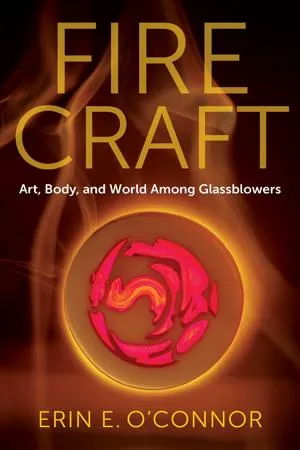
Fire Craft
Erin E. O'Connor Fire Craft: Art, Body, and World Among Glassblowers Columbia University Press 296 pages, 5 x 8 inches, ISBN 9780231218443
Available here →October 3, 2025
20251003-oconnor-erin-on-fire-craft-art-body-and-world-among-glassblowers-2
The wide angle
The rest of this thread
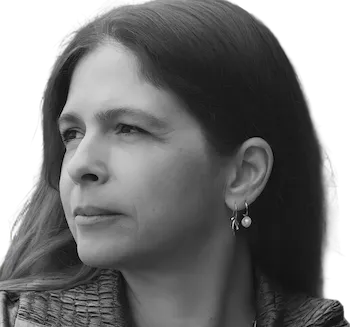
Erin E. O'Connor
Dr. Erin E. O’Connor is an Associate Professor of Sociology at Marymount Manhattan College in New York City and the author of Fire Craft: Art, Body, and World among Glassblowers (Columbia University Press, 2025). She is renowned within the international community for her ground-breaking studies of glassblowing. As a recipient of the 2023 Rakow Grant for Glass Research, Dr. O’Connor launched her second book project, The Middle Mineral & the Mine: an Ethnogeology of Studio Glass. This research investigates the reciprocity of human creativity and geology in the material life of studio glass. Her research specializes in glass, the arts, culture, the body, knowledge, and the environment.
Pull this thread
Fire, heat and matter are participants in skill, which is never transmitted between humans alone.
Know something the rest of us don't?
Most threads on Rorotoko begin with our invitation. Any thread can begin with a proposal: you write it with the same prompts every thread answers, and we review it.
Propose a thread →