
David J. Helfand
The Universal Timekeepers
The United Nations has declared 2025 the Year of Quantum Science and Technology to mark the 100th anniversary of our foundational model of the atomic world, quantum mechanics. This model is the most precise predictive description we have in all of science. Its theoretical calculations are verified by experiments to 9 or 10 decimal places. This level of understanding makes the modern world – from cell phones and cameras to solar panels and electric cars -- possible. But it also provides a unique set of tools with which to explore space and time.
I have a passion for sharing the enriched view of the world that science provides.
Thus, most of my five decades of teaching have been spent offering science courses designed for non-science majors. From an initial meander from my astrophysical roots into paleoclimatology – the reconstruction of past climates from the atomic record – my interest spread to the many other applications of atomic physics, chemistry, biology, and geology that reveal the past through techniques that clever people have devised over the last half century. Thus, this book.
By measuring the pattern of light from a primordial galaxy 13 billion light-years away, we can see that the Carbon atoms there are identical to the Carbon atoms in my fingernail.
By determining the ratio of the different flavors of Carbon atoms in ancient bones, we can chart the spread of maize agriculture from the highlands of Mexico to New England 5000 years later. From the same sort of ratio in the neuronal DNA in a human brain, we can establish that new nerve cells are being formed in our memory center throughout our lives. Simply counting atoms provides all these insights and many more.
Curator: Rachel Althof
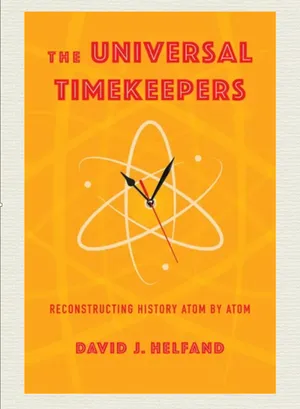
The Universal Timekeepers
David J. Helfand The Universal Timekeepers: Reconstructing History Atom by Atom Columbia University Press 288 pages, 6 x 9 inches, ISBN 9780231219037
Available here →October 13, 2025
20251013-david-helfand-universal-timekeepers-1
The wide angle
The rest of this thread
William Thompson
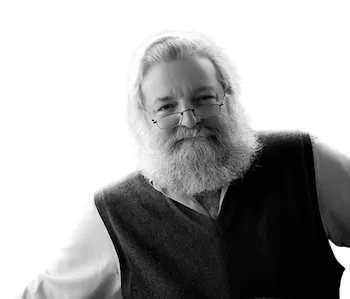
David J. Helfand
David Helfand, a Columbia University faculty member for 48 years, served for two decades as Chair of the Astronomy Department. While he has mentored 22 PhD students, most of his pedagogical efforts have been aimed at teaching science to non-science majors including creating the course Frontiers of Science, now required for all first-year students. In 2005, he joined an effort to create Canada's first independent, non-profit university, Quest University, where he served as President & Vice-Chancellor from 2008-2015. He completed a four-year term as President of the American Astronomical Society and is currently Chair of the American Institute of Physics.
Pull this thread
Atoms decay at unalterable rates and carry no memory, so they are better historians than any human record.
Know something the rest of us don't?
Most threads on Rorotoko begin with our invitation. Any thread can begin with a proposal: you write it with the same prompts every thread answers, and we review it.
Propose a thread →