
Heather Hendershot
Nashville
I write about the politics of media –right-wing and conservative media, mainstream network television news, and journalism history. My era is the 60s and 70s, and the Nashville book is exactly at this focal point. My earlier books do a deep dive into large amounts of content, such as Cold War right-wing broadcasting, or William F. Buckley's TV show Firing Line which ran from 1966 to 1999, totaling over fifteen-hundred episodes. My book When the News Broke is about network coverage of the infamous 1968 Democratic National Convention, which meant looking at hundreds of hours of TV. In the Nashville book, by contrast, I was able to hone in on a single film and really dive into it, performing a microanalysis. So I have the big political picture as a frame, but I also have the little picture, the film itself, to narrow in on.
The book is in three parts. The first sets up the context of 70s filmmaking, an era that many scholars consider a golden age of American cinema. I call it a cinema of losers. The protagonists of the New Hollywood are really sad guys – almost always guys—who are dealing with anxiety and despair in a really dark register that feels far from the Hollywood studio era of filmmaking, where moral absolutism was more common. The second chapter of the book is about Robert Altman's history and contextualizes where Nashville falls in that history. Understanding what he did before helps us understand the film, to some extent. His next picture after Nashville is Three Women, a really strong film about women and their interpersonal relationships. Nashville stands out within Altman's work, and also within the context of 70s cinema, for really dealing with women, their relationships, and their issues.
One thing I emphasize is how women contend with heterosexual relationships, how they are poorly treated, and how they have agency within these difficult scenarios or don't. Also, I discuss the power relationships between men and women, and between women and women. There is a sort of a pecking order on display in the film. For example, you've got a big country Western star, Barbara Jean (Ronee Blakely) and you've got a slightly lesser star Connie White (Karen Black), and they are competitors. You can see their raw dynamics, even though they never appear together in the same scene.
The third chapter centers on Nashville itself. And I take it day by day, over the course of the film’s five days.
Should people read the book before watching the film or vice versa?
This book could be read before or after screening the film for the first time, and there are pros and cons of both approaches. It's a difficult film to follow the first time. It runs 2 hours and 40 minutes, with 24 characters, some of them underdeveloped. It doesn't have a typical strong, narrative plotline of, like ‘here is a hero trying to overcome or achieve goals’, or ‘this couple falls in love, and they break up, and then they get back together’. There are very standard formulas out there. Nashville is not that. Some strong, smart films of the New Hollywood era, like, Dog Day Afternoon or Serpico or Scarecrow fit into genre classifications such as heist movie, crime drama, or road movie, and this helps us make sense of them. But Nashville, doesn't clearly fit into a genre, which is one thing that makes it a difficult film. So some people would benefit from reading the book first, because they would get the context and tools to understand what's going on.
On the other hand, I'm certain Altman would prefer someone watch the movie first. Part of the point of the film is to throw you in the middle of all of it, and to just ask you to rise to the challenge. Just hang out with this film, and try to figure it out. And if you don't know at the end what to think of it, Altman would say, ‘well, just go watch it again’. He didn't think that most of his films could be understood by watching them once. I'm sure there are other directors who feel that way, but they don't always say that, because it's not popular. Producers don't want to hear ‘people have to see my movie two or three times to really get it’. Most people don't go back to the theater over and over again. Especially back when theatrical viewing was the dominant norm. In 1975 it wasn't about home viewing. Altman was of the mindset that people go back to art museums, and they look at the same pieces of art over and over again. People listen to record albums over and over again. Why not watch a film more than once to figure it out? So, in a perfect world, newcomers to this film would watch it 3 times in a row. Most people won’t do that.
One alternative approach is ‘watch the film, feel a bit overwhelmed, be unsure of what it means, and just think about how it makes you feel’. It has a very dramatic, difficult ending that leaves people a little bit in shock. I have been in audiences watching it where half the audience has never seen it before, and you hear people gasp at the end.I'm very keen in my daily life – not my writing life – to not give away spoilers, but obviously, if you read the book, you'll know exactly what is going to happen in the film. I think seeing it without knowing that will make for a more emotionally and intellectually moving, challenging, and complex experience.

Nixon sitting at the piano at the Grand Ole Opry in 1974.Getty Images

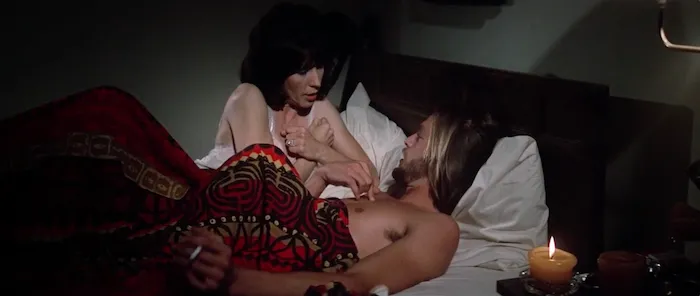

Curator: Bora Pajo
.webp)
Nashville
Heather Hendershot Nashville Bloomsbury, British Film Institute, 104 pages, 5 x 7 inches, ISBN 978-1839028946
Available here →November 21, 2025
20251121-heather-hendershot-on-her-nashville-2
The wide angle
The rest of this thread
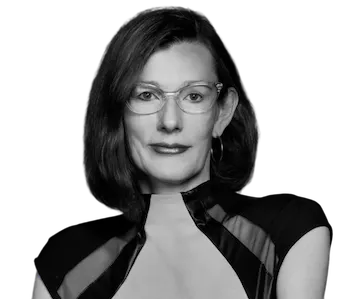
Heather Hendershot
Heather Hendershot is the Cardiss Collins Professor of Communication Studies and Journalism at Northwestern University. She is the editor of Nickelodeon Nation: The History, Politics, and Economics of America’s Only TV Channel for Kids and the author of: Saturday Morning Censors: Television Regulation before the V-Chip; Shaking the World for Jesus: Media and Conservative Evangelical Culture; What’s Fair on the Air? Cold War Right Wing Broadcasting and the Public Interest; Open to Debate: How William F. Buckley Put Liberal America on the Firing Line; and When the News Broke: Chicago 1968 and the Polarizing of America. She also researches Hollywood cinema of the 1950s–1970s, and has published research on Roger Corman, Dog Day Afternoon, and the Creature from the Black Lagoon trilogy.
Pull this thread
Nashville is a political text about the wreckage of 1968, Vietnam and Watergate, and unreadable without that frame.
Know something the rest of us don't?
Most threads on Rorotoko begin with our invitation. Any thread can begin with a proposal: you write it with the same prompts every thread answers, and we review it.
Propose a thread →