
Heather Hendershot
Nashville
The cover of the book is truly beautiful. I was very happy with the press, and I had some creative input on the work that their wonderful designer did. I emphasized that I wanted all women on the cover, and I wanted it to include Sueleen Gay, the character on the right of the cover, who is poorly treated in the film. It's easy not to notice her at the end of the picture, because there’s a big panoramic shot, and she's just a little figure off on the side, but she's been amped up for the cover, which is very striking. It might not make sense, though, if you haven't seen the film.
For people looking at this book in a bookstore, flipping through, they will see the images first. It's richly illustrated with a lot of color and a number of black-and-whites. I asked two people for their reactions, one who knew the film pretty well, and one who'd never seen the film.
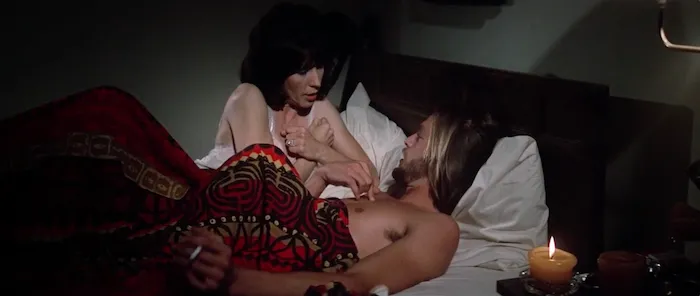
The person who already knew the movie but hadn't seen it in a while was excited to read the book and rewatch the movie, and the first thing he noticed flipping through the pages was that I had provided a chart of all the characters. A chart can be a boring thing to a lot of readers, but my book was written for cinephiles and a broader audience, and the chart is not dry. It gives my perspective on the characters and raises a few questions. For example, one character, L.A. Joan, played by the late, great, Shelley Duvall, floats through the movie in changing outfits. She picks up a lot of men, she doesn't have that many lines, she's a kind of mysterious character in some ways, and I ask in the chart, ‘is she wildly confident or wildly insecure?’ Because you can't tell! And that's a helpful prompt to think about.
The other person, who was new to the film, was really drawn to two images. One was Nixon sitting at the piano at the Grand Ole Opry in 1974 – the same stage where they shot a big scene in the film a few months later. This is the grand opening of the brand new Grand Ole Opry building, where country western singers perform all the time down in Nashville. Nixon is sitting at the piano playing, and he looks so phony – like a terrible piano player. He looks insincere while trying to look sincere because he's courting the country western market. Now, there is a character in the film who is modeled after Nixon operatives, and at one point in the film he refers to ‘country crapola,’ denigrating the market of voters that he's there to woo. He obviously doesn't respect them, and that is what Nixon was doing at the time, wooing the country western crowd by going to the Opry. So, this younger person who did not know about the film and was not deeply versed in 70s cinema, was like ‘wow, that photo of Nixon is striking and hilarious!’. And then he immediately flipped to a second photo of Nixon, a staged shot where Nixon is trying to show that he is a cool, relaxed person who just happens to be taking a walk on the beach.
Obviously, he’s trying to craft his image to convey that he is not the paranoid and vindictive person that he actually was. Rather, he is a happy, relaxed fellow who wears a windbreaker to take a stroll. This photo op totally fails because he is wearing dress shoes, and he is really awkward. He didn't wear his usual tie, but he's almost an animatronic robot down there walking in his wingtips. So the new reader honed right in on those two images and was intrigued. He got the point: ‘The book is political. There is humor in the book, because these pictures are funny, but there is something serious going on’, because we know ultimately what happened with Nixon was very serious.
There is a coda following the third chapter that I hope will resonate strongly with readers. It is about the political moment we are in, and how we need to keep it together. We need to keep going and find hope, rather than falling into despair or apathy. That said, we can’t be Pollyanna-ish and overly optimistic about how we are going to fix our authoritarianism problem and dig ourselves out of the very dark moment we are living in. Of course, a movie from 1975 is not going to fix that, but that doesn’t mean it’s not relevant. Altman was concerned about interpersonal relationships, apathy, and empathy. Throughout many of his films, he confronts the fact that people often treat each other poorly. But he hasn't given up hope. At one point in an interview, he describes himself as someone in the desert, but he has an umbrella. You are in the desert. It's very unlikely that it's going to rain. But having the umbrella shows that you still have some hope. You are not an optimist, but you have not given up. Even though within the film characters treat each other poorly, they have certain moments where they kind of get it right and have brief moments of connection.
If 10% of our lives include brief connections and 90% don't go so well, we have to really lean into the value of that 10% where we do make the connection. Nashville is in its own way a radical call for empathy – something we need now more than ever.

Nixon sitting at the piano at the Grand Ole Opry in 1974.Getty Images


Curator: Bora Pajo
.webp)
Nashville
Heather Hendershot Nashville Bloomsbury, British Film Institute, 104 pages, 5 x 7 inches, ISBN 978-1839028946
Available here →November 21, 2025
20251121-heather-hendershot-on-her-nashville-3
A close-up
The rest of this thread
Heather Hendershot
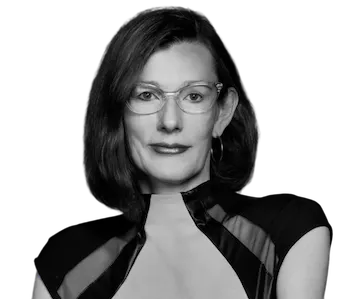
Heather Hendershot is the Cardiss Collins Professor of Communication Studies and Journalism at Northwestern University. She is the editor of Nickelodeon Nation: The History, Politics, and Economics of America’s Only TV Channel for Kids and the author of: Saturday Morning Censors: Television Regulation before the V-Chip; Shaking the World for Jesus: Media and Conservative Evangelical Culture; What’s Fair on the Air? Cold War Right Wing Broadcasting and the Public Interest; Open to Debate: How William F. Buckley Put Liberal America on the Firing Line; and When the News Broke: Chicago 1968 and the Polarizing of America. She also researches Hollywood cinema of the 1950s–1970s, and has published research on Roger Corman, Dog Day Afternoon, and the Creature from the Black Lagoon trilogy.
Pull this thread
Nashville is a political text about the wreckage of 1968, Vietnam and Watergate, and unreadable without that frame.
Know something the rest of us don't?
Most threads on Rorotoko begin with our invitation. Any thread can begin with a proposal: you write it with the same prompts every thread answers, and we review it.
Propose a thread →