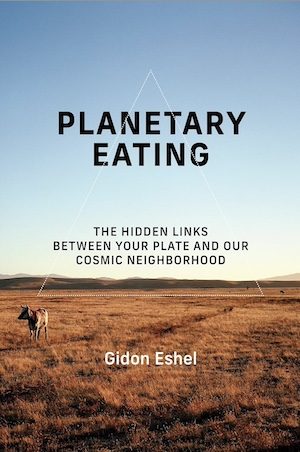
The widely divergent views on agriculture, and the wildly disparate organizations whose focus is food systems, share one, and only one, foundational assessment: modern agriculture is broken. What to do about it is where these views and organizations rapidly diverge. Yet all views on the food–agriculture–environment–health nexus can be usefully characterized by their location along a continuum spanned between two apparently diametrically opposite worldviews. The first is the further intensify worldview, advocating yield maximization (i.e., land need minimization) in vast industrial megafarms. Opposite this camp is the reduce impact one, which promotes small, diverse family farms with lower environmental and societal costs, accepting possibly lower yields as well worth the environmental betterment. Both views make sense because both are motivated by well-observed facts: ever-rising population and food demands on the one hand, and destructive environmental and societal impacts of today’s food systems on the other. Yet in head-to-head competitions, the reduce impact paradigm often loses on account of insufficient food delivery, and its proponents are often characterized as impractical, unrealistic dreamers. Crowd wisdom, meanwhile, is more nuanced, recognizing the strength of the production volume argument, but also of the need for mitigating industrial agriculture’s most harmful customs and thus the potential contributions either end member makes. There are deep reasons for this disparity between the objective winner status of the further intensify view and the impractically idealistic moniker of the reduce impact paradigm, and they too require deep appreciation of the physical, biological, and chemical processes that govern agriculture, and their deep planetary roots. This body of knowledge is fundamental to the Earth Sciences writ large (combining theory and observations from geology, geophysics, geochemistry, planetary science, cosmo chemistry, astrophysics, hydrology, meteorology, geomorphology, among other traditional disciplines), and has been ever more coherently unified in the modern Earth Sciences, yet it sadly is almost never brought to bear on the problem of the environmental consequences of food and agriculture, and is not ever united with nutritional sciences, which govern the other key element of agriculture, the quality of the diets its outputs facilitate. Unifying all of the above bodies of knowledge into a single coherent and internally consistent whole is the unique contribution of Planetary Eating.Planetary Eating is a culmination of a long journey. It started with childhood on a kibutz, an agricultural commune in Israel, in whose dairy farm I worked throughout my middle- and high school years. More an identity than a mere job, the dairy farm work was my all-consuming passion, the pride and joy of my young self. Some years later, I returned to cattle, this time raising beef cattle in northern Israel. After completing my PhD in geophysics at Columbia some 15 years later, and after a few years of doing traditional geophysical research, my two passions—Earth, its processes, and its planetary integrity on the one hand, and agriculture, farming, and ranching on the other—started converging. With the benefit of earth observing satellites, which moved from novelty to commonplace during my early years as a scientist, the uniqueness of agriculture—the only human activity readily visible from space on the sun-facing half sphere—became all the clearer. At the same time, earth science leaders were becoming progressively more appreciative of the vital necessity of transdisciplinary thinking for truly understanding our planet and protecting it from our worst instincts. Consistently, while my efforts to combine agricultural science with geophysics were viewed as peculiar and awkward in the early 2000s, they are now thankfully viewed as almost standard. These shifting winds played a key role in midwifing Planetary Eating into existence.