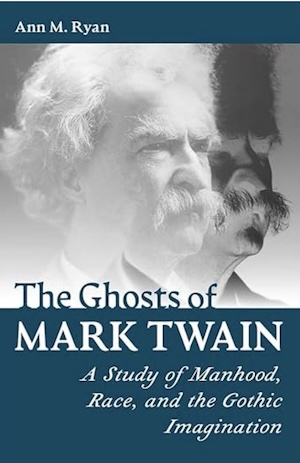
Many of us have been shocked by the brazen denials and revisions of racial and racist history that have been occurring all over the country. However, this whitewashing of American culture is nothing new. In fact, Toni Morrison suggests, in her seminal book on the intersections of race and metaphor in America, Playing in the Dark, that an “impenetrable whiteness” surfaces in American culture as “both antidote to and meditation on” a darkness that haunts its history. Twain’s fiction contemplates precisely these intersections between light and dark, horror and humor, historical trauma and the strategic denial of it. Nevertheless, Mark Twain’s persona has become a kind of cultural fetish; his suit, his hair, even the smoke from his cigar, all telegraph what Morrison calls a “blinding whiteness.” In effect, the white suit is a text that’s easier to read than the murkier world of Twain’s fiction; it’s a stagnant emblem of American virtue that has functionally marginalized Twain’s own efforts to mediate American darkness. Behind the façade of this cultural saint, “Mark Twain,” lies the artist Samuel L. Clemens, who struggled to confront the crimes of American history, which he inherits like family heirlooms.
As school boards, state legislators, and the current federal government, aggressively erase any history that threatens myths of American exceptionalism, Twain’s life and literature have been deployed in troubling ways. In 2020 Donald Trump proposed building what he called a “Garden of Heroes”—a national park containing 31 statues of the “greatest American Heroes.” As is true of all things Trump, that garden has grown to 244 with a 40-million-dollar price tag, funds taken out of the budget for the National Endowment for the Humanities. Mark Twain is one of the “heroes” who made the cut, chosen by people who most certainly cherish the Disney version of his fiction and his life.
Twain described himself as writing with a “pen warmed up in hell.” However, this passionate, acerbic artist has been effectively embalmed by American culture, turned into a cultural commodity. The Ghosts of Mark Twain is an attempt to revive the spirit of Twain and to honor his complexity by allowing the messy, conflicted, flawed human being to replace the “hero” and, once and for all, to bury the saint.