
Kim Chandler Vaccaro
Mura Dehn
So how is it that this white Jewish woman thought jazz was so important, when few others in the United States did? What’s really fascinating is that Mura Dehn had to flee the Russian Revolution. They lived in Odessa, which was a vibrant intellectual, artistic, progressive city at the time. She, her father and mother spoke several languages. They had to leave quickly so they got on a boat to Constantinople and made their way to Vienna. While her father took her brother on to London, where he had a job, Mura stayed with her mother in Vienna and became a notable classical dancer in the Isadora Duncan style. There she met her first husband, American Adolf Dehn, who ended up becoming a well-known lithographer.
The 2nd chapter describes how this young woman was influenced by her mother, who was very progressive, and the education that she insisted Mura had in the techniques of Delsarte and Dalcroze. Through these and the study of Commedia dell’arte she became infatuated with rhythm at a young age. Jazz had already infiltrated Europe, and it was everywhere, even in Russia. Her mother had taught her a cakewalk when she was twelve. At age 19 in Vienna she met, courted, then eventually married Dehn. They had no money whatsoever and lived on a dime. yet rambled about Europe. Mura and Adolf were part of the 1920’s Jazz Age, expatriate, avant-garde group that hung out in underground Paris night clubs. Their friends included painters, lithographers, writers, dancers, and artists such as e. e. Cummings and Leo Stein. Adolf introduced Mura to Josephine Baker; and the way she wrote about Baker was both insightful and imaginative.
Dehn’s first decades made her fearless and unflinching like few others. In her fifties she had the cojones to go to the southern states of the United States to talk to people about the origins of jazz. She was extraordinarily bold, a white woman walking around alone in the deeply segregated south. She wanted to investigate the roots of jazz, and experience what she learned from her work and interviews with jazz artists in New York. Langston Hughes gave her the name of a friend who was a reverend of the Christian African Methodist Church in Savannah, Georgia, so she traveled south and interviewed him. He put her in touch with a number of people as she was trying to figure out how jazz really happened and wrote about the cultures that intersected and produced new ways of moving.
The slave masters in North American continent were mostly of European ancestry and loved all things European including ballet. Ballet and dance were prominent in the courts of Europe during the sixteenth and seventeenth centuries. The most appropriate way of sitting and moving would have been taught by the dancing master. The torso was held long and straight. The hands moved; the hips did not. The shoulders did not. Women were corseted; men wore swords. Everyone was in a wig, so if you moved your head it would fall off. There was this very specific way of moving - which all courtiers learned as the most “appropriate movement”, a body attitude that also became prevalent in the US.
Long before others acknowledged it, Dehn learned that through a constant interchange of these European and African cultural attributes jazz was born. Through jazz Americans, and the world, learned to move polyrhythmically with poly-centers, which were African aesthetics. European folk dance kept the torso rigid, but poly centers allowed each body part to move independently. American body attitudes are very recognizable. Someone moving with a courtier’s stringency appears as if they just came from tea in London. When the jazz aesthetic entered into American bodies, heads could move to one beat, shoulders another, and hips another. And if we acknowledged that, how much better off would we be. African American, Indigenous American, Mexican American—it’s all in our bodies and our movement. Dehn knew jazz, and other Black social dances shaped the American body. We know and feel it, yet we’re still not admitting, America is part African.
Curator: Bora Pajo
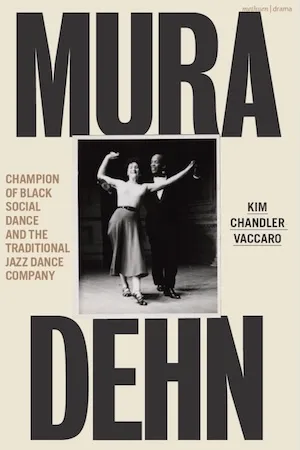
Mura Dehn
Vaccaro, Kim Chandler. Mura Dehn: Champion of Black Social Dance and the Traditional Jazz Dance Company. New York: Bloomsbury Academic, 2026. ISBN 978-1350428034
Available here →March 12, 2026
20260312-kim-chandler-vaccaro-mura-dehn
A close-up
The rest of this thread
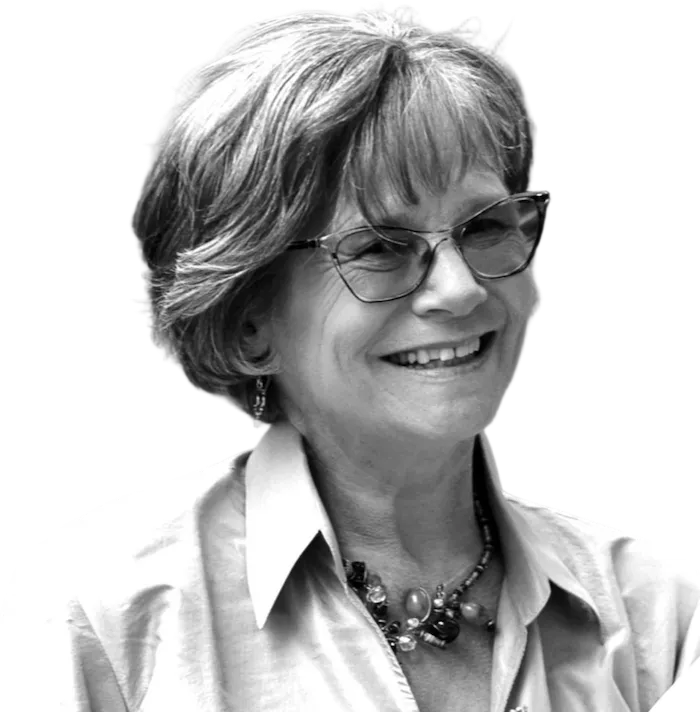
© Samantha Little, May 2025
Kim Chandler Vaccaro
Kim Chandler Vaccaro, Associate Professor of Dance, Emerita, Rider University also taught at the American Repertory Ballet’s Princeton Ballet School for over 30 years. She is co-author of Jazz Dance Today with Lorraine Person Kreigel, editor of Dance In My Life, and a contributing author to Jazz Dance: Roots and Branches. Her later research centered on the mindfulness of dance teaching leading to the development of a movement system and a book called CoMBo: Conditioning for Mind-body.
Pull this thread
Black social dance from jazz through hip-hop is one continuum, and it made the American body.
Know something the rest of us don't?
Most threads on Rorotoko begin with our invitation. Any thread can begin with a proposal: you write it with the same prompts every thread answers, and we review it.
Propose a thread →