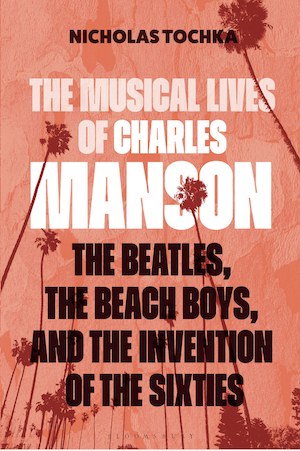
This is my fourth book, and represents the culmination of my interest in rock historiography, or the practice and criticism of writing histories about rock musicians. As a music fan and wannabe rock musician, I grew up consuming popular music biographies and documentaries that provided simple, even austere, narrative structures of redemption and romantic individualism. Yet as an academic historian (actually, an ethnomusicologist), I learned to approach the stories that people tell about the world as participating in larger projects to “invent” or “produce” or “construct” that world in some way.
The academic jargon word “poststructuralism” might be used to name this particular cluster of ideas pointing us toward thinking about the social construction of reality. While these ideas had their roots in modern philosophical movements stretching back to the early twentieth century, they emerged most fully in the late 1960s and early 1970s across a number of different literary, artistic, and academic movements.
Many of these ideas came to be mainstreamed, I suggest in the book, through decidedly non-academic genres, and in the service of explaining what many commentators in the 1960s claimed to be experiencing as some sort of major social rupture. The chapters in this book present and critique different modes of constructing reality that were present in both academic and popular media during this period and just after. But they also try on, experiment with, and discard these modes. The result is my case for what Hayden White, in his germinal book Metahistory (1973), called an ironic approach to writing music history.
Ongoing thread. More from Nicholas Tochka to follow.