
Nicholas Tochka
The Musical Lives of Charles Manson
This book is an experiment – an invitation to think about how different approaches to storytelling and narration shape the ways we think about the world. It takes the form of a musical biography of Charles Manson, perhaps one of the most notorious criminals in US history.
Everyone “knows” the story of the Manson Family: a California cult that practiced free love, hanged out with the Beach Boys, embarked on a failed musical career, and then killed at least seven people, including actress Sharon Tate, because secret messages in a Beatles album allegedly instructed them to do so. It’s a story that has been told and retold across a number of different genres and media. One of the primary goals of these tellings (and retellings) has been to discern the “truth” of the events that took place in August 1969. That’s not what this book does. Instead, I try to understand how the different genres that emerged or entered maturity in the late 1960s – including rock music criticism, true crime, gonzo journalism, science fiction, the postwar novel, and conspiracy theorizing – have contributed to the emergence of the post-truth order we are living in today.
I want readers to come to this book with an open mind. As an author, I’ve tried to use the generic conventions of the period to craft a narrative that makes you think about how and why rock music came to seem so politically and socially significant from the late 1960s onward. How did we come to assign such importance to rock lyrics? Why did the often fanciful, mythical stories we tell about “the Sixties” seem to make so much sense?
Ongoing thread. More from Nicholas Tochka to follow.
Curator: Bora Pajo
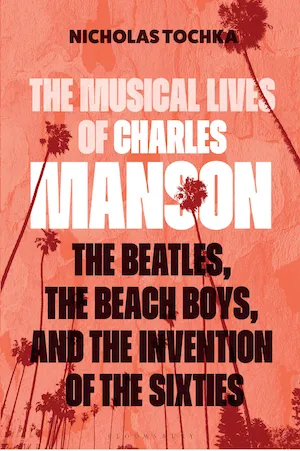
The Musical Lives of Charles Manson
Tochka, Nicholas. The Musical Lives of Charles Manson: The Beatles, the Beach Boys, and the Invention of the Sixties — or, No Sense Makes Sense. Bloomsbury Academic, 2026. ISBN 9781501384554
Available here →March 11, 2026
20260311-nicholas-tochka-on-musical-lives-manson
In a nutshell
The rest of this thread

Nicholas Tochka
Nicholas Tochka is an ethnomusicologist and historian who writes about the politics of popular music in the postwar world. His previous books have examined light music in the socialist and postsocialist Balkans, the career of Albanian pop star and media mogul Ardit Gjebrea, and the politics of rock music in the Cold War United States. Originally from Boston, Tochka now works and lives in Australia. He plays bass, a bit of guitar, and ukulele.
Pull this thread
The genres that matured around 1969, rock criticism and true crime among them, produced the post-truth order we live in.
Know something the rest of us don't?
Most threads on Rorotoko begin with our invitation. Any thread can begin with a proposal: you write it with the same prompts every thread answers, and we review it.
Propose a thread →