
Susanne Paola Antonetta
The Devil’s Castle
In The Devil’s Castle: Nazi Eugenics, Euthanasia, and How Psychiatry’s Troubled History Reverberates Today, I look at the history of twentieth century eugenics, focusing on the Nazi euthanasia programs, while also examining how that history has impacted contemporary psychiatry. After all, it was the German doctor Emil Kraepelin—a man who trained some of the worst of the Nazi doctors—who inspired the U.S.’s “neo-Kraepelinian revolution” in psychiatry in the late twentieth century. We’re still in that “revolution.” Considering our current state of mental misery, it’s hard to justify this radical switch from understanding distress as social and psychological to an almost purely biological psychiatry. I also use my own story, a lifelong patient diagnosed as bipolar.
There are two wonderful German figures in my book who form a counterweight to that predominant narrative of bad brains and bad genes. These are Paul Schreber and Dorothea Buck. Many people are familiar with Schreber, who wrote a memoir that got analyzed at a distance by most of the leading lights of mental health theory—Freud and Jung, then Lacan, Deleuze and Guattari, and more. My feeling about Schreber is that these thinkers often tripped over the real man in order to get to the analysis. I accept and celebrate Paul Schreber’s profound visions and his gender transition as they stand. Dorothea Buck was a somewhat later historical figure. She was sterilized at the age of nineteen under the Nazi hereditary disease law and became a lifelong activist for humane psychiatric care—and she utterly rejected biological psychiatry. She created her own methods for dealing with mental distress, focused on dialogue and understanding the individual and their needs. So while I am looking at things historically, I also bring them into the present, to interrogate the concept of “madness” and other states, and to ask how we can do better with mind care.
Ongoing thread. More from Susanne Paola Antonetta to follow.
Curator: Bora Pajo
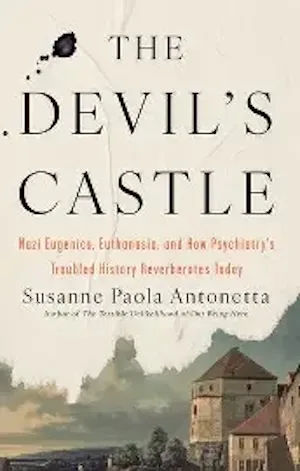
The Devil’s Castle
Antonetta, Susanne Paola. The Devil’s Castle: Nazi Eugenics, Euthanasia, and How Psychiatry’s Troubled History Reverberates Today. Counterpoint, 256 pages, ISBN-13: 9781640094024
Available here →April 25, 2026
20260425-susanne-paola-antonetta-devils-castle
In a nutshell
The rest of this thread
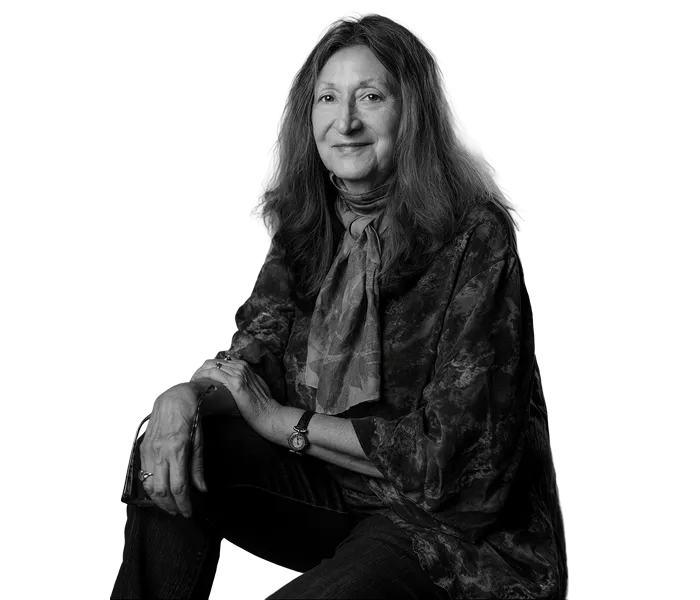
Susanne Paola Antonetta
Susanne Paola Antonetta is Professor Emeritus at Western Washington University and a steering committee member of the group Cultural Autism Studies at Yale. Her latest book is The Devil's Castle: Eugenics, Nazi Euthanasia, and How Psychiatry's Troubled History Reverberates Today (Counterpoint, 2025). She is also the author of The Terrible Unlikelihood of Our Being Here, Make Me a Mother, Entangled Objects, Body Toxic, A Mind Apart, and four books of poetry. Her awards include a New York Times Notable Book, an American Book Award, an Amazon Best Memoir of the Year award, and others. Her essays and poems have appeared in The New York Times, Ms., The Huffington Post, The UK Independent, The Hill, Orion, Psychology Today, and The New Republic and have been featured on CNN as well as the CBC Ideas documentary series. She lives in Asheville, North Carolina.
Pull this thread
American biological psychiatry descends directly from the eugenics behind the Nazi euthanasia programs.
Know something the rest of us don't?
Most threads on Rorotoko begin with our invitation. Any thread can begin with a proposal: you write it with the same prompts every thread answers, and we review it.
Propose a thread →