
Robynn Smith
Print Day in May
Print Day in May began at Monterey Peninsula College in 2007. A small group of printmaking students had become a very tight and committed collegial group, creating events, traveling, eating, drinking, and spreading the joy of printmaking. Making original prints is often a shared experience, as few people can afford the space and equipment to create their own print studio. The Art Department at Monterey Peninsula College was open to the entire community of the Monterey Bay region on the Central Coast of California. People of all ages and backgrounds came together at MPC to receive excellent instruction, work in well-equipped studios, and make art in a strong community of committed, creative people.
In the mid-2000s, new state regulations began to exclude a wide swath of people from community college programs in the name of efficiency and fiscal responsibility. As they were forced out of the community college system, my older students with means began to purchase their own presses and work on their own. It was a time in which folks were beginning to use the internet and have cell phones. We decided to make use of this expanded MPC diaspora by choosing a day when all of us would make prints in various studios while being together by sharing photos in real time and calling each other on our newly acquired cell phones throughout the day. We chose a day in the month of May, as Print Day in May was a good rhyme. We chose the first Saturday in May, to coincide with the Kentucky Derby, as I am a horse person.
.jpg)
Print Day in May was born and quickly became an annual event in our community. As I brought visiting artists into the printmaking program at the college, we asked each of them to participate and reach out to others. The event quickly mushroomed to dozens of people in various parts of the Untied States and abroad. My own studio practice included a great deal of travel, and I became a Johnny Appleseed, spreading awareness and participation. Those I recruited, recruited others. Each year, students in the printmaking program at MPC brought their own individual expertise and interest to the event. A student made a website and social media took off, exponentially increasing our reach. As a geography nerd, I challenged Print Day in May to record participation from all 50 US states. Then all 7 continents, which we achieved in 2016 when a photo of penguin footprints was sent to us from a scientist in Antarctica. A colleague from New York suggested the concept of sponsorship, and a web of sponsors was created, one that offered prizes such as printmaking supplies and residency experiences.
.jpg)
At that point we truly became a global action. The chain of creativity and community traversed the globe. My goal became Print Day in May as a known, annual experience, one that people look forward to every year, that celebrates printmaking and the creative process. I envision a world where Print Day in May takes on a life of its own, appearing on personal and commercial calendars worldwide: Valentine’s Day, St. Patrick’s Day, Ramadan, Print Day in May.
.jpg)
This year, we will enjoy the participation of tens of thousands of printmakers in over one hundred countries. Our tiny, mighty all volunteer team is busy coordinating with sponsors and getting the word out to as yet uninitiated printmakers in community printshops, academic programs, kitchens, and garages. As social media has become increasingly commodified, algorithms are designed to narrow our reach if we do not pay to advertise and boost our posts. With no budget, this presents new challenges. On the other hand, Print Day in May is forming new partnerships with exciting printmaking organizations and actions. My partner Tia Brady of Maui, Hawaii and I will be traveling to New Zealand for the Printopia Festival, held each year on Print Day in May weekend. I will be presenting the festival’s keynote address, and both of us will be teaching workshops at the event. Our team will be live streaming while physically working with hundreds of printmakers in Auckland. Further travel while there will educate us in the traditional forms of Maori printmaking and image making and connect us to contemporary printmakers of the region.
.webp)
Print Day in May is an annual, global experience.
Curator: Bora Pajo
Print Day in May
Available here →April 28, 2026
20260428-robynn-smith-printday
The wide angle
The rest of this thread
Robynn Smith
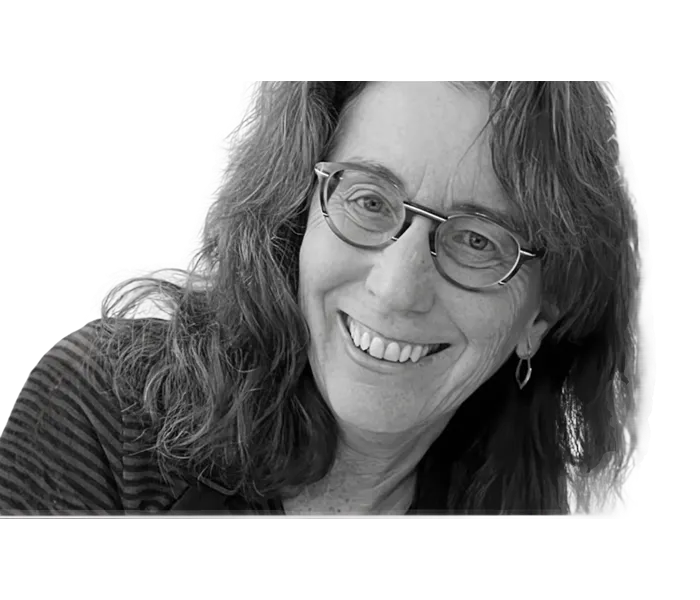
Robynn Smith is Professor Emeritus at California’s Monterey Peninsula College, where she founded Print Day in May, an annual international celbration of printmaking, in 2007. She holds a BFA in Painting from Rhode Island School of Design and two degrees from San Jose State University: an MFA in Sculpture/Ceramics and an MA in Painting. A printmaker and mixed media painter, she has had solo exhibitions in galleries and museums from Australia to Iceland and in such American cities as Chicago, San Francisco, and Washington, DC. Her work can be found in public collections in Belgium, Canada, and the United States. Robynn travels extensively for residencies and teaching opportunities, and leads workshops at her own Blue Mouse Studios in Aptos, California.
Pull this thread
Printmaking is any transfer of a mark from one surface to another, a lip print on a glass included.
Know something the rest of us don't?
Most threads on Rorotoko begin with our invitation. Any thread can begin with a proposal: you write it with the same prompts every thread answers, and we review it.
Propose a thread →