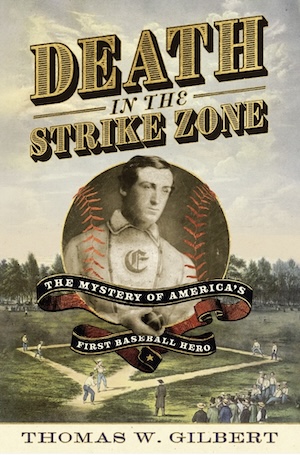
Consider what happened in the weeks and months after Creighton died. In 1862, he was playing two sports simultaneously: baseball and cricket. (There were many thriving cricket clubs in America in the 19th-century; and in the 1850s and 1860s the two sports saw themselves as rivals). In early October, Creighton bowled in a cricket match; a week later, he pitched a baseball game for the Excelsiors of Brooklyn. He left the baseball game in pain, was carried home and died four days later. An ugly public relations battle ensued between the two sports over which one was responsible for the death of the popular young Creighton. Cricketers suggested that Creighton had fatally injured an internal organ by swinging a baseball bat; baseball men – including members of the Excelsior club – countered that Creighton had hurt himself while batting in the cricket match.
.jpg)
The problem is that neither story was true. Two different recently uncovered death records confirm that Creighton died from a chronic condition that worsened over years and had nothing to do with a traumatic injury. If there was a real culprit, it was the fact that the Excelsiors overworked their star pitcher and knowingly risked his life. Even worse, the Excelsiors were full of medical doctors who would have known exactly how Creighton died and why. They tried to blame cricket out of guilt and a desire to protect the public image of the young sport of baseball. The rivalry between American cricket and baseball gives necessary context both to the events of Creighton’s brief life and to baseball’s ambition to become our first national sport.