
Meredith F. Small
How We Think
Last fall, during a walk in Prospect Park in Brooklyn, I passed by a woman who was wearing a Cornell T-shirt, and she had binoculars around her neck, so I knew she was a birder, a possible connection to the Cornell Lab of Ornithology. I called out, "Did you go to Cornell?" She stopped and said, "No, I grew up in Ithaca. My Dad is a philosophy professor there." Then I said, "I’m a Cornell anthropology professor," She quipped back, "Of course you are." And when I asked what she meant, she said, "You talked to me." That quick chat was an eye-opener to me because I hadn’t thought about the connection between asking questions and being an anthropologist, but she was correct. I do indeed talk to everyone—the barista, the salesclerk, the Uber driver (I once almost missed a meeting because the Uber driver, who was from Morocco, and I were having an in-depth chat about Moroccan sheep, and he had photographs to show me). I am drawn to what other people think and do. And when hearing an accent, I try to figure it out, eventually asking the speaker because I sincerely want to know where they come from and what their life experience might be.
That interest in other people and their work is what fuels my interviews and engages the subject to explain his or her work. It is the ticket into closed labs. It is the secret to getting someone to allow you to record them and quote them. To do my science journalism features, I need to spend time in the atmosphere of the subject, get them to explain what they are doing, and not be afraid to ask them again if I don’t get it. For some, this might feel risky, but I have found that once you get an academic talking about their work, they don’t stop. In pop-psychology terms, I believe they "feel seen," and they are seen, at least by me.
I have found that most subjects are more than happy to talk about their work. After all, they usually work alone, or with a few assistants, day after day, setting up experiments, collecting data, trying to make sense of the patterns with only each other to discuss their results. I come in as an avid but naive fan, and they perk right up and are happy to speak about their work.
I think my success as a science journalist and book author, which allows me to dig deeper into a subject, is driven by a low boredom threshold. Feeling bored, others might take up an activity like a new sport or hobby, but I want to learn something new from another person, a book or journal article, at a museum, during a festival, traveling in a foreign country, anybody and anything. As I wrote more for the popular press, I realized that urge had turned into a specific skill—to know what makes a good story. At this point, I surely know a good story when I see one. A friend who teaches the history of science journalism once told me that this kind of writing has to both educate and entertain. You can’t have one without the other, and that perspective is a foundation of my writing.
As for the essay pieces in How We Think, I now understand now why they work. I recently read Tracy Kidder and Richard Todd’s book Good Prose. Pulitzer Prize winner Kidder (author of House, Among Schools Children, Mountains Beyond Mountains, along with many other creative nonfiction book) surely knew a good story when he saw one, and how to get the story down—he embed himself in the subject and their life. I saw myself in that, but also in their chapter on the essay. I never thought much about why my essays work, but Kidder and Todd explained that the best essays have the whiff of the personal about them. My essays have my singular perspective as an anthropologist and a reporter who is also a mother, a partner, a teacher, a consumer, an observer, and a self-described comedian; they bring you in with personal language and reaction.
Basically, I am always looking and listening because there are stories everywhere. And I talk to people, including perfect strangers.
How We Think: The Hidden Life of Everyday Ideas (June 2026) is the first of three volumes of Meredith Small's collective works of science journalism and essays published by the American Philosophical Society. How We Know: The Improbable Sources of Human Knowledge comes out in June 2027 and How We Behave: The Social Science of Everyday Life arrives in June 2028.
Ongoing Thread. More from Meredith Small to follow.
Curator: Bora Pajo
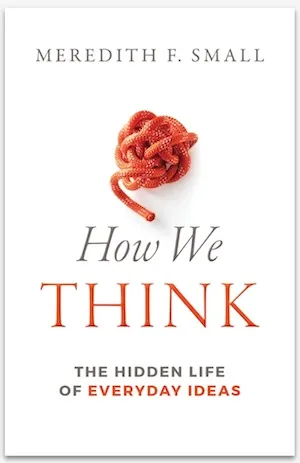
How We Think
Small, Meredith Francesca. How We Think: The Hidden Life of Everyday Ideas. Philadelphia: The American Philosophical Society Press, 272 pp. 5.5 × 8.5 in. ISBN: 978-1-60618-060-0.
Available here →July 20, 2026
20260720-meredith-small-how-we-think-a-close-up
A close-up
The rest of this thread
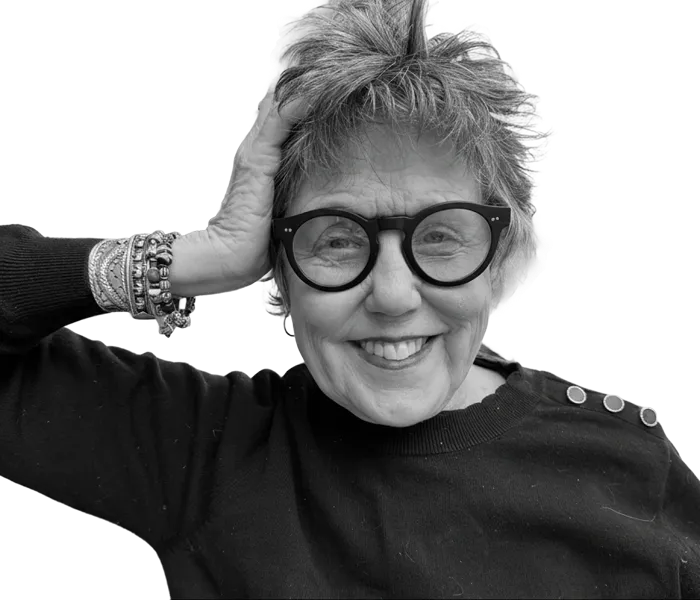
© Francesca Merrick
Meredith F. Small
Meredith F. Small is professor emerita of anthropology, Cornell University. She has written extensively for magazines such as Discover, Natural History, Scientific American, among many others. Her column "Human Nature" appeared on LiveScience.com and she was a regular commentator for NPR's All Things Considered. Dr. Small has written nine books and is best known for Our Babies, Ourselves: How Biology and Culture Shape the Way We Parent. Two recent books are on Venetian history, Inventing the World (2020) and Here Begins the Dark Sea (2023). The American Philosophical Society is publishing three volumes of her collective science journalism and essays. The first volume How We Think comes out June, 2026. Her book Family: How the Human Urge for Connection Shapes Our Lives will be published by Pegasus Book in October 2026.
Pull this thread
Nothing counts as human thought unless it is universal, and a science that never leaves the West cannot show that.
Know something the rest of us don't?
Most threads on Rorotoko begin with our invitation. Any thread can begin with a proposal: you write it with the same prompts every thread answers, and we review it.
Propose a thread →