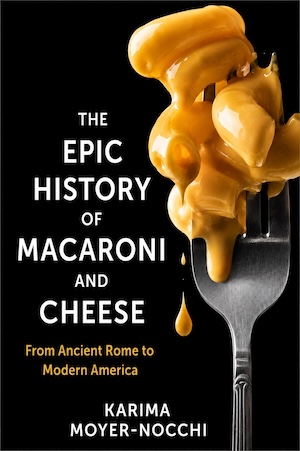
Scene I: The Arithmetic
Let's pick up the story in 1877, four years after the Panic of 1873—an economic downturn that rippled internationally, so prolonged they called it the Long Depression. We are sitting squarely in the Gilded Age, where the rift between the haves and have-nots in the United States assumed increasingly grotesque proportions.
The burden fell hardest on working-class men and women. Wages were cut relentlessly. Families scratched out kitchen-table arithmetic, trying to stretch food budgets until the next payday. That summer, workers on the Baltimore & Ohio Railroad finally snapped. The Great Railroad Strike of 1877 spread across the country. State militias were called out. Federal troops were deployed. More than a hundred people would be killed before order was restored.
While industrialists, politicians, and labor leaders buzzed about wages in the abstract, Juliette Corson set to work on the more immediate question: how were families supposed to feed themselves? She had experienced extreme poverty herself. Food reform was not a pastime for her. It was her life's work.
Scene II: The Promise
Corson's answer was macaroni and cheese.
In her 1877 cookery manual, Fifteen Cent Dinners for Workingmen's Families, she championed a suggestion already sounded by reformers in Europe — Alexis Soyer, Isabella Beeton, Charles Dickens — that macaroni and cheese be considered as part of a nutritional reform program aimed at feeding the poor with high-nutrition, low-cost foods.
Recent discoveries in nutritional science were hyping that miracle substance called gluten. In his lecture series on domestic science, Charles Buckmaster went so far as to declare macaroni not merely superior to bread but on par with meat. The New York Times followed through in an 1874 article, announcing that now that macaroni had become cheaper and more accessible, it should become a food of the People.
Corson became its most enthusiastic evangelist. Dried macaroni, she explained, would expand to four times its original weight when cooked until soft. With a spartan amount of butter, a light sprinkling of cheese, and a dusting of breadcrumbs, this hitherto elite dish would be as filling and fortifying as meat — while costing considerably less.
By 1888, when she published her last cookbook, Family Living on $500 a Year, Corson could happily proclaim that over the previous decade, macaroni and cheese had become a favorite American food. She even gave a nod of approval to American made macaroni. Popular dietician Sarah Rorer redoubled that effort, extolling the quality of domestic product.
Macaroni had come to the People.
Scene III: The Unraveling
Had the story ended there, we could have put a bow on it.
History eschews bows.
As reformers extolled the virtues of macaroni, a trickle of Italian immigrants became a torrent. Pressure from the Panic forced them to flee. Emigration promised relief from chronic rural poverty, heavy taxation, and land fragmentation. But there was more to come.
In 1884, a major cholera epidemic erupted in Italy. Naples was the most famous and internationally visible center of the outbreak, though it affected regions from north to south to varying degrees. Naples had for generations been the epicenter for macaroni exportation; now, in the public imagination, it also became the symbolic location of cholera.
The knee-jerk reaction was predictable and ugly. Newspaper caricatures, sensational reporting, and nativist anxieties increasingly fused Italians, disease, and macaroni into a single package. Fears of food borne contagion broadened into a general prejudice against Italian immigrants. A food that had once signaled refinement and cosmopolitan sophistication now carried very different associations.
What started as a public health warning hardened into a smear campaign, one that played directly into the hands of American macaroni manufacturers, many of whom were Italian Americans.
Scene IV: The Complication
But no one wanted to give up macaroni.
It was part of the American foodscape.
For some, the fearmongering worked. They switched to domestic brands. But the idea that imported Italian macaroni was superior had been ingrained in the American psyche for generations, so many consumers remained loyal—appetite proving stronger than bigotry. Indeed, American manufacturers went to considerable lengths to imitate the brand names and packaging styles of their Italian counterparts. Health concerns and prejudice may have swayed some customers, but the naysayers forced them to admit there was an elephant in the living room:
American macaroni was an inferior product.
.JPG)
Scene V: The Problem
Italian producers enjoyed two advantages.
The first was quality. American manufacturers generally relied upon coarsely ground soft wheat, which produced a pale, chalky pasta that quickly turned to mush when boiled. Remove it earlier from the pot and you got something resembling rubber tubing. Italian macaroni, by contrast, was made from golden durum wheat semolina—the very product high in that "flesh-forming" substance, gluten. It yielded a firmer pasta capable of withstanding the rigors of boiling.
The second advantage was price. Italian laborers were paid a pittance. American laborers commanded a living wage. The irony was that the imported product often cost less than its lower-quality domestic competitor.
Consumers knew it. Manufacturers knew they knew. Politicians took notice.
Scene VI: Politics
Pressure mounted.
American macaroni manufacturers appealed to Representative William McKinley, chairman of the House Ways and Means Committee, for protection against imported competition. The resulting tariff of 1890 raised the cost of foreign macaroni. Democrats were incensed. Why should Americans have to pay more for a lower-quality product? There was a logic there that couldn't be ignored. It was a fair complaint. Change of government, change of legislation.
When the Republicans returned to power, a second round of protectionist measures followed in 1897. Industrialists breathed a collective sigh of relief.
But the elephant was still on the couch.
Scene VII: The Twist
Then the obvious dawned on them.
What if we planted the right wheat?
If superior macaroni required superior wheat—durum wheat—then perhaps the answer was not a legislative one but an agricultural one. Plant durum on American soil.
When the widespread repercussions of this idea sank in, politicians, industrialists, and agriculturalists alike were almost giddy. Before petroleum, wheat and the control of the food corridors through which it passed were the gateways of power. The United States was already well on its way to becoming the powerhouse of soft-wheat exportation. But harnessing the durum wheat market would take them to another level—and put them in direct competition with Russia as the world's breadbasket and macaroni box.
The experiment succeeded beyond expectation. Durum wheat took to American soil as if it were its native terrain.
Then came pennies from heaven. World War I set in, increasing the need for American wheat. And with the Bolshevik Revolution, Russia's position in the global grain market collapsed. Suddenly the United States found itself poised not merely to manufacture macaroni, but to become the major durum wheat exporter to Italy and France—the main hub of the macaroni industry.
Just take a step back and savor that.
Scene VIII: All American
The irony is extraordinary.
Americans at home would now enjoy domestically produced macaroni made from domestically grown durum wheat. The quality problem? Solved.
At the same time, American farmers were exporting durum wheat to Italy and France, where it was transformed into the imported macaroni that still filled American grocery shelves. So whether you bought imported macaroni or domestic macaroni, the wheat was increasingly American. A win-win for the United States.
In the span of a few decades, a food reform project had become entangled with immigration, nutritional science, disease, prejudice, industrial lobbying, agricultural ambition, and global power. Macaroni may have crossed the Atlantic as a European food, but American exceptionalism would see to that.
And if you're reading this on July 14th, there's cause for celebration. It's National Macaroni and Cheese Day.
American exceptionalism has done its work.