
Paul Moody
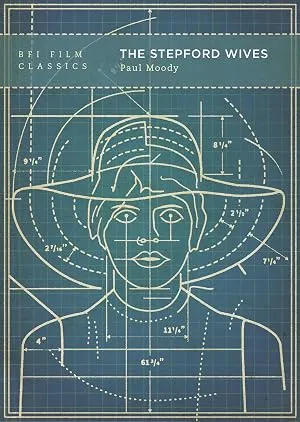
The Stepford Wives
The Stepford Wives (1975) is a film about replacing women. However, the story I tell about Stepford in this book is also a narrative about the women involved in its production, many of whom have also been replaced in popular myths about the film.
The opening shot of the movie is of Joanna Eberhart’s (Katharine Ross) reflection in a mirrored wardrobe. Ross was best known as Dustin Hoffman’s young girlfriend in The Graduate (1967), but she was not the first choice for Stepford’s Joanna. Other actresses, including Diane Keaton, Mia Farrow, and Tuesday Weld, had been approached and either turned down the role or left due to health reasons. This was the first of many replacements of the cast or crew.
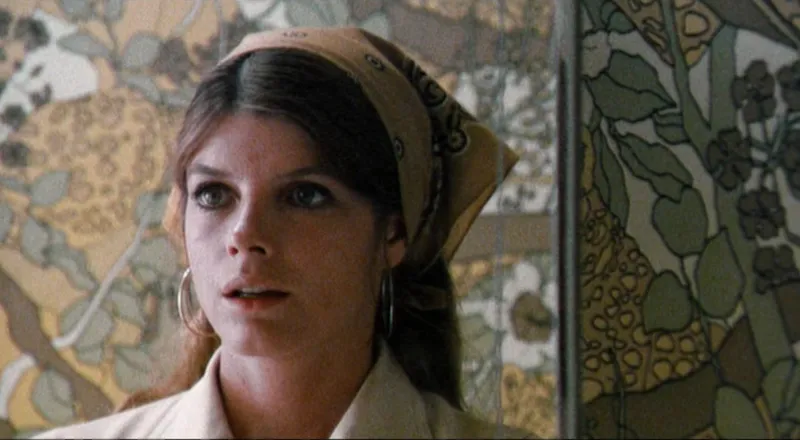
By drawing on archival records of the film’s production, I outline how some of these replacements came about, arguing that the firing of an actress who was cast as Joanna’s best friend, Bobby Markowe—after sixty-five scenes had already been shot—was collateral damage in a battle between the film’s producer (the former television executive Edgar Scherick), who wanted to speed up production, and a film director and cinematographer, who were used to working under the more forgiving timescales of traditional filmmaking.
My book also explores the work of many other women who have been omitted from Stepford’s history along the way—such as the costume designer Anna Hill Johnstone, who, prior to Stepford, was credited on three films in succession that were focused on narratives of men and male violence: The Godfather (1972), Serpico (1973), and The Taking of Pelham One Two Three (1974). For Stepford, she captures an altogether different form of patriarchal control. Other examples include the casting director Juliet Taylor, who was integral to the recruitment of replacements for Joanna and Bobby after the original actresses withdrew or were fired; the sound editor Janet Davidson, who had been the director’s sound editor for all his feature films since The Madwoman of Chaillot (1969); or the electronic music pioneer Suzanne Ciani. This book explores their work for the first time and argues that their erasure from its history is connected to the main themes of the film itself.
Joanna Eberhart’s first appearance – that shot of her face in the mirrored wardrobe – is simultaneously a view of what we, as an audience, see via the camera lens, and what Joanna sees in her reflection. It is a prefiguring of the confrontation with her robotic double at the film’s conclusion, in which Joanna is confronted with the reality of what the replacement represents - in place of human eyes, two empty, blank voids stare back at her from the android’s head. As a burgeoning photographer, Joanna’s sense of self is defined by her ability to look – as shown explicitly from the start in that opening scene in front of the mirror. In her final moments, she is presented with a future where that option will be denied to her - suggesting that the main danger she represents to the men of Stepford is her creative potential as an independent woman.
My book turns the mirror back onto the production itself, revealing the creative work of the various women involved in making it. In so doing, it suggests that their omission from previous studies of the film is, ironically, itself a Stepford-isation of cinema history, which has sought to downplay the creative input of women crew in favour of their male counterparts.
Ongoing thread. More from Paul Moody to follow.
Curator: Bora Pajo
September 8, 2026
20260908-moody-the-stepford-wives-in-a-nutshell
In a nutshell
The rest of this thread

Paul Moody
Dr Paul Moody is a Senior Lecturer in Media and Communications at Brunel University of London, UK. He is a film historian whose work explores how film industries shape national identity, diplomacy and ideology. He is the author of EMI Films and the Limits of British Cinema (2018) and the forthcoming Hollywood’s Ambassadors: The State Department and the Battle for the Global Film Industry (2027).
Pull this thread
The Stepford Wives was made by women who have been erased from its history.
Know something the rest of us don't?
Most threads on Rorotoko begin with our invitation. Any thread can begin with a proposal: you write it with the same prompts every thread answers, and we review it.
Propose a thread →