
Pamela Foohey
Forgive Us Our Debts: How Black Churches Use Bankruptcy to Survive
Every year, dozens of churches across the country file bankruptcy to reorganize to try to keep their doors open. Between 2006 and 2021, over 1,000 churches filed this type of bankruptcy, only a handful of which were the Catholic dioceses that readily come to people's mind when they think of churches and bankruptcy. To learn more about why churches consistently turned to bankruptcy to reorganize, I spoke with over 150 church leaders and bankruptcy attorneys. What I found, as detailed in Forgive Us Our Debts: How Black Churches Use Bankruptcy To Survive, is a story of leveraging the legal system to bring recalcitrant lenders to the negotiating table to keep spiritual homes. It is a story of triumph. And it is a story of skewed lending.
Most of the churches that filed bankruptcy to reorganize were small non-denominational or congregationalist churches. Many turned to reorganization in the wake of operational and financial hiccups. Some filed even after it seemed that they had recovered well from those hiccups. Almost all owned a building—their spiritual home. Almost every church filed hoping to keep its spiritual home.
Like other businesses and families, churches need to take out credit to fund large purchases, such as the buying of houses of worship. Churches' buildings often were in the midst of foreclosure proceedings or under threat of foreclosure. For churches, beyond keeping their buildings, many also wanted to hold onto the money—known as equity—in their buildings. The reorganization process pauses foreclosure and because of the bankruptcy law's structure, forces lenders to negotiate.
And negotiate lenders did. Among the churches that filed between 2006 and 2021, over half emerged from the reorganization process either still owning their spiritual home or with enough money to move down the street and continue worshipping together as a congregation. The alternative for these churches likely would have been disbandment of their communities. It also would have been the loss of accumulated equity in their buildings themselves. This is the story of triumph.
Most notable about the churches that sought to reorganize is not that they owned buildings or that they held equity in those buildings. It was their congregations. Over 60% of the churches that sought to reorganize were Black churches, defined as having congregations with at least 80% Black members. No more than a quarter of congregations nationwide are Black churches. Black churches seek to reorganize at three times the rate they appear among churches in the United States.
Something drove Black churches, year after year, much more so than other churches, to turn to the legal process of reorganization to force their lenders' hands. Forgive Us Our Debts is also the story of why, which is a story of lending.
Ongoing thread. More from Pamela Foohey to follow.
Curator: Bora Pajo
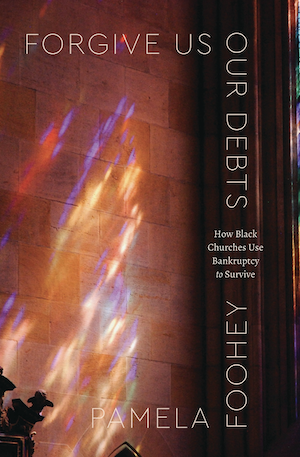
Forgive Us Our Debts: How Black Churches Use Bankruptcy to Survive
Foohey, P. (2026). Forgive us our debts: How Black churches use bankruptcy to survive. University of Chicago Press.
Get the book →September 21, 2026
20260921-foohey-forgive-us-our-debts-how-black-churches-use-bankruptcy-to-survive-in-a-nutshell
In a nutshell
The rest of this thread

Pamela Foohey
Pamela Foohey is the Curtis Bradbury Kellar Professor of Law at the University of Minnesota. She is a researcher and teacher of the laws about bankruptcy, business, debt, and credit, and how they affect people and communities. Most of her work involves empirical studies of bankruptcy and related parts of the legal system. In addition to Forgive Us Our Debts: How Black Churches Use Bankruptcy to Survive, she is the co-author of Debt's Grip: Risk and Consumer Bankruptcy, which draws on data from the people who file bankruptcy to tell the story of financial struggle in the United States.
Know something the rest of us don't?
Most threads on Rorotoko begin with our invitation. Some begin with a proposal. Both use the same prompts and the same editing, with your own pages in the archive. Proposed threads carry a small Sponsored label and a fee.
Propose a thread →