
Mike Reed
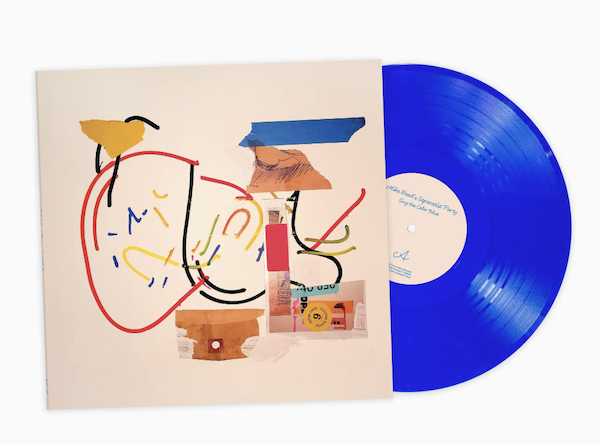
Sing the Color Blue
Life is what you can get away with, and so is making a record.
Every project starts with expectations. You can stick to them and get frustrated, or let the work show you something you'd never have imagined.
Most of the records I've made were done the old jazz way. Get the band in a room. Play. Keep the best take. My duos with Roscoe Mitchell. The Loose Assembly records. People, Places & Things. The Flesh & Bone project, where the band played live and Marvin Tate's parts were collaged and overdubbed later. Records I've played on, like Jason Adasiewicz's Sun Rooms and Rob Mazurek's Exploding Star records. Maybe a small edit or overdub. But the point was to capture a good live performance. The record is a photograph of something that happened.
That's still the backbone of jazz, and I love it.
Sing the Color Blue is a departure. It comes out of a different tradition, one more common with rock bands, that took hold in the 1960s and '70s: using the studio itself as an instrument. In that approach, a record isn't a document of a performance. It's built. Parts get recorded separately, then layered, cut apart, reversed, moved around. What comes out often couldn't have happened any other way. Brian Eno. Talk Talk's Spirit of Eden. The Olivia Tremor Control. Don Cherry's records from the '70s. Terry Riley. That's closer to where this record lives. In various ways, these influences opened up three ideas for me.
- Experiment with tape speed. Record at a high speed and play it back slower, and the sound changes.
- Enter the studio without finished music. Build tracks layer by layer from a skeletal idea instead of arranging everything beforehand.
- Never delete anything. Keep archives, and treat past drafts as active material.
What people get wrong is treating these as better and worse versions of the same thing. They're different arts. One asks the musicians to be ready in the moment. The other asks whoever is producing to hear what the moment could become a year later.
The Separatist Party pushed me into the second one. It's six people with full lives. Marvin Tate is a poet and singer. Ben LaMar Gay plays cornet. Rob Frye, Cooper Crain, and Dan Quinlivan are also the trio Bitchin Bajas. I play drums. Getting all of us in one room was difficult. So I decided to do both: keep the live takes we got, and build the rest in parts.
Take our version of Conlon Nancarrow's Study for Player Piano No. 6. Nancarrow was an American composer who wrote for player pianos, the kind that play themselves from punched paper rolls, so he could make music no human hands could play. On our version, none of us were ever in the same room. I reduced the piece to what became the bass part, and Dan processed it through Ableton, which is music software. The flute and cornet parts were pieced together from different takes. The cornet solo came from the cutting room floor of other tracks. I added vibraphone played with bows and an oscillating metal tool, and we turned it backward. Nothing on that track was meant to be played live. In an ironic way, I was doing what Nancarrow was after, just with a different machine.
And one more thing people get wrong: there's no social or political agenda here. These are scenes from life, in the literal and the abstract. As Marvin says on our track “Tea Leaves Part 2”:
“Life is just a bowl full of absurdities, isn’t it? Contradictions, flabbergastions.”
Everything means nothing, or as much as you need it to mean.
Ongoing thread. More from Mike Reed to follow.
Curator: Bora Pajo
Sing the Color Blue
Available here →October 28, 2026
20261028-reed-sing-the-color-blue-in-a-nutshell
In a nutshell
The rest of this thread
© Francesca Patella
Mike Reed
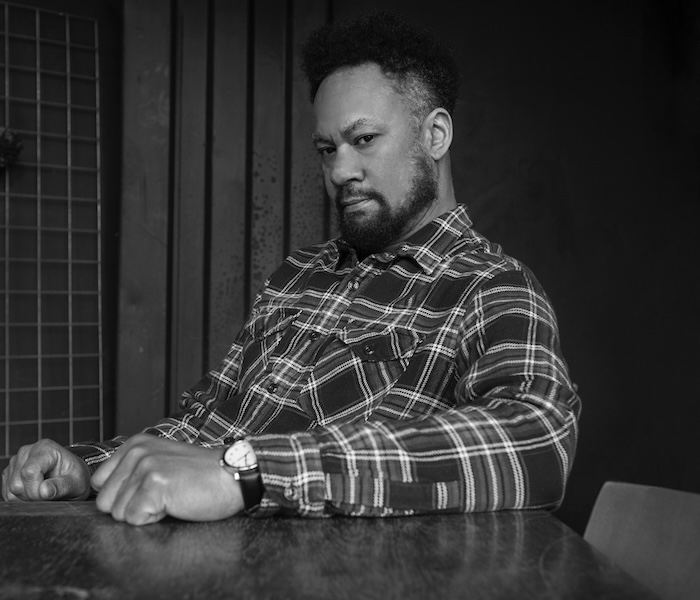
Mike Reed is a Chicago drummer, composer, bandleader, and arts presenter. He leads People, Places & Things, Loose Assembly, and the Separatist Party, whose new album, Sing the Color Blue, is out on Thrill Jockey. He has collaborated with AACM pioneers Roscoe Mitchell, Wadada Leo Smith, and Fred Anderson. A member of the AACM, he is also a member of the AACM legacy trio, Artifacts, along with Nicole Mitchell and Tomeka Reid. Reed owns the Chicago venues Constellation and the Hungry Brain, and produces the Sound & Gravity festival. Reed was producer of the Pitchfork Music Festival in Chicago until 2024 and served as Chair of the Chicago Jazz Festival for 17 years. He has received numerous awards, including a United States Artists fellowship and was named Chevalier of the Ordre des Arts et des Lettres by the French Ministry of Culture.
Pull this thread
A record assembled from studio fragments is a different art from a captured live take, not a lesser one.
Know something the rest of us don't?
Most threads on Rorotoko begin with our invitation. Any thread can begin with a proposal: you write it with the same prompts every thread answers, and we review it.
Propose a thread →