
Manuel E. Cornely
Liposuction versus conservative therapy for patients with lipoedema in Germany: a multicentre, randomised controlled clinical trial
Taking the fat takes the pain away – in LiDo, the so-called lipedema.
Lipedema is a misnomer. It's not an edema. It's fat that hurts. You can treat it for a lifetime – or remove it once. Conservative therapy can't cure it. Remove the tissue completely – and the pain is gone. This is no longer mere assertion: the LIPLEG trial of 410 women, published in The Lancet, has shown it.
It affects women. Fat gathers, symmetrically, on the arms and legs, while torso, hands and feet stay slim. The limbs seem to belong to another body. Above all, the tissue hurts – under pressure, at a touch, standing, walking, sleeping. Fat cells in great numbers – inborn, not earned. Doctors call such an excess hyperplasia. Because this fat hurts, in 2005 I renamed the disease: Lipohyperplasia dolorosa – LiDo. More fat cells, plus pain. Yet numbers alone don't make the pain.
What, then, is this disease? Two explanations have long held sway. Both lead astray.
The first: overweight. Eat less, move more. For decades, women did exactly that – with iron discipline. The LiDo cell doesn't care. It doesn't answer to "obesity." Small, numerous, stubborn – it stays, however hard you wish. Diet and exercise melt only the weight piled on these small cells. The LiDo cells in arms and legs keep their number, their mass – and their pain.
The second hides in the name: lip-edema, fat plus water. Every cell in the body swims in fluid. An edema is water that swells the tissue. Say edema in lymphology, and you think lymphedema. And act: drainage, compression, for life. Right for lymphedema. For LiDo – smart. Drainage can't reach the small cells, only the water they swim in. The silhouette is fat, and it stays. The pain eases. We've just been the first to prove it: water, yes. Edema, no. "Lipedema" remains a misnomer. Time to drop the name.
What we don't know – not yet: where the pain comes from. Fat cells in a three-dimensional web of fine fibers, bathed in gel and free water. Here's the dilemma. After weight-loss surgery, the cells shrink, volume falls – the pain stays. After liposuction, the cells are gone – and so is the pain. Why? The small LiDo cell itself? The web? The water? One thing is certain: take the fat, and you take the pain. For good. We've known that for thirty years. I surveyed my patients up to 15 years after surgery: 97 percent needed no further treatment. Other groups, in the US too, confirm it. But studies without a control group can't convince skeptics. Nor should they.
Now there's a comparison. LIPLEG, decided by lot: surgery or conservative care. After one year, 68 percent of the surgical group had markedly less pain. Conservative group: 8 percent. Critics object: a strict protocol for surgery, none for the control group. A fair point – and still a stunning result. Since 2025, German public health insurance has covered the operation.
A cure? Yes – if the diseased tissue is completely removed. Then the patient needs no more treatment. Then she is cured.
In 1940, the first to describe the disease wrote, "Occasionally, a patient feels that her large legs have 'ruined her life.'" Eleven years later, "occasionally" had become "ordinarily." Today a new rule applies – the opposite: no pain, no lifelong therapy, a new silhouette. New horizons open.
Ongoing thread. More from Manuel E. Cornely to follow.
Curator: Bora Pajo
Liposuction versus conservative therapy for patients with lipoedema in Germany: a multicentre, randomised controlled clinical trial
Podda, M., Schmidt, J., Cornely, M. E., Steinmetz, M. I., Rajewski, D., Busch, K.-H., Taufig, Z., Ghods, M., Kovacs, M., Schmid, S., Kraus, D., Hellmich, M., Müller, W., Schiller, P., & Cornely, O. A. (2026). Liposuction versus conservative therapy for patients with lipoedema in Germany: A multicentre, randomised controlled clinical trial. The Lancet, 408(10558), 910-923. https://doi.org/10.1016/S0140-6736(26)00910-4
Available here →November 8, 2026
20261108-cornely-liposuction-versus-conservative-therapy-for-patients-with-lipoedema-in-germany-in-a-nutshell
In a nutshell
The rest of this thread
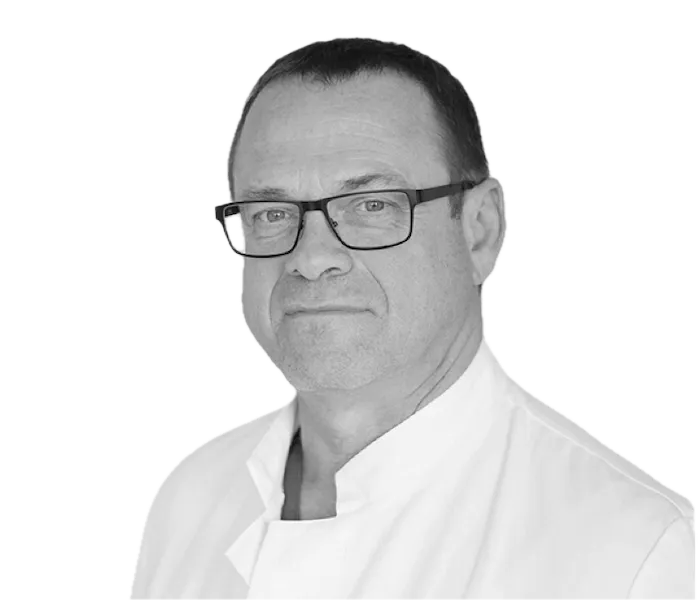
© Manuel E. Cornely
Manuel E. Cornely
Manuel E. Cornely is a dermatologist and lymphologist, honorary professor at the Benemérita Universidad Autónoma de Puebla, Mexico, and senior consultant at Schön Klinik Düsseldorf – both in lymphology. He has researched lymphology since 1992, focusing on lipedema and lymphological surgery. He developed Lymphological Liposculpture, renamed the disease Lipohyperplasia dolorosa (LiDo) in 2005, and created the LF-PST questionnaire. He co-authored the German guidelines and the Lancet LIPLEG trial, co-edited Applied Lymphology, co-founded the Lipedema World Alliance and sits on its board, and chairs the lymphology section of the German Society of Phlebology and Lymphology. He directs the LY.SEARCH institute for basic lymphology research.
Pull this thread
Lipedema is painful fat rather than edema, and removing the tissue completely ends the pain.
Know something the rest of us don't?
Most threads on Rorotoko begin with our invitation. Any thread can begin with a proposal: you write it with the same prompts every thread answers, and we review it.
Propose a thread →