
Jack Lule
Persecuted: Why We Need Scapegoats
Persecuted is a book about scapegoating. It is not a cheerful book. But scapegoating may soon tear apart nations around the world. And I now have grandchildren.
Scapegoating is unfairly blaming a person or group for something they did not do. A husband might have had a terrible day at work and been yelled at by his boss. The husband cannot yell back at his boss, so he goes home and yells at his wife.
That happens. It is scapegoating. But it is not what this book is about.
Scapegoating gets more complicated when groups scapegoat other groups, that is, when groups unfairly blame other groups for problems. German Nazis scapegoated Jews. American Southerners scapegoated Blacks. Nativists scapegoat immigrants. Political parties scapegoat opponents.
That kind of scapegoating is the subject of this book. It is sometimes called “collective persecution.” As I said, it is not a cheerful book.
Here are the arguments:
1. Scapegoating is not a social malfunction, not an aberration, but fundamental to human groups. It is WHY human groups – such as nations – are formed and HOW they are formed. People come together most passionately in opposition to some Other.
2. Scapegoating is built into language. The individual identity of humans is formed by language through contrast with others. I am Black not white. I am Christian not Jewish. I am American not Mexican. The “opposition” becomes real.
3. Scapegoating also derives from “mimesis,” a theoretical concept from Rene Girard, which states that the individual identity of humans is formed through imitations of others. Humans learn to desire what others desire. Conflict arises naturally. A shared scapegoat resolves the conflict.
4. Media have always played an unacknowledged, but crucial, role in scapegoating. From early minstrels and messengers to newspapers and television to contemporary social platforms, media manufacture crises, amplify accusations, identify targets and accelerate cycles of blame against those to be persecuted.
5. The modern era is especially volatile and dangerous, because of media. New social media increase the reach, speed, and intensity of scapegoating. New media allow people to isolate themselves and find confirmation in communities of hate, transforming local resentments into global networks of hostility. Rage is performed. Mass murders are played out on live feeds for community members.
6. Scapegoating persists precisely because it feels natural, justified, and invisible to those participating in it. The persecutor never doubts the guilt of the persecuted.
Ongoing thread. More from Jack Lule to follow.
Curator: Bora Pajo
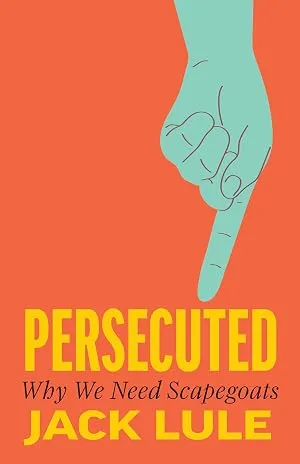
Persecuted: Why We Need Scapegoats
Lule, J. (2026). Persecuted: Why we need scapegoats. Johns Hopkins University Press.
Available here →November 16, 2026
20261116-lule-persecuted-in-a-nutshell
In a nutshell
The rest of this thread
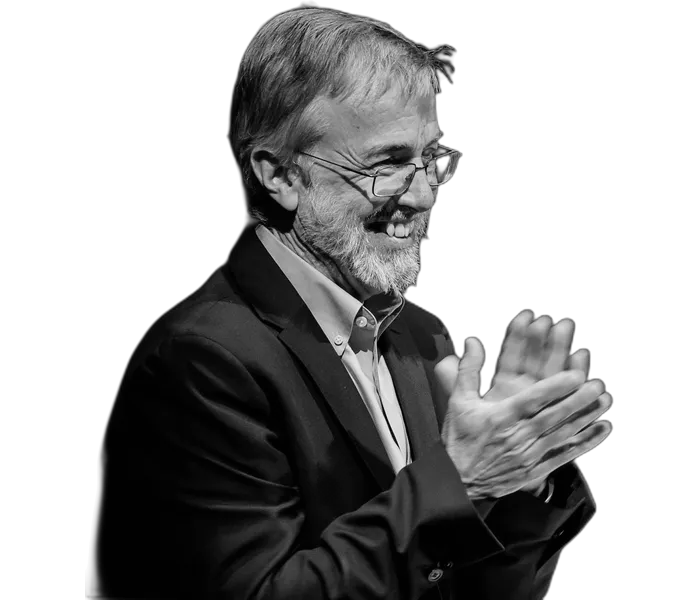
Jack Lule
Jack Lule is Professor Emeritus in the Department of Journalism and Communication at Lehigh University. He is a former endowed Iacocca Professor and Fulbright Specialist in Journalism. He is the author of four books: Persecuted: Why We Need Scapegoats (Johns Hopkins), Globalization and Media: Global Village of Babel (Rowman & Littlefield), Understanding Media and Culture (Flatworld), and Daily News, Eternal Stories: The Mythological Role of Journalism (Guilford Press). A former reporter, he earned his Ph.D. from the University of Georgia.
Pull this thread
Scapegoating is not a social malfunction but how human groups form, and media accelerate it.
More in Books
Know something the rest of us don't?
Most threads on Rorotoko begin with our invitation. Any thread can begin with a proposal: you write it with the same prompts every thread answers, and we review it.
Propose a thread →