
Robert Gildea
Children of the Revolution
‘The bloody truth about France’ was the heading of the London Sunday Times review of this book. For those who think France is about camembert and surrender, here is another story. The French Revolution of 1789 plunged France into twenty-five years of civil war, religious war, Terror, dictatorship and continental war from which it took a century to recover. The ‘children of the Revolution’ are the successive generations of French men and women who were torn between resuming old battles they had lost and forging a strong and united French nation.
They could not decide whether they wanted a Republic, a monarchy or an Empire, Napoleon-style: there were three revolutions and ten regime changes in seventy years. They struggled to regain the great-power status they lost at Waterloo, and looked enviously towards Britain, the United States, Russia and Germany. Defeat by Germany in 1870 plunged them again into civil war, but after that they found a political consensus around a middle-of-the-road republic and built an overseas empire, so that by the time Europe went to war in 1914 they were strong and united enough to withstand the onslaught.
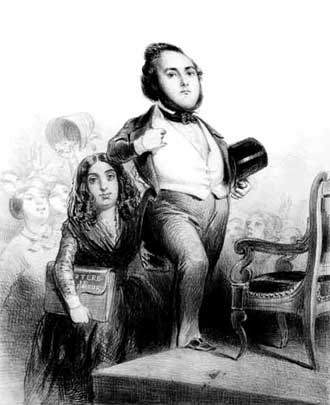
George Sand whispering instructions to the Interior Minister in 1848
Editor: Erind Pajo
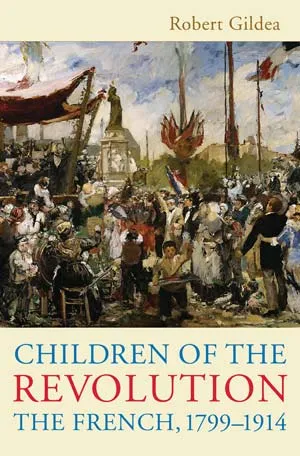
Children of the Revolution
Robert Gildea Children of the Revolution: The French, 1799—1914 Harvard University Press 530 pages, 6 1/4 x 9 1/4 ISBN: 978 0 674 03209 5
Available here →December 19, 2008
20081219-gildea-robert-children-of-revolution-the-french-1799-1914-1-1
In a nutshell
The rest of this thread

Robert Gildea
Robert Gildea is Professor of Modern History at the University Oxford. He has spent a lifetime researching French and European history. His previous publications include Barricades and Borders. Europe 1800-1914 (Oxford, 1986, 1997, 2003), The Past in French History (Yale, 1994), France since 1945 (Oxford, 1996, 2002) and Marianne in Chains: In Search of the German Occupation (Macmillan, 2002), published in the USA by Metropolitan/Henry Holt (2003) with the subtitle Daily Life in the Heartland of France under German Occupation, and winner of the 2002 Wolfson History Prize. He has edited Surviving History and Mussolini: Daily Life in Occupied Europe (Berg, 2006) and Writing Contemporary History (Hodder Arnold, 2008). He is currently directing an international project based on interviews with former activists of 1968.
Pull this thread
France took a century to recover from 1789 and found consensus only after the defeat of 1870.
Know something the rest of us don't?
Most threads on Rorotoko begin with our invitation. Any thread can begin with a proposal: you write it with the same prompts every thread answers, and we review it.
Propose a thread →