
Krin Gabbard
Hotter Than That
The basic thesis of Hotter Than That is that the trumpet has been associated, rightly or wrongly, with masculinity. The men who have played it have jealously guarded their exclusive access to the instrument. In one tribe along the Amazon, for example, if a woman so much as looked at a trumpet, she was killed. Perhaps because it can make more noise than just about anything except a bomb blast, men have used the trumpet for ceremonies, most notably the welcoming of kings.
A monarch succeeds grandiloquently in establishing his power if his trumpeters make a terrible racket before he arrives on the scene. Of course, a trumpet makes the first sound that a soldier hears in the morning and the last sound he hears as he falls on the battlefield. In the religion of God the Father, we know that a trumpet brought down Jericho and that a trumpet call will announce the End of Days. When sons and grandsons of slaves created jazz in the early 20th century by playing the trumpet loudly and aggressively, they found a brand new way to assert themselves as men.
Any other assertion of masculinity might have got them lynched! These audacious young black men must have been astounded when white people smiled and applauded their music rather than warning them about being “uppity.”
Many white men have even sought to enhance their own masculinity by imitating African American trumpeters. This is not to say that women cannot and have not played the trumpet. The book documents the many contributions that women have made to the instrument’s history. There is no denying, however, that the trumpet has been made to serve the needs of men throughout its history.

Art Farmer with a flumpet created by David Monette. (Photo by Ydo Sol.)
Editor: Erind Pajo
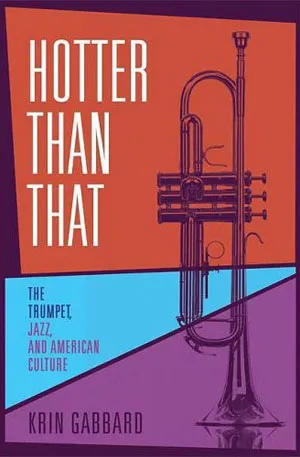
Hotter Than That
Krin Gabbard Hotter Than That: The Trumpet, Jazz, and American Culture Faber and Faber 272 pages, 5 1/2 x 8 1/4 inches ISBN 978 0 571 21199 9
Available here →December 26, 2008
20081226-gabbard-krin-hotter-than-that-trumpet-jazz-american-culture-2
The wide angle
The rest of this thread

Krin Gabbard
Krin Gabbard is Professor of Comparative Literary and Cultural Studies at the State University of New York at Stony Brook. He has written on jazz, film, psychoanalysis, and African American studies. His books include Jammin’ at the Margin: Jazz and the American Cinema (1996), Psychiatry and the Cinema (2nd edition, 1999), and Black Magic: White Hollywood and African American Culture (2004). He lives in New York City where he plays the trumpet – not very well – with whomever will let him join in.
Pull this thread
Jazz trumpet let the sons and grandsons of slaves assert manhood and win applause, not lynching.
Know something the rest of us don't?
Most threads on Rorotoko begin with our invitation. Any thread can begin with a proposal: you write it with the same prompts every thread answers, and we review it.
Propose a thread →