
Donald S. Lopez Jr.
The Tibetan Book of the Dead
Princeton University Press has started a new series entitled “Lives of Great Religious Books,” and my book is one of the three inaugural volumes. The idea behind the series is that books have lives, that in addition to the particular time and place of their composition, they also move through time and across space, where they meet unexpected fates and fortunes.
Scholars call this the “reception history” of a text.
Princeton has chosen some of the most famous religious texts from around the world and asked a scholar to recount the life of that book for a general audience. I was asked to write about The Tibetan Book of the Dead, certainly the most famous Tibetan work in the world and perhaps the world’s most famous Buddhist text.
The Tibetan Book of the Dead has had a rather strange life. Despite its great fame, it is not famous in Tibet.
In 1919, an American named Walter Evans-Wentz, who was traveling in India at the time, purchased a set of Tibetan mortuary texts from a British Army major who had recently returned from Tibet. Evans-Wentz could not read Tibetan so he took them to the English teacher at the local boarding school for boys, who translated a selection of the texts.
Evans-Wentz then provided his own preface, introduction, notes, and appendices (which together outweigh the translation itself) and called it The Tibetan Book of the Dead. It was published by Oxford University Press in 1927 and has gone on to sell over a half million copies.
Evans-Wentz was a Theosophist, and in the book I discuss how he read the translation through a particular lens of American spiritualism, one that obscured, and in some cases misrepresented, the meaning of the Tibetan text.
I then go on to talk about the book’s remarkable persistence and its place in a kind of New Age canon that developed in the 1960s and that continues to the present day. The Tibetan Book of the Dead was important to Timothy Leary, for example, inspiring his own book The Psychedelic Experience.
Editor: Erind Pajo
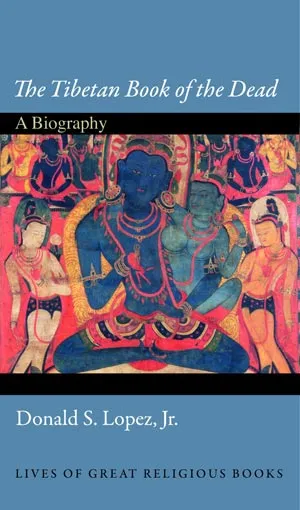
The Tibetan Book of the Dead
Donald S. Lopez, Jr.The Tibetan Book of the Dead: A Biography Princeton University Press 192 pages, 4 1/2 x 7 1/2 inches ISBN: 978 1400838042
Available here →May 11, 2011
20090313-donald-lopez-on-buddhism-science-guide-perplexed-1-1
In a nutshell
The rest of this thread
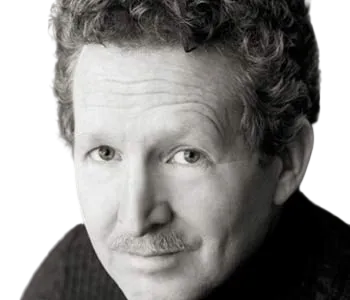
Donald S. Lopez Jr.
Donald S. Lopez, Jr. is the Arthur E. Link Distinguished University Professor of Buddhist and Tibetan Studies at the University of Michigan, where he serves as chair of the Department of Asian Languages and Cultures and as chair of the Michigan Society of Fellows. Besides the books featured in his two Rorotoko interviews, he is the author of The Story of Buddhism, Prisoners of Shangri-La, The Madman’s Middle Way, and others. Donald Lopez was elected to the American Academy of Arts and Sciences in 2000. He is currently completing a book on the European encounter with the Buddha.
Pull this thread
The Tibetan Book of the Dead is more an American book than a Tibetan one.
Know something the rest of us don't?
Most threads on Rorotoko begin with our invitation. Any thread can begin with a proposal: you write it with the same prompts every thread answers, and we review it.
Propose a thread →