
Donald S. Lopez Jr.
The Tibetan Book of the Dead
In Tibet, there is a genre of books called terma, which means “treasure” in Tibetan. According to Tibetan Buddhist belief, in the eighth century, a great Indian master named Padmasambhava came to Tibet to help establish Buddhism there. His stay was short and there was much for the Tibetans to learn. He therefore wrote hundreds of works and buried them all over Tibet—in mountains, in pillars, at the bottom of lakes—so that they could be discovered at the appropriate moment in the future. He also made prophecies about when, and by whom, they would be found.
The Tibetan texts that Evans-Wentz purchased belong to that genre of “treasures” and were unearthed in the fourteenth century. Scholars of Tibetan Buddhism, and some Tibetan Buddhists themselves, regard these works as spurious, as latter day compositions that are then buried by their author to be immediately unearthed, gaining legitimacy from the claim that they were written by Padmasambhava centuries earlier.
In conjunction with telling this story, I also tell the story of another famous case of buried texts: Joseph Smith’s discovery in 1823 of engraved plates unearthed from a hill in upstate New York. Smith would later translate these plates into The Book of Mormon.
As unlikely as it might seem, there are a number of interesting parallels between The Tibetan Book of the Dead and The Book of Mormon. I wrote with three audiences in mind. The first is those people who have heard of The Tibetan Book of the Dead, as I guess almost everyone has, but who have never read it and would like to learn something about it and its history. For them, I devote two chapters to the Buddhist doctrines and practices that appear in the Tibetan texts that Evans-Wentz purchased.
The second audience is those people interested in the history of religion in America and who might not be aware of the very American nature of Evans-Wentz’s book and the role it has played in the formation of American spirituality. For them, I describe Evans-Wentz’s earlier work on Celtic folklore as further evidence of his Theosophical convictions.
I also describe a kind of lineage of American spirituality that includes the Fox Sisters (the most famous American mediums of the nineteenth century), Madame Blavatsky, and Walter Evans-Wentz.
The third audience is those people who have read The Tibetan Book of the Dead and have drawn inspiration from it, either as a work of Buddhist practice or as a work to provide solace to the dying. These readers may not be aware of the circumstances of its creation and of the fact that the book is more famous in America than it ever was in Tibet.
I wrote the book with this last audience in mind—but not because I want to cast aspersions on a book that they love or because I wanted to disillusion them.
I am sometimes saddened to see that people who are interested in Buddhism think that they must renounce their historical consciousness in order to appreciate Buddhist texts. What I hope readers might understand is that The Tibetan Book of the Dead, like all religious texts, has a history and that knowing that history can also be the starting point for the inspiration we draw from it.
Editor: Erind Pajo
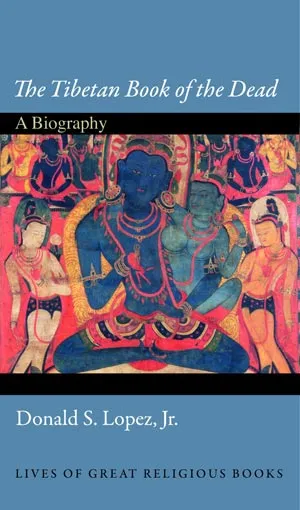
The Tibetan Book of the Dead
Donald S. Lopez Jr. The Tibetan Book of the Dead: A Biography Princeton University Press 192 pages, 4 1/2 x 7 1/2 inches ISBN: 978 1400838042
Available here →May 11, 2011
20090313-donald-lopez-on-buddhism-science-guide-perplexed-3
A close-up
The rest of this thread
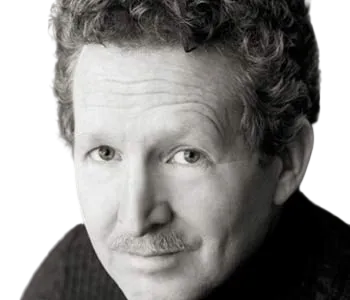
Donald S. Lopez Jr.
Donald S. Lopez, Jr. is the Arthur E. Link Distinguished University Professor of Buddhist and Tibetan Studies at the University of Michigan, where he serves as chair of the Department of Asian Languages and Cultures and as chair of the Michigan Society of Fellows. Besides the books featured in his two Rorotoko interviews, he is the author of The Story of Buddhism, Prisoners of Shangri-La, The Madman’s Middle Way, and others. Donald Lopez was elected to the American Academy of Arts and Sciences in 2000. He is currently completing a book on the European encounter with the Buddha.
Pull this thread
The Tibetan Book of the Dead is more an American book than a Tibetan one.
Know something the rest of us don't?
Most threads on Rorotoko begin with our invitation. Any thread can begin with a proposal: you write it with the same prompts every thread answers, and we review it.
Propose a thread →