
Daniel Martin Varisco
Reading Orientalism
Reading Orientalism is literally a re-reading of the late Edward Said’s Orientalism. Said’s powerful critique remains a milestone in the critical theory of academic bias three decades after its first publication. As the years go by, Orientalism survives more as an essential source to cite rather than a polemical text in need of thorough and open-minded reading. Read by academics as well as the general public in almost three dozen translations, Said’s text analyzes novels, travelogues and academic books to argue that a dominant imperialist discourse of West over East has underwritten virtually all past European and American representation of a so-called “Orient.”
The debate over these views of Edward Said, a prominent intellectual of Palestinian heritage, continues unabated even after his passing in 2003.
Reading Orientalism presents an in-depth critical analysis of Said’s unrevised text. I examine Said’s rhetoric of persuasion as well as the credibility and accuracy of historical claims made in representing Orientalism as a unified Western discourse. The result is a critical study of the phenomenon of Orientalism and its profound impact on the intellectual and political culture of our times.
Actually, Reading Orientalism is two books—one is a narrative couched in judicious satire of Said’s own writing style, and the other a comprehensive documentation buried in the endless set of endnotes. The narrative argument engages the mind of the reader through a certain amount of playful, literary flirtation. As an intentioned author, my genealogy in re-approaching Edward Said prefers satirist Mark Twain to philologist Friedrich Nietzsche and extols the wit of Baron Montesquieu’s Persian Letters over Gustave Flaubert’s flirtation with an Egyptian dancer.
Following a muse that can amuse at the same time that it disabuses the hubris of self-righteous posturing, I hark back to Oscar Wilde’s bon mot that those books which should not be read at all are “all argumentative books and all books that try to prove anything.” These are precisely the books we do need to read and understand why we do. Said’s Orientalism is such a book.
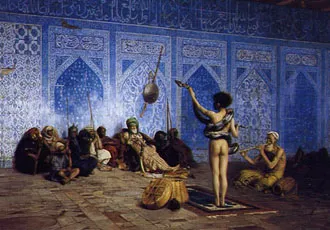
Jean-León Gérôme, The Snake Charmer, 1880
Editor: Erind Pajo

Reading Orientalism
Daniel Martin Varisco Reading Orientalism: Said and the Unsaid University of Washington Press 501 pages, 9 x 6 inches ISBN 978 0295987521
Available here →April 3, 2009
20090403-martin-daniel-varisco-reading-orientalism-edward-said-unsaid-1
In a nutshell
The rest of this thread
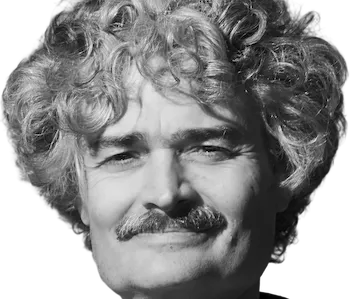
Dr. Najwa Adra
Daniel Martin Varisco
Daniel Martin Varisco is Professor and Chair of Anthropology at Hofstra University in Hempstead, New York. He has conduced ethnographic fieldwork and Arabic archival research in Yemen, Egypt, Turkey, and Qatar. He has served as President of the Middle East Section of the American Anthropological Association and on the board of the American Institute for Yemeni Studies and the American Academic Research Institute in Iraq. In 2005 he published Islam Obscured: The Rhetoric of Anthropological Representation. Varisco serves as co-editor of Contemporary Islam, editor of the online journal CyberOrient and webshaykh of the academic blog Tabsir: Insight on Islam and the Middle East. He is currently working on a comprehensive history of Yemeni agriculture in the Islamic era entitled Arabia Viridis.
Pull this thread
Orientalism was canonized without being read through, and Said's own thesis is itself an essentialism.
Know something the rest of us don't?
Most threads on Rorotoko begin with our invitation. Any thread can begin with a proposal: you write it with the same prompts every thread answers, and we review it.
Propose a thread →