
Thomas N. Bisson
The Crisis of the Twelfth Century
In Chapter VI, on pages 484-499, I open the discussion of “politicised power” with a new reading of the notorious assassination of Thomas Becket on 29 December 1170. Here, one appalling scene of crisis projects the whole problem of this book: lordship, its unpolitical failure, the habitual violence of knights.
What the sources say is that King Henry II and his proud archbishop Thomas were both great lord-princes. Both had vassals sworn to fidelity, both had great patrimonies, both were proud and intransigent. And when the lord-king wanted his former chancellor, now archbishop of Canterbury, to recognize the king’s jurisdictional rights over the English church, they fell into conflict that became heated and personal. Becket was forced into prolonged exile, then returned to England in hopes that a reconciliation was near, only to be murdered in his cathedral by a few knights who probably thought that the lord-king wished, after all, to destroy the disloyal prelate.
“If ever a medieval conflict cried out for a ‘political solution,’ it was this one.” But my argument here is that this was a “crisis of lordship.” It was not a political crisis, nor was it resolved as such—this was a struggle to the death between proud lord-princes who stood on principles, not policies. Neither cultivated allies so as to debate their claims; both insisted on their rights as non-negotiable. Thomas Becket’s principled “liberty of the church” could not be compromised, nor did the king seek to make his interest in a regulated church a worthy collective cause until it was too late. Both adversaries “were born and bred in cultures of lordship and nobility that prevailed widely and deeply in the twelfth century.”
But the “politicising” of power was already in progress by the 1170s. This section of the book continues with a discussion of “government” and “politics” as foreign to twelfth-century circumstances, and concludes with two case studies of crisis: that of Catalonia (1173 - 1205), which is here expounded for the first time, and that of Magna Carta in England (1212 - 1216), which is world-famous, but is placed here in a wholly new context. It is in these crises in two of Europe’s most progressive societies that political action first becomes visible. These are profoundly ironical mini-histories. In Catalonia the barons and castellans defended their bad lordship over peasants against king and church, their cause as historic as it was retrograde. In England a bad-lord king (John) aroused a baronial opposition that imposed Magna Carta on him, only to have a (great) pope (Innocent III) side with John and his lordship. In this case, however, the good cause proved historic.
Of my six original books, The Crisis of the Twelfth Century is the only one likely to prove controversial. But I shall welcome debate, it if comes, for what my 25 years with this subject have taught me is that the sources surviving from the twelfth century—everywhere in Europe, from Poland to Portugal, Sicily to Scotland—are overwhelmingly supportive of my thesis. Lordship was the normal form of power everywhere. In its new and most generative guises it was attended by violence, and it remained predominant even as it was overtaken by government toward 1200.
Some medievalist historians, especially older ones, may be troubled by the idea of a twelfth century without government. A smaller band of younger scholars have already taken issue with me about violence, and they will surely contend against my book. My arguments about exploitative lordship and constraint, however, have been revised and strengthened since I first set them out in 1994; and (to repeat) my support in the sources is strong.
I think it likely that Crisis will earn a recognized place in the ongoing study of power and institutional life in medieval Europe. It will be recognized for defending the old historians who first wrote about feudalism, without commending their justly discredited concept. Lordship, not “feudalism,” was the contemporary reality. My book is, I believe, the first to make clear how fundamental this really was in the twelfth century. I contend, further, that among writings in English, my book is the first fully to renounce the anachronistic concepts of government and politics with reference to the long (and formative) twelfth century. I hope that this position will prove influential.
Editor: Erind Pajo
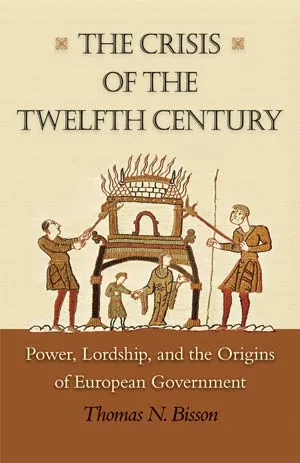
The Crisis of the Twelfth Century
Thomas N. Bisson The Crisis of the Twelfth Century: Power, Lordship, and the Origins of European Government Princeton University Press 720 pages, 5 1/2 x 8 1/2 inches ISBN 978 0691137087
Available here →May 15, 2009
20090515-bisson-thomas-crisis-12th-century-power-lordship-european-governme-3
A close-up
The rest of this thread
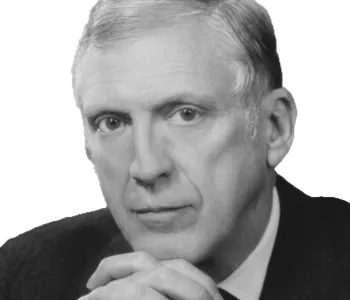
Courtesy of Harvard University Press
Thomas N. Bisson
Thomas N. Bisson, Emeritus Lea Professor of Medieval History, Harvard University, received his A.B. from Haverford College (1953), and studied with Joseph R. Strayer at Princeton University (Ph.D. 1958). He has written chiefly on medieval France and Catalonia, where he received the Creu de Sant Jordi (2001). The argument of The Crisis of the Twelfth Century was first set out in “The Feudal Revolution,” Past & Present no. 142 (1994). Bisson is Fellow of the Medieval Academy of America, the British Academy, Institut d’Estudis Catalans, etc.
Pull this thread
Twelfth-century Europe had no government, only lordship.
Know something the rest of us don't?
Most threads on Rorotoko begin with our invitation. Any thread can begin with a proposal: you write it with the same prompts every thread answers, and we review it.
Propose a thread →