
Thomas N. Bisson
The Crisis of the Twelfth Century
The Crisis of the Twelfth Century was conceived in 1987 when, upon moving from Berkeley to Harvard, I was invited to offer a course in Harvard’s undergraduate core curriculum. I welcomed the opportunity, for after some 25 years of teaching what I had been taught about medieval Europe, I was ready to try out a new and different view of the twelfth century. With the help of students and teaching fellows, my course, which was offered from 1988 to 2003, became an ongoing laboratory experiment in historical reinterpretation. My new argument was there from the start, but students read the sources with me. They were invited to draw their own conclusions about the shortcomings as well as the merits of my revisionist case.
To argue for a “crisis” in the twelfth century is altogether new, for two reasons. First, it challenges the view made famous by Charles Homer Haskins in his 1928 book entitled The Renaissance of the Twelfth Century. Was this not the grand creative century in medieval history, the century in which all was growth, creativity, and human progress? Second, my book challenges the great corollary of Haskins’s work: that government was a real element of twelfth-century progress, exemplified in the celebrated reigns of William the Conqueror and his Norman and Angevin successors, and in much else.
In my view, now long tested with students, this understanding of history is either seriously mistaken or seriously misleading. Wherever one looks in twelfth-century Europe, what the sources talk about is power and lordship, not government. Contemporaries had no definition of government, nor even a vision of it. Even when, after about 1160, they were stumbling into ad hoc contrivances for the general welfare, they had no vocabulary for that—no way of thinking about government or the state. And because I refrain from imposing any such usage on my subjects, the modern relevance of my book will seem understated to some readers.
Conceived during Ronald Reagan’s second term, and published at the moment of Barack Obama’s election, The Crisis of the Twelfth Century has resonance for us—to say the least. The Europe of knights, castles, and violence was, in our perspective, an ungoverned jungle. Government was to be the solution as well as a resolution, not the problem. To begin to think about power as “ours,” not just as “mine,” was new and progressive in the twelfth century. Unregulated power no longer worked. It is from the resolution of compounded crises in the twelfth century that government originates as a continuous phenomenon in European history.
Editor: Erind Pajo
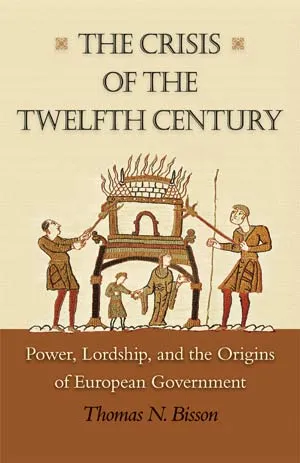
The Crisis of the Twelfth Century
Thomas N. Bisson The Crisis of the Twelfth Century: Power, Lordship, and the Origins of European Government Princeton University Press 720 pages, 5 1/2 x 8 1/2 inches ISBN 978 0691137087
Get the book →May 15, 2009
20090515-bisson-thomas-crisis-12th-century-power-lordship-european-governme-2
The wide angle
The rest of this thread
Courtesy of Harvard University Press
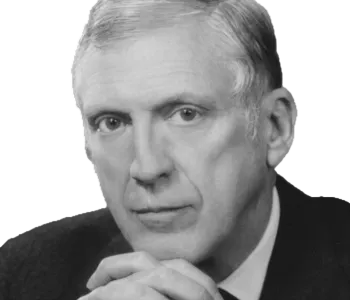
Thomas N. Bisson
Thomas N. Bisson, Emeritus Lea Professor of Medieval History, Harvard University, received his A.B. from Haverford College (1953), and studied with Joseph R. Strayer at Princeton University (Ph.D. 1958). He has written chiefly on medieval France and Catalonia, where he received the Creu de Sant Jordi (2001). The argument of The Crisis of the Twelfth Century was first set out in “The Feudal Revolution,” Past & Present no. 142 (1994). Bisson is Fellow of the Medieval Academy of America, the British Academy, Institut d’Estudis Catalans, etc.
Know something the rest of us don't?
Most threads on Rorotoko begin with our invitation. Some begin with a proposal. Both use the same prompts and the same editing, with your own pages in the archive. Proposed threads carry a small Sponsored label and a fee.
Propose a thread →