
Thomas N. Bisson
The Crisis of the Twelfth Century
This is a book about power in a great period of the European Middle Ages. All societies have governments, right? And surely so in the famously progressive twelfth century? No, not so. The Crisis of the Twelfth Century argues, against an old and massive consensus of historians, that the story of power in the twelfth century is not that of government, but rather one of lordship—and that the exercise of power for social purpose began in the western world only as the resolution of a prolonged crisis of power.
In twelfth-century Europe, the public powers to protect and judge exercised by emperors and kings were subverted by ambitious pretenders to personal powers over people. Building castles in vast numbers, they created multiplied lordships over peasants who were forced into submission, and even servility. The masters of castles and their knights, craving noble status for themselves, had to dominate by force, exploitatively, in order to avoid submission themselves.
The book asks not only how they exercised power, but also how the masses of people experienced power. Their suffering, their voiced complaints against arbitrary lordship, led to reaction and to the revival of public justice. By granting charters, including the English Magna Carta, the greater lord-princes restored public taxation (and consent) in support of public enterprise.
But the crisis thus resolved was not only, perhaps not even primarily, one of suffering people. It was also a crisis of economic growth, for lord-princes were compelled by increased numbers of productive people to impose accountability on their appointed agents, to learn how to manage as well as to exploit. And it was, above all, a crisis of lordship. Could the multiplied masters of castles impose their exploitative domination? Their ultimate failure marked the origins of government in Europe. Could the great lord-rulers overcome the genetic defect of their status: the accident of dynastic failure leading to civil war? Their success in France and England coincided with their success in putting down the castellans, whereas in Germany dynastic conflict long delayed the resolution of crisis.
The compounded crises can be traced in varied “cultures of power”: those of troubadour singers, of moralists such as John of Salisbury and Peter the Chanter, and of the lawyers who rediscovered the concept of public interest in the twelfth century.
Editor: Erind Pajo
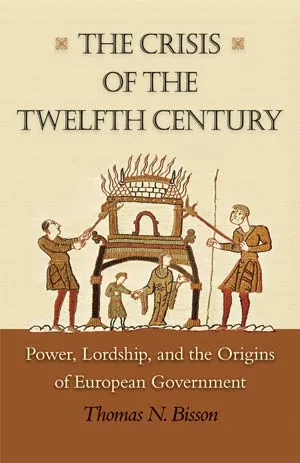
The Crisis of the Twelfth Century
Thomas N. Bisson The Crisis of the Twelfth Century: Power, Lordship, and the Origins of European Government Princeton University Press 720 pages, 5 1/2 x 8 1/2 inches ISBN 978 0691137087
Available here →May 15, 2009
20090515-bisson-thomas-crisis-12th-century-power-lordship-european-governme-1-1
In a nutshell
The rest of this thread
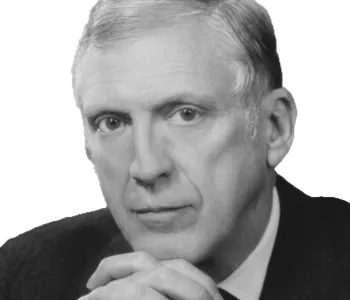
Courtesy of Harvard University Press
Thomas N. Bisson
Thomas N. Bisson, Emeritus Lea Professor of Medieval History, Harvard University, received his A.B. from Haverford College (1953), and studied with Joseph R. Strayer at Princeton University (Ph.D. 1958). He has written chiefly on medieval France and Catalonia, where he received the Creu de Sant Jordi (2001). The argument of The Crisis of the Twelfth Century was first set out in “The Feudal Revolution,” Past & Present no. 142 (1994). Bisson is Fellow of the Medieval Academy of America, the British Academy, Institut d’Estudis Catalans, etc.
Pull this thread
Twelfth-century Europe had no government, only lordship.
Know something the rest of us don't?
Most threads on Rorotoko begin with our invitation. Any thread can begin with a proposal: you write it with the same prompts every thread answers, and we review it.
Propose a thread →