
Nicholas Dagen Bloom
Public Housing That Worked
Public Housing That Worked is one of the few upbeat histories of one of the most reviled aspects of the American welfare state: tower block public housing. Some years ago I identified the curious fact that the projects of America’s largest housing authority had not suffered the same disastrous fate as so much public housing elsewhere.
New York City still housed more than 10% of public housing tenants nationally, and its housing authority had been founded in 1934, but was mysteriously never the subject of a comprehensive history. Why not? Why had it been ignored? In my opinion the answer was simple: it did not fit the conventional wisdom that public housing is always doomed to failure.
What I found, as I researched in the archives of the New York City Housing Authority, was that New York had adopted an alternative management model that proved superior to those in other cities. The book looks in detail, over time, at the different elements of this management including politics, design, tenant selection, community planning, and daily maintenance.
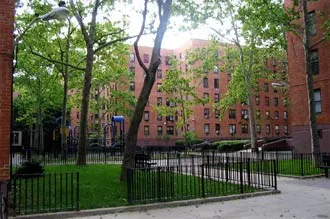
Vladeck Houses on New York City’s Lower East Side. Photo Nicholas Bloom.
Editor: Erind Pajo
Public Housing That Worked
Nicholas Dagen Bloom Public Housing That Worked: New York in the Twentieth Century University of Pennsylvania Press 368 pages, 6 x 9 inches ISBN 978 0812240771 ISBN 978 0812220674
Available here →May 18, 2009
20090518-bloom-nicholas-public-housing-that-worked-new-york-1-1
In a nutshell
The rest of this thread
.webp)
Nicholas Dagen Bloom
Nicholas Dagen Bloom is an associate professor and chairman of interdisciplinary studies at the New York Institute of Technology. He was born and raised in Baltimore and educated at the University of Wisconsin and Brandeis University. Besides Public Housing That Worked, he is the author of Suburban Alchemy: 1960s New Towns and the Transformation of the American Dream (2001) and Merchant of Illusion: James Rouse, America’s Salesman of the Businessman’s Utopia (2004), and editor of Adventures Into Mexico: American Tourism Beyond the Border (2006). Dr. Bloom has been an invited speaker on public housing history at Columbia University, the MIT, the New School University, and the New York City Housing Authority.
Pull this thread
New York's tower-block public housing worked, proving that design does not determine social outcome.
Know something the rest of us don't?
Most threads on Rorotoko begin with our invitation. Any thread can begin with a proposal: you write it with the same prompts every thread answers, and we review it.
Propose a thread →