
Nicholas Dagen Bloom
Public Housing That Worked
Anybody interested in social policy should take a look at Chapters 11 and 12 in the book. These chapters show that New York’s housing managers faced and overcame many of the same social challenges that destroyed public housing in cities elsewhere—welfare concentration, crime, vandalism, etc. These chapters indicate that it wasn’t luck that kept New York’s towers alive, but the application of decent management practices even as the challenges mounted. During the most troubled years of the New York City Housing Authority, the 1970s and 1980s, employees still collected rents, mopped hallways, picked up trash, repaired elevators, arrested criminals, replaced broken windows, and cleaned graffiti—and they do so today.
New York’s public housing, both then and now, may not have been the utopia housing advocates dreamed up in the 1930s. But most people are surprised by how well kept New York’s public housing is, especially in light of all the negative press coverage public housing attracts. The buildings and grounds in New York are regularly maintained and the apartments much loved by long-term residents. Public housing in many other cities, meanwhile, has been completely abandoned by government officials.
Those who would abandon the poor by arguing that nothing can be done for them should consider the strategies of control and maintenance that, while not always popular or soft-hearted, kept public housing alive in New York. The old fashioned, often paternalistic, system of control pursued in New York has pretty progressive outcomes: lots of cheap housing for working people in one of the country’s most expensive cities.
The book raises as many questions as it answers. If New York can keep up towers, why can’t many cities do a better job maintaining low-rise public housing? If New York can provide affordable housing on big scale, why can’t other cities and the federal government think about new subsidized housing? We probably will need more and better subsidized housing in the future; my book offers some lesson on what worked, not just what failed. Public Housing That Worked shows that ”smart” government can work for people and create decent social housing systems.
As we watch the collapse of the homeownership society—in part based on the idea that everyone regardless of income should own a home—I haven’t been surprised that public housing, with its negative reputation nationally, has stayed off the table as a solution to foreclosure. Yet I remain convinced that many people who moved into subprime housing would have been better off in some form of government subsidized housing in the first place. Instead of subsidizing these few families for billions, we let many working families buy houses they could not afford. This policy error will now cost us trillions as we try to stem foreclosure and steady the mortgage system. Frankly, I am not sure who will not live in some form of government subsidized housing when this crisis is finally over.
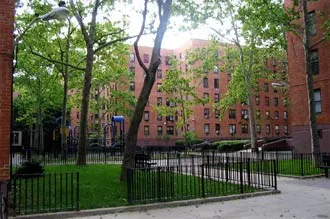
Vladeck Houses on New York City’s Lower East Side. Photo Nicholas Bloom.
Editor: Erind Pajo
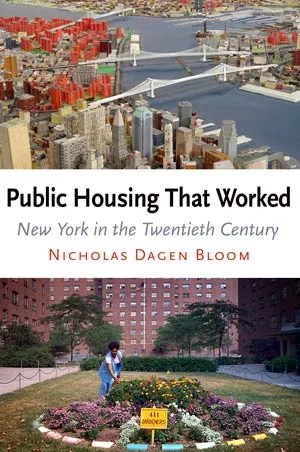
Public Housing That Worked
Nicholas Dagen Bloom Public Housing That Worked: New York in the Twentieth Century University of Pennsylvania Press 368 pages, 6 x 9 inches ISBN 978 0812240771 ISBN 978 0812220674
Available here →May 18, 2009
20090518-bloom-nicholas-public-housing-that-worked-new-york-3
A close-up
The rest of this thread
.webp)
Nicholas Dagen Bloom
Nicholas Dagen Bloom is an associate professor and chairman of interdisciplinary studies at the New York Institute of Technology. He was born and raised in Baltimore and educated at the University of Wisconsin and Brandeis University. Besides Public Housing That Worked, he is the author of Suburban Alchemy: 1960s New Towns and the Transformation of the American Dream (2001) and Merchant of Illusion: James Rouse, America’s Salesman of the Businessman’s Utopia (2004), and editor of Adventures Into Mexico: American Tourism Beyond the Border (2006). Dr. Bloom has been an invited speaker on public housing history at Columbia University, the MIT, the New School University, and the New York City Housing Authority.
Pull this thread
New York's tower-block public housing worked, carried by constant maintenance, tough policing, tenant selection and community planning.
Know something the rest of us don't?
Most threads on Rorotoko begin with our invitation. Any thread can begin with a proposal: you write it with the same prompts every thread answers, and we review it.
Propose a thread →