
Cormac Ó Gráda
Famine
The book is about famine, one of the greatest catastrophes that could befall any community. It offers a clear, non-technical overview of a fraught topic and of a wide-ranging, multi-disciplinary literature covering the globe over several millennia. I focus on the causes, symptoms, and results of famine, explain the strategies that communities have used over the ages to combat and cope with famine, and discuss the frequency of famine in the past and whether humankind is any nearer to making famine history.
I believe this is the most comprehensive history of famine available.
Famines have a history spanning six or seven millennia, stretching from Gilgamesh, Egyptian stelae, and the Old Testament to the present. Famine: A Short History describes their causes and their symptoms and explains how these have changed over the centuries. The book’s approach is thematic, rather than chronological, analytical rather than narrative. This is not to say that the book is difficult to read, merely that each chapter invokes evidence both across the continents and over the centuries.
I wrote on the premise that understanding what causes famine may help make them less likely in future. This should make Famine of interest to governments, relief agencies, historians, political scientists, and development economists.
Editor: Erind Pajo
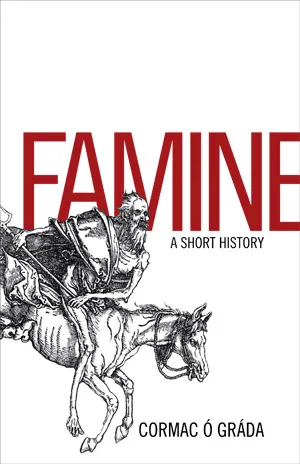
Famine
Cormac Ó Gráda Famine: A Short History Princeton University Press 344 pages, 51/2 x 81/2 inches ISBN 978 0691122373
Available here →May 25, 2009
20090525-ograda-cormac-famine-short-history-1-1
In a nutshell
The rest of this thread

Cormac Ó Gráda
Cormac Ó Gráda is professor of economics at University College Dublin. His other books include Ireland: A New Economic History (Oxford, 1994), A Rocky Road: The Irish Economy since the 1920s (Manchester, 1997), Black ’47 and Beyond: The Great Irish Famine in History, Economy, and Memory (Princeton, 1999), and Jewish Ireland in the Age of Joyce: A Socioeconomic History (Princeton, 2006). He lives with his family in Dublin.
Pull this thread
Every famine is the product of economic backwardness and human action together.
Know something the rest of us don't?
Most threads on Rorotoko begin with our invitation. Any thread can begin with a proposal: you write it with the same prompts every thread answers, and we review it.
Propose a thread →