
In a nutshell
September 21, 2009
Sorry States
In order for countries to reconcile after terrible wars, must they apologize, pay reparations, and otherwise “come to terms with the past”?A powerful conventional wisdom, based on the postwar experiences of West Germany and Japan, says yes. West Germany made extensive efforts to atone for wartime crimes—formal apologies, monuments to victims of the Nazis, and candid history textbooks; Bonn successfully reconciled with its wartime enemies. By contrast, Japan routinely ignites the ire of its former adversaries when its leaders deny atrocities or visit memorials that honor the architects of Japanese imperialism. Each release of new history textbooks in Japan sparks regional furor as books often gloss over past aggression and atrocities. Tokyo has paid little in the way of reparations to victims; its apologies have been derided as too little, too late. Observers say that the suspicion of Japan that lingers in Asia is caused in great part by Japan’s failure to face its past.
But is it this simple? What is the relationship between apologies, memory, and international reconciliation?
To answer these questions, my book Sorry States: Apologies in International Politics examines the post-World War II cases of South Korean relations with Japan, and French relations with Germany. I find that, as many people have argued, denials of past aggression and atrocities do fuel distrust and elevate fears among former adversaries. More than sixty years after the war, Japan’s failure to admit its atrocities continues to poison relations with not only South Korea but also China and Australia.
Across the globe, West Germany’s willingness to accept responsibility for the crimes of the Nazi era, and the absence of denials or glorifications of that past among mainstream West Germans, reassured Germany’s World War II adversaries. To this day the French and British monitor German remembrance for signs of revisionism and are reassured by their absence. Both the German and Japanese cases thus suggest that avoiding denials and glorification of past violence facilitates reconciliation.
Though I find strong support for the widely accepted view about the damaging effects of denials, my book challenges the prevailing wisdom in two important ways. One, I show that many countries have been able to reconcile with very little contrition or self-reflection about the past. Two, I argue that contrition is highly controversial and likely to cause a domestic backlash that alarms—rather than assuages—outside observers.
Because of backlash, I find that apologies and other such polarizing gestures are unlikely to soothe relations after conflict. Less accusatory remembrance, conducted bilaterally or in multilateral settings, holds the most promise for international reconciliation.
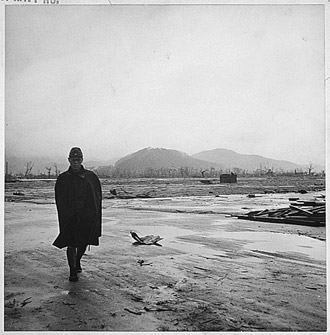
A Japanese soldier walks through the ruins of Hiroshima after the atomic bombing. Photo courtesy of National Archives.
Editor: Erind Pajo
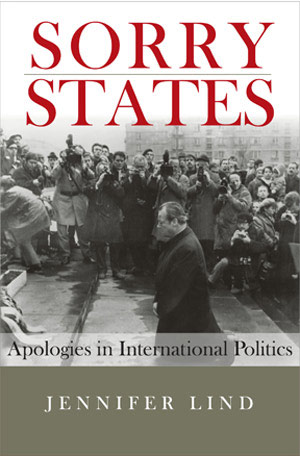
Sorry States
Jennifer Lind Sorry States: Apologies in International Politics Cornell University Press 256 pages, 6 1/8 x 9 1/4 inches ISBN 978 0801446252
Get the book →September 21, 2009
20090921-lind-jennifer-on-sorry-states-apologies-international-politics-1-1
The rest of this thread

Joseph Mehling
Jennifer Lind
Jennifer Lind is Assistant Professor in the Department of Government at Dartmouth College. She received a Ph.D. in Political Science from the Massachusetts Institute of Technology, an M.A. in Pacific International Affairs from the University of California, San Diego, and a B.A. from the University of California, Berkeley. In addition to Sorry States, she has authored scholarly articles in International Security and Security Studies, and has also written for Foreign Affairs, Atlantic and Foreign Policy. Professor Lind has worked as a consultant for RAND and for the Office of the Secretary of the U.S. Department of Defense, and has lived and worked in Japan. Her current research interests include the resilience of the North Korean regime, planning for stability operations in the event of North Korean collapse, and energy competition and its security implications for East Asia. Publications and more are available at her Dartmouth page.
Feature your book
Publishing with a small press, or on your own?
A Sponsored Thread runs like every other thread on Rorotoko: three parts on three dates, the same editorial review, your own pages in the archive. Marked Sponsored. $199, paid only once accepted.
Feature your book →