Understanding what promotes international reconciliation is a key but neglected question in world politics. Scholars who study the phenomenon of war have explored many of its aspects—when do wars start, how do they end, who wins, and so on. Indeed, these are critically important questions. However, analysts have paid less attention to another key issue—the causes of peace. Not that this has been entirely unexamined. But the role of ideas in peacemaking, and specifically memory, has so far received little attention.
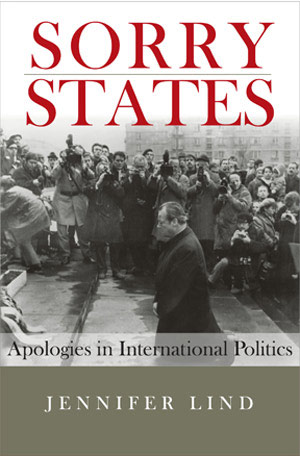
Scholars, journalists, and other analysts have explored how countries deal with their own violent history, and how memory and justice affect national development, democratic consolidation, and stability. Examples include the cases of South Africa and the role of the Truth and Reconciliation Commission; various Latin American countries and how the victims of dictators and military juntas are remembered or forgotten; also Rwanda and how its society has rebounded from its terrible recent past. In my book I wanted to connect the concepts from this literature about the domestic realm to the realm of international politics. I ask how the ways that countries remember and atone for the past affect the promise of international reconciliation.I grew interested in this topic because, as an East Asia specialist, I could see the powerful role of memory in regional relations. Every day seemed to bring another news story about a textbook crisis between Japan and its neighbors, a rift in Sino-Japanese relations about history issues, or an uproar over a gaffe made by a Japanese politician. These issues seemed to weigh heavily over the region’s politics, yet I found that my international relations toolkit offered little to help me understand them. That’s why I wrote this book.