
Kay Heath
Aging by the Book
In an 1852 Punch cartoon, a middle-aged man looks in a mirror and says, “Good gracious! Is it possible?—No! Yes! No!—Yes! Yes, by Jupiter, it's a grey hair in my favourite whisker!” Jokes like this might be routine to us, but in Victorian England they represented a new way of thinking about age.
Middle age had been considered the prime of life since Aristotle, an idea evident in “steps of life” drawings that were popular from the medieval era into the nineteenth century. They feature a fifty-year-old man—or less commonly a woman—who stands proudly on the top of an arched set of steps depicting the decades of life from ten to ninety. In the eighteenth century, concern about aging remained on the elderly. Longevity texts, describing elaborate techniques and rituals for living into a "green” or healthy old age, became the rage.
Though scholars usually discuss midlife anxiety as a product of the twentieth century, I argue that age anxiety was expanded in Victorian Britain to include the middle of the life course. The word “midlife” itself first appeared in an English dictionary in 1895 to designate this developing idea. In Aging By The Book, I demonstrate that concern about midlife became common during the Victorian era, that we inherited our obsession with being “over the hill” from the nineteenth century.
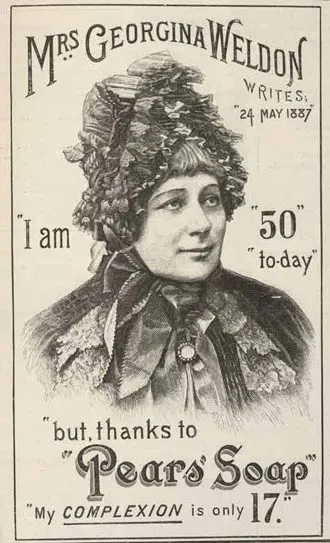
Image courtesy of the Library of Virginia.
Editor: Erind Pajo
Aging by the Book
Kay Heath Aging by the Book: The Emergence of Midlife in Victorian Britain SUNY Press 247 pages, 9 x 6 inches ISBN 978 0791476574
Available here →January 13, 2010
20100113-kay-heath-on-aging-by-book-emergence-midlife-victorian-britain-1-1
In a nutshell
The rest of this thread

Kay Heath
Kay Heath is an associate professor of English at Virginia State University. In addition to Aging By The Book, she has published on nineteenth-century aging in Victorian Literature and Culture and Frances Trollope and the Novel of Social Change. Currently, she is working on a project about Victorian women who began writing careers in midlife. Heath was a 2008 recipient of a Mellon Fellowship at the Harry Ransom Center. She received her Ph.D. from Rice University in 2001.
Pull this thread
Midlife anxiety is a Victorian invention, and the word midlife entered an English dictionary in 1895 to name it.
Know something the rest of us don't?
Most threads on Rorotoko begin with our invitation. Any thread can begin with a proposal: you write it with the same prompts every thread answers, and we review it.
Propose a thread →