
Jonathan Walker
Pistols! Treason! Murder! The Rise and Fall of a Master Spy
Pistols! Treason! Murder! describes the short, disturbing and unprecedented career of a Venetian spy, Gerolamo Vano, who was executed for perjury in 1622.
In the years immediately preceding his death, Vano wrote hundreds of surveillance reports, based on material compiled from a revolving cast of suborned informants. Vano submitted these reports to his nominal employers, the Venetian Inquisitors of State, who were dedicated to protecting state secrets—that is, to counter-intelligence in modern parlance.
Vano’s targets were the embassies of powers then hostile to the independent Venetian republic, principally Spain and her Hapsburg allies. In working against these targets, Vano was one of a number of competing suppliers in what we might describe as a deregulated free market of information (indeed, a black market); one whose invisible operation on capitalist principles was unique in the guild economy of early seventeenth-century Venice.
The Inquisitors of State did not directly employ informers (although they could directly reward them); rather, they delegated this task to independent intermediaries like Vano, whose reports are distinctive among those submitted by his contemporaries for their professional focus. They are also crudely melodramatic and obviously mendacious, even if it is virtually impossible to catch Vano outright in any specific lie. Nonetheless, these reports resulted in the arrest, imprisonment and/or execution of several of Vano’s protagonists. But since the Inquisitors’ final statement on the matter was to execute Vano for perjury, his reports clearly present unique interpretive problems.
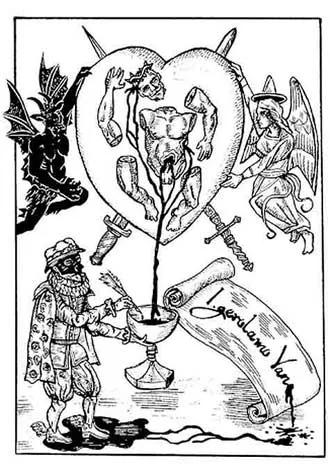
Pistols! Treason! Murder! is therefore about Vano as a storyteller, but it is also more generally about the role of stories in historical analysis. To do justice to Vano, it was necessary to experiment with several devices that have no direct equivalent in his surveillance reports, but that illuminate them by analogy, such as original illustrations drawn in the style of seventeenth-century woodcuts and a dialogue between myself and two other historians.
Editor: Erind Pajo
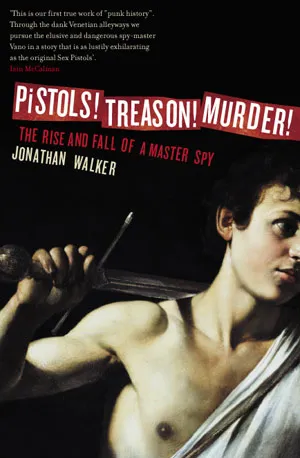
Pistols! Treason! Murder! The Rise and Fall of a Master Spy
Jonathan Walker Pistols! Treason! Murder! The Rise and Fall of a Master Spy The Johns Hopkins University Press 288 pages, 9 x 6 inches ISBN 978 0801893704
Available here →February 3, 2010
20100203-jonathan-walker-on-pistols-treason-murder-rise-fall-master-spy-1
In a nutshell
The rest of this thread

Scott Riley
Jonathan Walker
Jonathan Walker is a Senior Research Fellow in the Department of History at the University of Sydney. He is the author of articles on the history of Venice, which have appeared in journals such as Past and Present and Rethinking History. Pistols! Treason! Murder! is his first book. (The first chapter can be downloaded for free from http://www.pistolstreasonmurder.com; for more discussion see http://www.jonathanwalkersblog.com.) Together with Dan Hallett, Walker has just completed an “illuminated novel,” Five Wounds, which will be published by Allen & Unwin later in 2010. He is also working on a documentary photography project, Let Us Burn the Gondolas: Venice as a Modern City.
Pull this thread
pulls againstpulls alongside
The spy is the representative figure in the genealogy of modernity.
Against CE · The Night Café encodes Van Gogh's sense of life's meaning, clue by clue, resting on a parable from Luke. On: A person has an inner authentic self that can be uncovered by looking inward
Against NW · Even architecture specialists cannot say whether Le Corbusier was married, and what they think they know is wrong. On: A person has an inner authentic self that can be uncovered by looking inward
Alongside RL · There is no such thing as an identity, only a jumble of self-identifications with raw appetites underneath. On: A person has an inner authentic self that can be uncovered by looking inward
Alongside VS · Fashion is significant precisely because it is superficial, and psychoanalytic concepts are the right instruments for reading clothes. On: A person has an inner authentic self that can be uncovered by looking inward
Alongside PR · Self-consciousness grows out of the fear of being rejected, and to be ignored is psychological death. On: A person has an inner authentic self that can be uncovered by looking inward
Alongside MG · Einstein's sixteen months in Prague were no way station, and they durably marked his philosophy of science, Zionism and politics. On: A person has an inner authentic self that can be uncovered by looking inward
Nearby BH · German law was corrupted before the Nazis took power, by judges and prosecutors while Weimar still stood.
Nearby SM · The Nozière case gripped France because the parents were recognizably people like us.
Know something the rest of us don't?
Most threads on Rorotoko begin with our invitation. Any thread can begin with a proposal: you write it with the same prompts every thread answers, and we review it.
Propose a thread →