
Joshua Shannon
The Disappearance of Objects
New York’s artists around 1960 were living in the shadows of the city’s deindustrialization—moving among demolition sites, abandoned factories, and decrepit hardware stores, while all around them new highways, sleek skyscrapers, and urban renewal projects were forever altering the city’s purpose and shape. The purpose of The Disappearance of Objects is to tell this important chapter of postwar art history, but especially to place that strange history back in the context of a city undergoing incredibly rapid change.
Using four case studies focused on the work of Jasper Johns, Donald Judd, Claes Oldenburg, and Robert Rauschenberg, the book discusses the art of this period as a deeply revealing (if also clumsy) effort to understand New York’s first stages of postmodernization. Oldenburg installed room-sized works made from trash, Johns sculpted heavy little replicas of outmoded flashlights and beer cans, Rauschenberg made paintings out of nineteenth-century architectural scraps, and Judd ordered up crystalline sheet-metal boxes. In various ways, all this difficult-to-interpret art offered an unusually sophisticated way of thinking about the changing texture of everyday life.
The book’s title comes from a note in Johns’s sketchbook about the “loss, destruction, disappearance of objects.” I hope that the book communicates what this art taught me about how recent history has brought an abstraction of our everyday spaces, a shift toward systematicity and away from particular, palpable things. Of course I hope, too, that the book serves as a way for us to think historically and critically about the texture of life in the present, about how profoundly our relationship to the material world has changed in a few short decades.
Editor: Erind Pajo
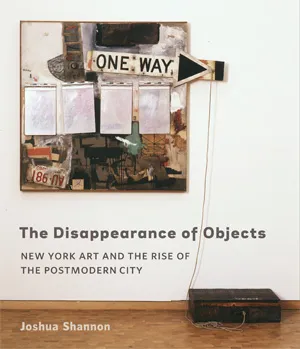
The Disappearance of Objects
Joshua Shannon The Disappearance of Objects: New York Art and the Rise of the Postmodern City Yale University Press 348 pages, 9 ¾ x 8 ¼ inches ISBN 978 0300137064
Available here →April 5, 2010
20100405-shannon-joshua-on-disappear-objects-new-york-art-postmodern-city-1-1
In a nutshell
The rest of this thread
Joshua Shannon
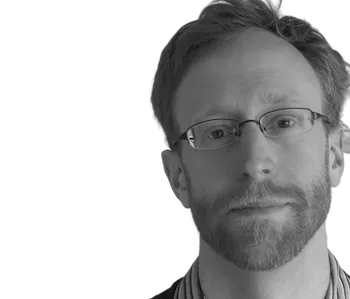
Joshua Shannon is Assistant Professor of contemporary art history and theory at the University of Maryland. In 2009-10, he holds the Terra Visiting Professorship of American Art at the Freie Universität Berlin, where he is working on a new book called The Recording Machine: Photography and Realism since the 1960s.
Pull this thread
pulls againstpulls alongside
The difficult New York art of around 1960 was an attempt to understand the city's deindustrialization.
Nearby LB · Chicago is now an arts-rich global city, and its inherited images obstruct seeing what it actually is.
Nearby AC · Rustbelt cities turned to tourism not because it worked but because postwar leaders had few other options.
Nearby AV · Postwar suburbia is a landscape of interiors, each an escape capsule from a city becoming racially mixed.
Know something the rest of us don't?
Most threads on Rorotoko begin with our invitation. Any thread can begin with a proposal: you write it with the same prompts every thread answers, and we read it.
Propose a thread →