
Richard Ned Lebow
Why Nations Fight
The Iraq invasion of 2003 was justified by the Bush administration on the grounds of national security. But all of the principal advisors of the administration of president George W. Bush’s father privately told the president that no security or economic interest was at stake—and that intervention could put them at risk.
Oil is another unsatisfactory explanation for the Iraq invasion. The oil companies themselves did not favor war, but wanted the administration to end sanctions so they could buy and distribute Iraqi oil.
The invasion is best understood as an attempt to exploit America's comparative military advantage to lock in “the unipolar movement” for reasons of standing. Rather than making friend and foe alike more complaint, it provided the need and opportunity for them to become more recalcitrant.
The three shifts in thinking I identity have two common features. Each developed slowly and progressed in fits and starts.
Changes in beliefs took a long time to become sufficiently widespread to affect practice, and practice was at first halting and unsuccessful. Over time, however, patterns of behavior changed and the motives in question become increasingly disaggregated from war. The revolution in thinking about wealth began in late eighteenth century, did not fully become the conventional wisdom until the late nineteenth century and did not act as a check on war until at least one half century later. Collective security, a product of the early nineteenth century, took almost 150 years to show meaningful political consequences. The shift in thinking about standing is a twentieth century phenomenon and only began to affect political practice during the Cold War.
This author can only hope that a book that demonstrates how traditional conceptions of standing have been responsible for war can help accelerate this change, and, with it, the search and acceptance of alternate means of claiming and receiving standing.
Editor: Erind Pajo
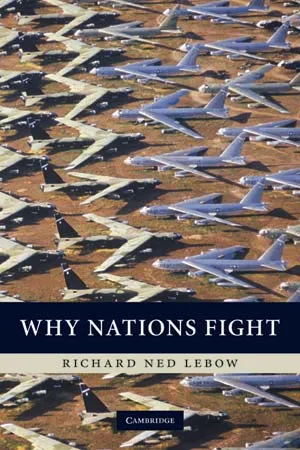
Why Nations Fight
Richard Ned Lebow Why Nations Fight: Past and Future Motives for War Cambridge University Press 344 pages, 9 x 6 inches ISBN 978 0521192835 ISBN 978 0521170451
Available here →October 4, 2010
20100407-lebow-richard-on-forbidden-fruit-counterfactuals-intl-relations-3
A close-up
The rest of this thread
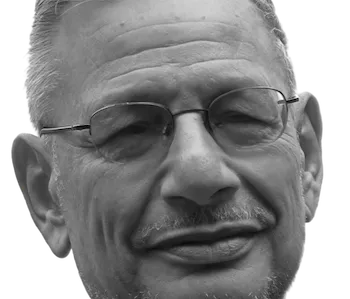
Richard Ned Lebow
Richard Ned Lebow is the James O. Freedman Presidential Professor of Government at Dartmouth College and Centennial Professor of International Relations at the London School of Economics and Political Science. Besides the books featured in his Rorotoko interviews, Forbidden Fruit and Why Nations Fight, he is also the author of A Cultural Theory of International Relations (Cambridge, 2008), winner of the Jervis-Schoeder Award for the best book in international relations and history and the Susan Strange Award for the best book of the year, and The Tragic Vision of Politics: Ethics, Interests and Orders (Cambridge, 2003), winner of the Alexander L. George Award for the best book in political psychology.
Pull this thread
The desire for standing, not security, is the main cause of war.
Know something the rest of us don't?
Most threads on Rorotoko begin with our invitation. Any thread can begin with a proposal: you write it with the same prompts every thread answers, and we review it.
Propose a thread →