
Heather Cox Richardson
Wounded Knee
Since the 1970s, there has been a tendency in America to see inequalities in society solely through the lens of race. Our understanding of the Wounded Knee massacre has reflected this: we have blamed racist soldiers alone for the brutal deaths of the Sioux that day.
But using racism as a scapegoat for society’s inequalities is far too easy. It lets modern-day Americans—most of whom pride themselves for not being racist—condemn inequalities in the past while insisting that problems in the present are not of their making.
Wounded Knee demands that we use a wider lens when we look at society’s problems. I recognize the racism of the soldiers, but if the soldiers had had their wish, they would never have been in South Dakota in the first place.
To understand what created the Wounded Knee massacre, we have to look beyond the racism of the soldiers. We have to figure out what led President Harrison to deploy a third of the U.S. Army to the new state of South Dakota when there was no obviously pressing reason to do so. It turns out that what prompted him to make that fatal decision was a toxic brew of politics and economics.
It is a mistake to let racism alone bear the responsibility for American inequalities. Wounded Knee suggests that to understand events like the massacre—as well as myriad other instances where one group has advantages over another—we have to look at larger societal systems. We need to see how economic policies privilege certain groups over others; how seemingly even-handed legislation can in fact discriminate against certain groups of people; how political machinations have winners and losers.
Looked at this way, continuing inequalities in society cannot be explained away by blaming somebody else’s racism. They implicate anyone who participates in the system without addressing its flaws.
In 1890, the soldiers were responsible for pulling the triggers, yes. But anyone who had voted for the Harrison administration was also responsible for what happened at Wounded Knee.
Some of those Republican voters prided themselves on their goodwill toward the Indians. But they were nonetheless instrumental in setting them up for destruction: accepting the idea that Harrison’s opponents were socialists who wanted to destroy America, they handed the reins of government to men who were determined to promote big business at all costs.
Editor: Erind Pajo
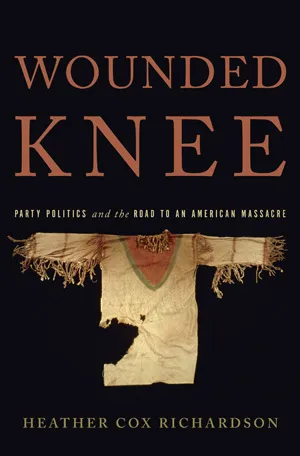
Wounded Knee
Heather Cox Richardson Wounded Knee: Party Politics and the Road to an American Massacre Basic Books 392 pages, 9 ¼ x 6 ½ inches ISBN 978 0465009213
Available here →June 7, 2010
20100607-richardson-heather-on-wounded-knee-party-politic-american-massacre-2
The wide angle
The rest of this thread
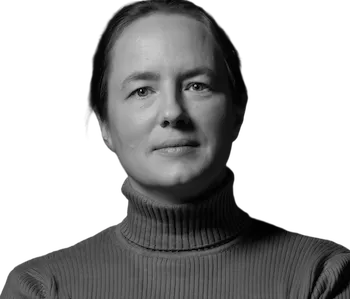
Greg Anthony
Heather Cox Richardson
Heather Cox Richardson is a professor of history at University of Massachusetts, Amherst. Besides Wounded Knee, featured in her Rorotoko interview, she is the author of a number of other books on late nineteenth-century America, including The Death of Reconstruction: Race, Class, and Politics, 1865-1901, and West from Appomattox: The Reconstruction of America after the Civil War.
Pull this thread
pulls againstpulls alongside
Wounded Knee happened because control of the U.S. Senate hung on one contested South Dakota seat.
Against SB · Modern assassination is a state phenomenon, because the reaction of states is what gives political murder its charge. On: Large historical outcomes are contingent choices rather than the working-out of deep causes
Against DS · Dehumanization works because its victims are seen as human vermin, uncanny fusions of fellow human and subhuman creature. On: Ideology explains state and collective violence
Against TH · Ordinary crime control, not ideology, was one of the decisive steps to the Bolshevik totalitarian state. On: Rates of violence are set by material conditions such as poverty and unemployment
Against IH · Humans head toward ever more stuff because when things fail the fix is more things, and that cannot be reversed. On: Large historical outcomes are contingent choices rather than the working-out of deep causes
Alongside JA · Capitalism is a culture, neither inevitable nor natural, so it takes a different shape in every country that adopts it. On: Large historical outcomes are contingent choices rather than the working-out of deep causes
Alongside RS · When you are born matters more than who you are, and history is baked into criminal records. On: Rates of violence are set by material conditions such as poverty and unemployment
Alongside DH · Socialist ideology did not cause Stalinist violence, whose techniques came from a European repertoire of modern state practice. On: Ideology explains state and collective violence
Alongside PW · The Thirty Years War was neither inevitable nor a religious conflict. On: Large historical outcomes are contingent choices rather than the working-out of deep causes
Know something the rest of us don't?
Most threads on Rorotoko begin with our invitation. Any thread can begin with a proposal: you write it with the same prompts every thread answers, and we review it.
Propose a thread →