
Tony Whyton
Jazz Icons
In Jazz Icons, I argue that jazz history is now dominated by iconic figures who have taken on an almost God-like status.
When musicians and fans discuss the life and music of Satchmo, Duke, Bird or Trane, they often create a mythic world where legendary jazzmen are used to tell the story of jazz.
So I explore the growing significance of icons in jazz through individual case studies—to explain the politics behind why jazz history is frequently portrayed as a succession of heroic male figures.
I am interested in contemporary uses of mythology and how the telling of the story of jazz history ties into American politics and values. I want readers to examine their own relationships with iconic figures. Why do we invest so much of our energy in icons? (And this could apply to other types of art, not only jazz.) How can our behaviour be understood in broader contexts?
Editor: Erind Pajo
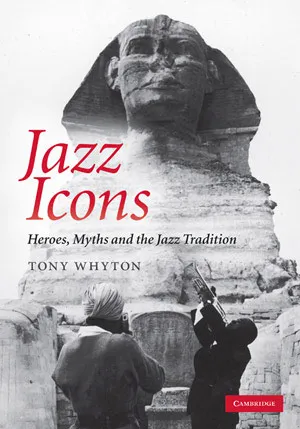
Jazz Icons
Tony Whyton Jazz Icons: Heroes, Myths and the Jazz Tradition Cambridge University Press 230 pages, 10 x 7 inches ISBN 978 0521896450
Available here →August 9, 2010
20100809-whyton-tony-on-jazz-icons-heroes-myths-jazz-tradition-1
In a nutshell
The rest of this thread
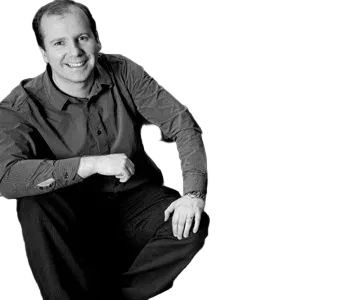
Jason Broadhurst
Tony Whyton
Tony Whyton is co-editor of the internationally peer-reviewed Jazz Research Journal and is currently working on his second book, Beyond A Love Supreme, a cross-disciplinary study of the musical and cultural influence of John Coltrane’s seminal album. A leading figure in international jazz research, he established the Centre for Jazz Studies UK, and is currently the Project Leader for the €1 million European research programme Rhythm Changes: Jazz Cultures and European Identities, funded as part of the HERA Joint Research Programme. Tony is a Reader in Music at the University of Salford.
Pull this thread
pulls againstpulls alongside
Jazz history, told as a succession of God-like male heroes, enforces masculine and heterosexual norms.
Against JP · The American Dream is the gateway drug, and meth cooking is a hyperbolic version of coming undone while pursuing it. On: The researcher's own first-person experience is admissible evidence in scholarly argument
Against AW · Literature yields existential and sentient knowledge, and that, not any political payoff, is why we read it. On: A canon records real artistic quality rather than the machinery that assembled it
Against RE · The 1743 Memoirs of an Unfortunate Young Nobleman, reprinted as a novel, is substantially true. On: The reasons participants give for what they do are reliable evidence about why they do it
Against TD · Loneliness is a way of life, rooted in a missing mother, that shapes political as well as personal possibility. On: The researcher's own first-person experience is admissible evidence in scholarly argument
Alongside AR · Nihilism is true, because science cannot justify the morality nearly everyone accepts, and it is harmless. On: The researcher's own first-person experience is admissible evidence in scholarly argument
Alongside BN · Western philosophy's refusal to teach Chinese, Indian and African thought is a lingering effect of Kantian racial theory. On: A canon records real artistic quality rather than the machinery that assembled it
Alongside WG · Ordinary Soviet citizens made the Great Terror, writing denunciations and naming names out of belief and fear at once. On: The reasons participants give for what they do are reliable evidence about why they do it
Alongside JK · Natural science cannot settle judicial, legislative or personal questions, because those rest on ethical premises evidence cannot supply. On: The researcher's own first-person experience is admissible evidence in scholarly argument
Know something the rest of us don't?
Most threads on Rorotoko begin with our invitation. Any thread can begin with a proposal: you write it with the same prompts every thread answers, and we review it.
Propose a thread →