
George R. Packard
Edwin O. Reischauer and the American Discovery of Japan
This is a book about one American’s lifelong mission to explain the real Japan to the rest of the world. Edwin O. Reischauer, born in Japan in 1910 to Presbyterian missionary parents, played an enormous role in shaping American policy and attitudes toward Japan. Only George Kennan’s influence on our relations with the Soviet Union is comparable.
Reischauer spent his first 16 years growing up in Japan and absorbing its culture. After graduating from Oberlin College and Harvard, he spent five years in Europe and Japan in the 1930’s as the world careened toward World War Two.
After serving as a code breaker and intelligence officer in the US Army during the war, he returned to Harvard and, with John K. Fairbank, founded the field of East Asian Studies in America.
He faced enormous obstacles. The image of the Japanese in the minds of most Americans was that of a fanatical, warlike, treacherous, deceitful and subhuman people, happily willing to die for their Emperor. They were imitators and makers of shoddy goods. They could never be trusted.
Reischauer sat down in 1945, the year the war ended, and wrote Japan: Past and Present, a short book that completely upset the image of the hated “Japs.”
The book, and its subsequent elaborations, became the core narrative in American schools and universities for the next three decades.
Reischauer’s Japan was not the militaristic, sword-wielding threat of American propaganda films, but rather an ancient civilization worthy of study and admiration. He found beauty and originality in Japanese culture, and saw Japan’s descent into militarism as an aberration. He became America’s leading expert on the nation and a superstar lecturer at Harvard. After his first wife died in 1955, he married Haru Matsukata, granddaughter of a former Japanese prime minister.
After massive protests in Tokyo against the US-Japan Security Treaty in 1960, President Kennedy appointed Reischauer ambassador to Japan in 1961. Over the next five years, Ed and Haru transformed the relationship, using their deep knowledge to end the Americans’ “occupation mentality” and treat Japan as a sovereign equal. With Kennedy’s death in 1963 and President Johnson’s escalation of the war in Vietnam (1964-66), Reischauer found himself in the excruciating position of having to defend a war that he found indefensible—or resign.
He waffled, and paid an enormous price. Anti-war students branded him an agent of American imperialism when he returned to Harvard in 1966.
Further troubles awaited him. As Japan’s exports to America surged in the 1980’s a small group of “revisionists” captivated the American mainstream media with their contention that Japan was out to destroy American industry and win through unfair trade practices what it failed to accomplish at Pearl Harbor. Japan, they argued, was not a peace-loving democracy, not a trustworthy ally, and would never play by the rules. Some predicted we were on the road to another war. Reischauer became the whipping boy for these pundits.
Reischauer died in 1990 at the height of these attacks on Japan, concerned that his life’s work had been in vain. Just at that moment, Japan’s economic bubble burst, Saddam Hussein attacked Kuwait, and the US had a new enemy in Iraq. Japan was all but forgotten.
My conclusion, two decades later, is that Reischauer got Japan right: today Japan is demonstrably a peace-loving, democratic nation, a solid ally and a fair trader. Its critics have all but disappeared, and China has begun to loom as the new potential enemy.
My book argues that America desperately needs more experts like Reischauer who know the language and culture of the nations we deal with and who can affect foreign policy. The wars in Vietnam and Iraq could have been avoided if policy-makers had known more about each nation. Fighting against the Chinese in Korea (1950) could possibly have been avoided if Reischauer’s advice to recognize Communist China in 1949 had been followed.
American embassies in most major nations today are for sale. Who contributes most to the campaigns of the winning candidate for President walks away with the top prizes: London, Paris, Rome, Madrid and even Tokyo. Meanwhile, every foreign Ambassador in Washington knows a great deal about American politics and culture and speaks our language. This is an unacceptable handicap for our policy-makers.
Editor: Erind Pajo
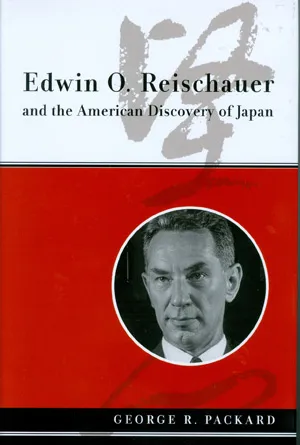
Edwin O. Reischauer and the American Discovery of Japan
George R. Packard Edwin O. Reischauer and the American Discovery of Japan Columbia University Press 368 pages, 9 1/4 x 6 inches ISBN 978 0231143547
Available here →October 13, 2010
20101013-george-packard-on-edwin-o-reischauer-american-discovery-japan-1-1
In a nutshell
The rest of this thread
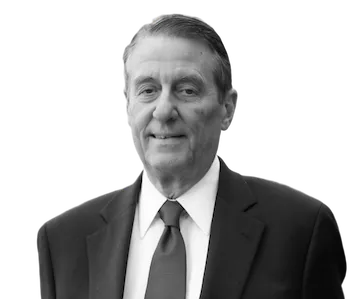
Michael Dames
George R. Packard
George R. Packard has been President of the United States-Japan Foundation since 1998. He is also Adjunct Professor of Political Science at Columbia University, and Chairman of the Advisory Board at the Weatherhead East Asian Institute there. Dr. Packard was Dean of the Johns Hopkins School of Advanced International Studies from 1979 to 1993, and Visiting President of the International University of Japan from 1994 to 1998. Earlier in his career, Dr. Packard was an intelligence officer and later a special assistant to US Ambassador Edwin O. Reischauer in Tokyo. He is the author of eight books, and of articles that have appeared in the New York Times, Washington Post, Foreign Affairs, and elsewhere. Dr. Packard received from the Japanese Government the Order of the Rising Sun, Gold and Silver Stars in November 2007. He studied at Princeton University (B.A.) and at Tufts’ Fletcher School of Law and Diplomacy (M.A. and Ph.D.).
Pull this thread
Deep language and area knowledge inside government prevents wars.
Know something the rest of us don't?
Most threads on Rorotoko begin with our invitation. Any thread can begin with a proposal: you write it with the same prompts every thread answers, and we review it.
Propose a thread →