
Carolyn J. Dean
Aversion and Erasure
One claim I make in different ways in the book—and very explicitly in chapter 3—is that to be really credible, a victim has to appear to have mastered his or her suffering.
There is a style that is most appreciated and recognized for telling stories of suffering—I call it “minimalism” after an art form with the same name. What I want to convey is that victims who seem dignified and clear-eyed are those that we are most likely to believe.
This may seem self-evident: after all, aren’t those people reasonable and capable of conveying their experience in a way we can all understand? The Holocaust survivor Primo Levi was always celebrated because of his measured approach to his own experience in Auschwitz, while other writers as good as Levi did not receive the same kind of attention.
There are other reasons for this: the most popular memoirs of the Holocaust were initially by writers who were not Jewish or who were from Western Europe, like Levi. The Jewish experience, as someone put it, wasn’t as “marketable” because it was so far from what anyone could imagine.
All of this is true, and of course, by now a variety of memoirs has been published, many of them by Jews and East Europeans. But there is still a bias, I argue, toward understatement in those memoirs we deem most truthful.
I argue that this is partly because there is a move afoot to take the Holocaust off of its pedestal as a kind of sacred event. A good move, I think: giving the Holocaust sacred status denies that it was first and foremost a historical event.
But it is also true because fragile, powerless, and helpless victims make us uncomfortable, evoke complicated responses in us, and make it hard for us to empathize with the humiliation they underwent.
Indeed, that is why, to go back to my earlier comments, so many journalists denounced photography of political violence as demeaning to victims because it showed them in all of their helplessness.
And as I discuss later on in the book, these attitudes account for all the debate about the so-called passivity of Jews in the Holocaust and the aversion toward those who did not resist. Remember that Jews were said to have gone like sheep to the slaughter? Right after the war even Israelis expressed shame about Holocaust survivors because they allegedly did not for the most part fight back. Though that debate is over, I would argue that the attitudes underlying it persist.
I hope that the reader will take away from the book some sense of how he or she responds to victim’s narratives, and how this is impacted by culture.
The book is about how we judge victims in an era of unending violence and increased attention to global human rights. It shows that attitudes toward victims have a history, and that views about victims have changed over time and are deeply rooted in cultural norms about suffering as well as dignity.
What does it mean that we find victims who suffer with dignity more attractive than victims who don’t? What does it mean that we don’t mind it when perpetrators, torn apart by their own experiences, weep openly—but we are rendered uncomfortable when victims do the same?
I don’t mean that each and every person has this experience: many of us feel like weeping when we see the carnage created by a suicide bombing and the grieving and shocked faces of the survivors. I mean instead that in all I have read, I detect a strong cultural bias toward aversion when confronted with victims who act as if they have suffered.
We want our victims to be reasonable or very distant. We don’t want vengeful, angry, emotionally stunted victims unable to overcome some of their experiences. We know, for example, how long it has taken the US military to recognize the psychological suffering imposed on men and women in war.
I think it is very important to explore these biases as we challenge ourselves to help those who suffer, including those in our midst. Why is it that we don’t always want to see suffering, and what are the biases that allow us to turn away?
In order to answer these questions, I felt that I had to establish that we did often turn away, that we turned away not simply because we were weary of media images (though that is part of it too). I felt that I had to understand how attitudes toward victims were shaped historically and how interpretations of the Holocaust of European Jewry were central to shaping those attitudes.
Editor: Erind Pajo
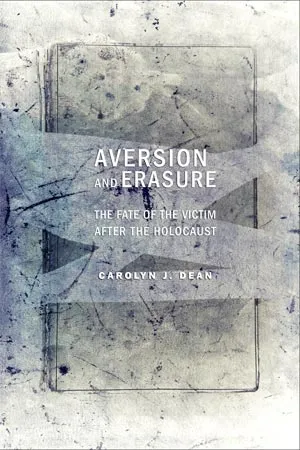
Aversion and Erasure
Carolyn J. Dean Aversion and Erasure: The Fate of the Victim after the Holocaust Cornell University Press 200 pages, 9 x 6 inches ISBN 978 0801449444
Available here →February 2, 2011
20110202-dean-carolyn-on-aversion-erasure-fate-victim-after-holocaust-3
A close-up
The rest of this thread
Brown University
Carolyn J. Dean
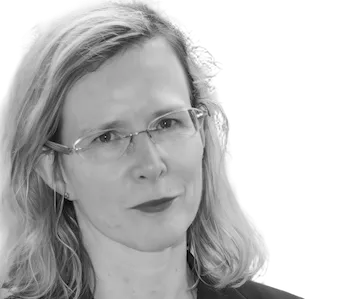
Carolyn J. Dean is John Hay Professor of International Studies and Interim Director of the Watson Institute for International Studies at Brown University. She is the author of several books, including The Fragility of Empathy after the Holocaust (Cornell, 2004), and Aversion and Erasure: The Fate of the Victim after the Holocaust (Cornell, 2010), featured in her Rorotoko interview.
Pull this thread
A victim is believed only insofar as he appears to have mastered his suffering.
Know something the rest of us don't?
Most threads on Rorotoko begin with our invitation. Any thread can begin with a proposal: you write it with the same prompts every thread answers, and we review it.
Propose a thread →